If you have ever received a message containing “DHZ” or “WTV” and wondered what the sender was trying to say, you are not alone.
Texting slang changes quickly, and not every three-letter abbreviation has one clear meaning. That is why searches such as “DHZ meaning in text” and “WTV meaning in text message” are becoming common.
The good news is that these terms are easy to understand once you look at the context.
WTV usually means “whatever,” while DHZ is less standardized and can have different meanings depending on the online community and conversation. One slang use of DHZ is “dead homies,” but it should not automatically be assumed in every message.
In this guide, we will explain both terms in simple English, show real-style chat examples, discuss social media usage, and explain how to reply naturally.
What Does DHZ Mean in Text & Chat?
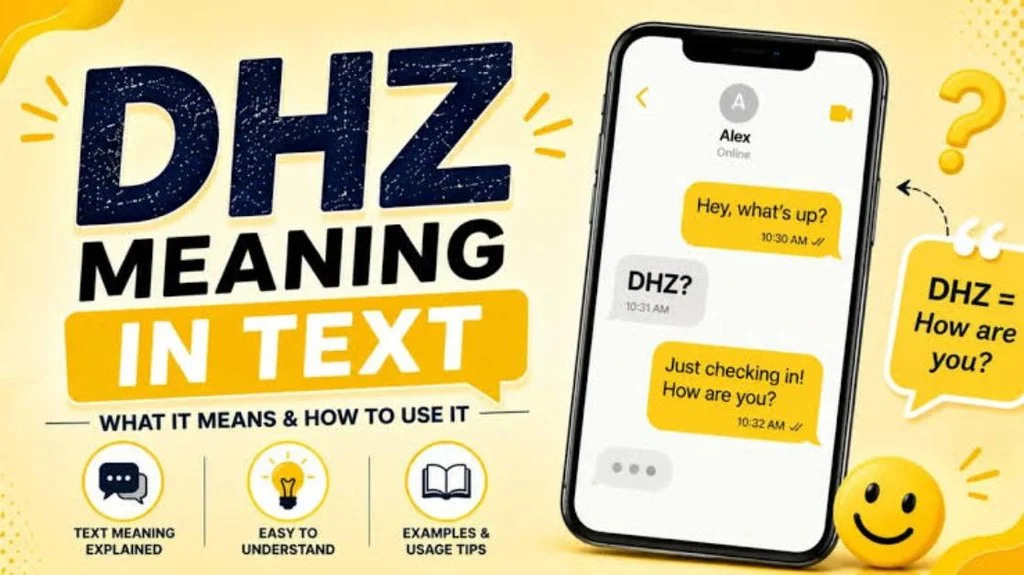
The DHZ meaning in text is not as fixed as common abbreviations such as LOL, BRB, or IDK. This is the most important thing to know before interpreting it.
In some slang communities, DHZ can stand for “dead homies” or “dead homiez.” In that use, it can act as an oath or a way of emphasizing that someone is telling the truth. For example, a phrase such as “on my DHZ” may carry the idea of “I swear this is true.”
However, DHZ does not have one universal meaning across all texting platforms. Other online sources describe it as a context-based abbreviation, typing variation, or private slang.
That means you should always read the words around DHZ before deciding what it means.
Quick points to remember
- DHZ does not have one universal texting definition.
- It can be slang used by a particular online community.
- One recognized slang use is “dead homies.”
- It may also appear as private group slang or a typing variation.
- The surrounding sentence is often the best clue.
For example:
- “On my DHZ, I saw him there.” → May use DHZ as an oath.
- “DHZ?? What does that mean?” → Could simply be an unclear abbreviation.
- “Everyone in the group knows DHZ.” → It may be a group-specific expression.
So, if somebody sends you only “DHZ”, do not immediately assume one definition. Ask for context if necessary.
Full Form, Stands For & Short Meaning of DHZ and WTV
The two abbreviations in this topic are very different.
WTV has a much clearer meaning. In texting, WTV normally stands for “whatever.” It is a shortened form used in casual conversations, especially when someone wants to type quickly.
DHZ is more complicated. It does not have one universally accepted full form in modern texting. One documented slang interpretation is “dead homies,” while other uses can be community-specific.
Simple meaning guide
- DHZ: Context-dependent; in one slang use, “dead homies.”
- WTV: “Whatever.”
- WTV tone: Casual, indifferent, flexible, dismissive, or annoyed.
- DHZ tone: Depends strongly on the community and sentence.
WTV examples
- “WTV you want is fine.” → Whatever you want is fine.
- “WTV, I’m done arguing.” → I do not want to continue this argument.
- “Pick a movie, wtv.” → I do not have a strong preference.
The tone of WTV can change dramatically. A friendly “wtv 😂” may simply mean “anything is fine,” while a short “WTV.” during an argument can sound dismissive.
DHZ requires even more care because the abbreviation itself is not standardized. If you do not know the sender’s slang, asking is safer than guessing.
Origin, History & First Known Use of DHZ and WTV
There is no reliable, universally accepted record showing the exact first person or exact date when DHZ began being used as modern text slang. This is common with internet abbreviations. Many terms develop inside small communities before spreading through social media.
DHZ is particularly difficult to trace because different sources give different interpretations. Some recent slang references connect it with “dead homies,” while others describe it as context-dependent internet shorthand.
This means it would be misleading to claim that DHZ definitely started on one specific app or on one exact date.
WTV has a simpler linguistic background. It is essentially a shortened texting form of “whatever.” As mobile messaging became faster and more informal, users began removing letters from longer words and phrases. WTV fits that pattern.
There is also no single confirmed “first text message” that introduced WTV. It developed naturally from the broader culture of online abbreviations.
Why abbreviations develop
People shorten words online for several reasons:
- Faster typing
- Smaller messages
- Casual communication
- Humor and internet culture
- Group identity
- Social media character limits
- A desire to sound relaxed
Terms can then spread from private chats to public platforms.
The key difference is that WTV has a stable everyday meaning, while DHZ remains much more dependent on context and community.
How People Use DHZ and WTV in Daily Conversations
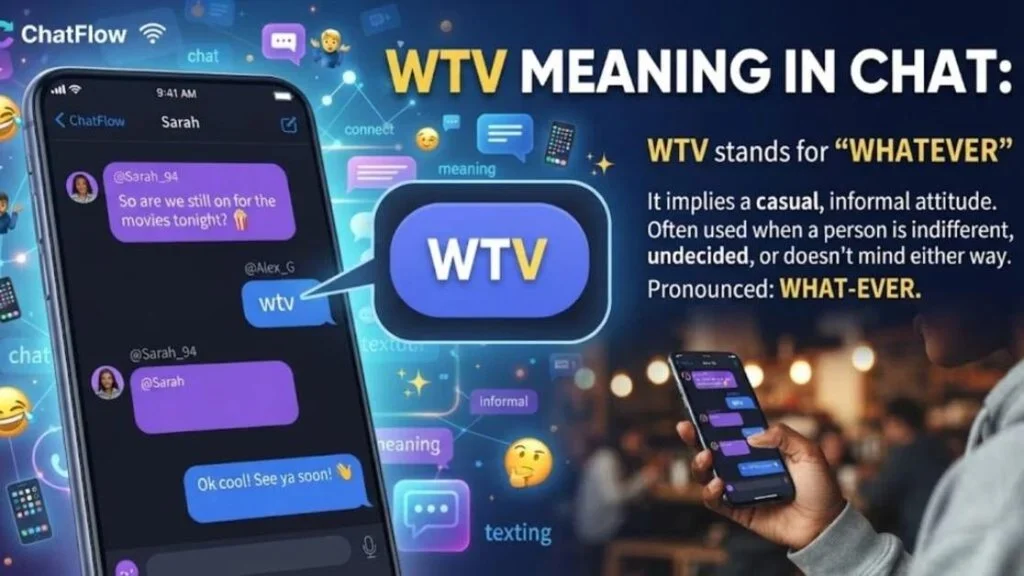
People normally use texting abbreviations when they want conversations to feel quick and informal. WTV is especially useful because “whatever” can express several slightly different ideas.
Someone might use WTV to show flexibility:
“Pizza or burgers?”
“WTV, you choose 😂”
Here, WTV is not necessarily rude. The person simply does not care which option is selected.
It can also express frustration:
“You said you were coming!”
“WTV, forget it.”
In this situation, WTV sounds much colder.
Common WTV uses
- Showing no strong preference
- Ending a small disagreement
- Saying “anything is fine”
- Showing mild annoyance
- Dismissing a topic
- Keeping a conversation short
DHZ works differently. If someone uses DHZ as “dead homies,” the expression may appear in a statement where the speaker wants to emphasize sincerity.
For example:
“On my DHZ, I wasn’t there.”
The exact meaning depends on the sender and their slang background. You should not copy this expression simply because you have seen it online. Some slang has cultural or personal weight that is not obvious from three letters.
A useful rule
If you understand the community using the term, context can make the meaning obvious. If you do not, ask before interpreting it.
DHZ Meaning Across WhatsApp, Instagram, TikTok & Snapchat
DHZ and WTV can appear across many social platforms, but their meaning does not automatically change just because the platform changes.
On WhatsApp, WTV may appear in private chats or group conversations:
“Where should we go?”
“WTV works for me 👍”
On Instagram, WTV can appear in DMs, comments, or replies. The tone may be playful or dismissive depending on the conversation.
On TikTok, slang can spread quickly because users see unfamiliar abbreviations in comments and then repeat them. However, seeing DHZ in a TikTok comment does not prove that every TikTok user gives it the same meaning.
On Snapchat, short messages are especially common, so abbreviations such as WTV fit naturally into quick conversations.
Platform examples
- WhatsApp: “WTV you decide.”
- Instagram: “WTV 😂 it was funny.”
- TikTok: “WTV bro 😭”
- Snapchat: “WTV, I’m free tonight.”
For DHZ, context is even more important:
- A slang-heavy conversation may use DHZ in a specific community meaning.
- A gaming chat may use it differently.
- A friend group may have its own private definition.
- A random message may simply contain a typo.
This is why searching for a single dictionary-style answer to DHZ meaning in text can sometimes create more confusion than clarity.
Different Meanings of DHZ and WTV in Other Fields
Texting slang is only one area where abbreviations appear. The same letters can mean something completely different in another field.
For DHZ, the meaning can vary outside casual texting. It may appear as initials, a username, a brand-style abbreviation, a group name, or a technical shorthand. You should not assume that a meaning used in social media applies in business, education, medicine, gaming, or technology.
WTV can also have meanings outside texting, although the casual internet meaning is normally “whatever.”
Context matters
Consider these examples:
- In a casual DM: WTV → usually “whatever.”
- In a technical document: WTV → potentially a field-specific abbreviation.
- In a personal chat: DHZ → could be slang.
- In a username: DHZ → may simply be initials or a chosen name.
The safest approach is to identify the setting first.
If the abbreviation appears in a sentence such as “WTV, I don’t care,” the intended meaning is obvious.
If DHZ appears alone with no surrounding words, there may not be enough information to determine its meaning accurately.
Important tip
Never treat every abbreviation as having one permanent definition. Digital language is flexible, and the same letters can represent different things in different communities.
Common Confusions, Mistakes & Wrong Interpretations
One of the biggest mistakes people make with DHZ meaning in text is assuming that every website or social media post uses the abbreviation in exactly the same way.
DHZ is not a standardized abbreviation like “LOL.” Several online sources give different interpretations, which shows why context matters.
Another common mistake is assuming that WTV always sounds rude.
It does not.
Compare:
“WTV you want 😊”
with:
“WTV.”
The first can sound relaxed and flexible. The second may sound annoyed or dismissive.
Common mistakes
- Assuming DHZ always has one full form.
- Treating WTV as automatically rude.
- Ignoring punctuation.
- Ignoring emojis.
- Looking at the abbreviation without reading the previous message.
- Copying slang without understanding its cultural context.
- Assuming a TikTok abbreviation has the same meaning everywhere.
A good rule is to read at least one or two messages before and after the abbreviation.
For example:
“What do you want for dinner?”
“WTV.”
“Okay, I’ll choose.”
Here, WTV almost certainly means “whatever.”
But:
“You swear you’re telling the truth?”
“On my DHZ.”
Here, the context may point toward the “dead homies” slang usage.
Similar Terms, Alternatives & Related Slang
If you are learning texting language, DHZ and WTV belong to a much larger group of abbreviations.
WTV is closest to words and phrases that show indifference or flexibility.
Similar to WTV
- IDC — I don’t care
- IDK — I don’t know
- NVM — Never mind
- I mean — often shortened informally in conversation
- Whatever — the full form of WTV
- Anything — sometimes used with the same flexible meaning
For example:
“What should we watch?”
“IDC, you pick.”
This is similar to:
“What should we watch?”
“WTV, you pick.”
The meaning is close, but the tone can differ.
Other useful slang pages to link internally
For an abbreviation website, consider adding internal links such as:
- [IDK meaning in text]
- [IDC meaning in text]
- [NVM meaning in text]
- [LOL meaning in text]
- [BRB meaning in text]
- [BTW meaning in text]
- [WYD meaning in text]
- [WBU meaning in text]
- [FR meaning in text]
- [TBH meaning in text]
These links can help readers move naturally from one slang definition to another without forcing keywords into every paragraph.
Examples of DHZ and WTV in Real Chat Situations
Real chat examples make these abbreviations much easier to understand.
WTV meaning in casual conversation
- Friend: “Pizza or pasta?”
You: “WTV, I’m good with either 😂” - Friend: “Do you want the blue one or black one?”
You: “WTV looks better to you.” - Friend: “Are you still mad?”
You: “WTV 😭 let’s just move on.”
WTV during an argument
- Person A: “You never listen to me.”
- Person B: “WTV.”
- Person A: “Okay, clearly you’re not interested.”
Here, WTV may sound dismissive rather than neutral.
DHZ in a slang context
- Person A: “You actually saw him there?”
- Person B: “On my DHZ, yeah.”
In this example, DHZ may be used as an oath connected with the “dead homies” interpretation.
Another example:
- Person A: “Are you serious?”
- Person B: “DHZ, I’m serious.”
Again, the exact meaning depends on the speaker’s community and intended slang.
Important reminder
Do not assume every DHZ example has the same meaning. Unlike WTV, DHZ does not have a single universally accepted definition.
How to Reply When Someone Says DHZ or WTV
Your best reply depends on what the person appears to mean.
If someone sends WTV and the context clearly means “whatever,” you can simply continue the conversation.
Friendly replies
- “Haha okay 😂”
- “You choose then.”
- “Fair enough.”
- “Either works for me too.”
- “No worries.”
If WTV sounds annoyed, a calm response is better:
“Okay, I didn’t mean to annoy you.”
Or:
“All good. We can talk later.”
For DHZ, the safest response is to ask if you are unsure.
Good replies to an unclear DHZ
- “What does DHZ mean here?”
- “Wait, what do you mean by DHZ? 😂”
- “I haven’t seen that one before.”
- “Is DHZ slang? 😭”
Asking is better than pretending you understand.
If you already know the sender’s slang, you can respond naturally to the actual message rather than focusing on the abbreviation.
Simple rule
WTV → usually understand it as “whatever.”
DHZ → check the context before deciding what it means.
Is DHZ and WTV Still Popular? Trends & Online Usage

WTV remains useful because it solves a simple texting problem: it turns the longer word “whatever” into three quick letters. Current slang references continue to describe WTV as a common informal abbreviation used in texts and social media.
Its popularity is also helped by the fact that the meaning is easy to understand once someone has seen it a few times.
DHZ is different. It is better described as niche or context-dependent slang rather than a universally understood texting abbreviation. Recent online references disagree about its exact meaning, which is another reason users should avoid assuming that DHZ always means the same thing.
Internet slang changes constantly. Some abbreviations become popular for a few months and then disappear. Others stay around for years because they are easy to type and easy to understand.
What affects slang trends?
- TikTok comments
- Instagram Reels
- Snapchat conversations
- WhatsApp groups
- Gaming communities
- Memes
- Gen Z and Gen Alpha language
- Private friend groups
The important takeaway is that WTV has a clear and widely recognized casual meaning, while DHZ needs more context.
If you see either abbreviation online, look at the complete message before deciding what the sender means.
Frequently Asked Questions
What does DHZ mean in text?
DHZ does not have one universally accepted meaning. One documented slang use is “dead homies,” but the intended meaning can vary by community and context.
What does WTV mean in a text message?
WTV usually means “whatever.” It is an informal texting abbreviation used to show flexibility, indifference, or sometimes annoyance.
Is WTV rude in texting?
Not always. “WTV” can be completely casual, but it may sound dismissive when used alone during an argument. Context, punctuation, and emojis can change the tone.
Does DHZ always mean dead homies?
No. “Dead homies” is one recognized slang interpretation, but DHZ is not universally standardized. The surrounding conversation should be checked before deciding what it means.
What is the difference between WTV and IDC?
WTV means “whatever,” while IDC means “I don’t care.” They can have similar meanings, but WTV may suggest flexibility, while IDC can sound more direct or dismissive.
Should I use DHZ in my own texts?
Only if you clearly understand how the person or community uses it. Because DHZ has multiple reported meanings, using it without knowing the context could create confusion.
What should I say if someone sends me DHZ?
If you do not understand it, simply ask: “What does DHZ mean here?” That is clearer than guessing.
Conclusion:
Understanding DHZ meaning in text and WTV meaning in text message is mostly about knowing the difference between fixed slang and context-based slang.
WTV is straightforward: it normally means “whatever” and can express flexibility, indifference, or mild frustration. DHZ is less predictable.
One recognized slang use connects it with “dead homies,” but the abbreviation does not have one universal definition.
The best way to understand either term is to look at the entire conversation. Pay attention to the words around it, the sender’s tone, punctuation, and emojis.
If DHZ is unclear, simply ask what the person means. With WTV, context usually makes the intended meaning much easier to spot.
