
If you have seen “SMO” in a text, chat, comment, or social media post, you may have wondered what it means. Internet slang can be confusing because the same short form may have more than one meaning.
So, what does SMO meaning in text actually refer to?
In casual online conversations, SMO most commonly means “Shut Me Out” or “Shout Me Out,” depending on the context. However, SMO can also have other meanings in marketing, technology, business, and different online communities.
People search for the meaning of SMO because abbreviations are often used without explanation.
A friend may send “SMO 😂,” or someone may write “SMO on my post,” leaving you unsure how to respond.
This guide explains the SMO meaning in text, its possible meanings, common uses, examples, related slang, and ways to reply naturally.
What Does SMO Mean in Text & Chat?

The meaning of SMO in text and chat depends heavily on the sentence and the people involved. Unlike some abbreviations that have one fixed definition, SMO can be used in several ways.
One common interpretation is “Shout Me Out.” In this use, a person is asking someone to mention, tag, or promote them publicly. This meaning is especially common on social media.
For example:
- “SMO on your next post.”
- “Can you SMO? 🙌”
- “Thanks for the SMO!”
- “SMO my new page.”
Here, the person wants a public mention or acknowledgment.
Another possible meaning is “Shut Me Out.” This interpretation is usually connected to a personal conversation. Someone may use it when they feel ignored or excluded.
For example:
- “Why do you always SMO?”
- “You SMO when I try to talk.”
- “I feel like you SMO lately.”
The exact meaning becomes clearer when you look at the words around SMO.
Quick way to understand it
- Social media + promotion: likely “Shout Me Out.”
- Personal disagreement: possibly “Shut Me Out.”
- Marketing discussion: possibly “Social Media Optimization.”
- Professional conversation: check the subject before assuming the meaning.
Context is the most important clue. If someone simply sends “SMO,” you may need to ask what they mean.
Full Form, Stands For & Short Meaning of SMO
There is no single full form of SMO that works in every situation. Its meaning changes based on the platform, topic, and conversation.
In casual social media language, SMO can stand for “Shout Me Out.” A shout-out is a public mention or recommendation. People may ask friends, creators, or followers to mention their account.
Another casual interpretation is “Shut Me Out.” In this case, SMO describes ignoring or excluding someone from a conversation or relationship.
In digital marketing, SMO commonly stands for “Social Media Optimization.” This is a completely different meaning. It refers to improving social media content and profiles so they can reach more people and encourage engagement.
Common meanings of SMO
- Shout Me Out — casual social media slang.
- Shut Me Out — personal or conversational use.
- Social Media Optimization — digital marketing.
- Social Media Optimizer/Optimization — professional marketing contexts.
- Other specialized meanings may appear in specific industries.
This is why searching only for the letters “SMO” may not give you the correct answer for a particular conversation.
If you received SMO from a friend, the social slang meaning is usually more relevant than the business meaning. If you found SMO in a marketing report, the professional definition is much more likely.
Simple rule
Ask yourself:
“What is the conversation about?”
If the conversation is about Instagram, followers, or a new page, SMO may mean Shout Me Out. If the conversation is about SEO, advertising, or content strategy, it probably means Social Media Optimization.
Origin, History & First Known Use of SMO
The history of SMO is difficult to pin down because abbreviations can develop naturally in different online communities. Unlike a branded term or officially created acronym, casual texting slang often spreads through users rather than through one clearly documented source.
The social media meaning of SMO grew alongside the popularity of online profiles, follower-based platforms, and public mentions. As people began asking friends and creators to promote their accounts, short expressions became useful in fast-moving chats.
“Shout-out” itself is older than modern social media. People have used the expression to publicly recognize or mention someone for many years. Online communities later shortened many phrases, making abbreviations like SMO practical for comments, direct messages, and text conversations.
The professional meaning has a different history. Social Media Optimization developed as businesses began using social networks as part of their online marketing strategies. The idea is related to improving content, profiles, sharing, engagement, and visibility on social platforms.
Important point about SMO’s history
There is no need to assume that every use of SMO comes from the same source.
- Shout Me Out developed as casual online slang.
- Shut Me Out can arise naturally as a shortened phrase.
- Social Media Optimization belongs to digital marketing language.
- Different communities may create additional meanings.
This makes SMO a good example of how internet language changes over time.
People often create short forms because typing a few letters is faster than writing a complete phrase. Once enough people understand the abbreviation, it can spread through messages, comments, and social networks.
How People Use SMO in Daily Conversations
People use SMO differently depending on what they want from the conversation. In casual chats, the abbreviation may be a request, a complaint, or a reference to something that happened online.
When SMO means “Shout Me Out,” it usually has a friendly or promotional purpose. A person may want their friend to mention their account, business, video, song, or new project.
Examples:
- “SMO on your story please 🙏”
- “Can you give me an SMO?”
- “Appreciate the SMO!”
- “My friend gave me an SMO yesterday.”
When SMO means “Shut Me Out,” the tone is more personal. Someone may be saying that another person ignored them or stopped including them.
Examples:
- “Why did you SMO?”
- “You completely SMO yesterday.”
- “Don’t SMO when I’m trying to help.”
How context changes the meaning
Consider these two messages:
- “SMO my new YouTube channel.”
- “Why do you SMO every time I call?”
The first message clearly sounds promotional. The second sounds personal.
This is why reading the entire conversation is better than translating an abbreviation by itself.
Quick examples
- Friendly: “SMO my new page 😄”
- Promotional: “Need an SMO for my business.”
- Personal: “You SMO when you’re upset.”
- Thankful: “Thanks for the SMO!”
If you are unsure, a simple question works well:
“Do you mean shout me out?”
That avoids an awkward misunderstanding.
SMO Meaning Across WhatsApp, Instagram, TikTok & Snapchat
The SMO meaning in WhatsApp, Instagram, TikTok, and Snapchat can vary because each platform has a different style of communication.
On Instagram, SMO is likely to appear around profiles, stories, posts, followers, or promotion. Someone might ask a friend to “SMO” their account, meaning they want a public mention.
On TikTok, the same idea may appear when a creator wants another user to mention their profile or content. However, TikTok users also rely heavily on platform-specific terms, so the surrounding message matters.
On Snapchat, SMO may appear in private messages rather than public promotional posts. If the conversation is personal, “Shut Me Out” could be a possible interpretation.
On WhatsApp, there is no single built-in meaning for SMO. Users can use the abbreviation however they choose. A WhatsApp message about an Instagram account could use SMO as “Shout Me Out,” while a personal conversation could use it differently.
Platform clues
- Instagram: often connected with shout-outs and promotion.
- TikTok: may relate to creators, accounts, or content.
- Snapchat: depends strongly on the private conversation.
- WhatsApp: context is especially important.
For example:
“SMO my new reel 😂”
This probably refers to a social media shout-out.
But:
“You keep SMO whenever we argue.”
This sounds more like “Shut Me Out.”
The platform gives you a clue, but the complete message gives you the answer.
Different Meanings of SMO in Other Fields
Outside texting and social media slang, SMO has several professional meanings.
The most important one in online marketing is Social Media Optimization. This involves improving social media profiles and content to increase visibility, engagement, sharing, and audience interaction.
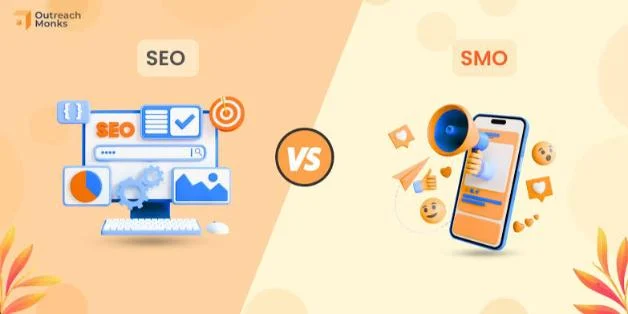
SMO is often discussed alongside SEO, or Search Engine Optimization. Although they are related to online visibility, they are not exactly the same thing.
SMO in digital marketing
A marketer may talk about:
- Social media profile optimization.
- Content sharing.
- Audience engagement.
- Hashtag strategy.
- Social content performance.
- Community interaction.
- Improving social visibility.
In this context, SMO does not mean “Shout Me Out.”
Why this causes confusion
Someone working in digital marketing might write:
“Our SEO and SMO strategy needs improvement.”
Here, SMO almost certainly means Social Media Optimization.
But a teenager might write:
“SMO my account bro 😂”
Here, it probably means Shout Me Out.
The same three letters can therefore have completely different meanings.
Other specialized uses
SMO can also appear as an abbreviation in technical, medical, business, organizational, or scientific settings. These meanings are usually specific to the field.
If you see SMO in a document, report, or professional message, do not automatically use the texting definition.
The subject of the conversation should always come first.
Common Confusions, Mistakes & Wrong Interpretations
One of the biggest mistakes people make with SMO is assuming that it always means the same thing.
For example, someone may see “SMO” and immediately think it means “Shout Me Out.” That could be wrong if the conversation is about marketing.
Another common mistake is confusing SMO with SEO.
- SEO: Search Engine Optimization.
- SMO: Social Media Optimization.
Both involve online visibility, but they focus on different areas.
Common mistakes
- Assuming SMO has only one meaning.
- Ignoring the surrounding sentence.
- Confusing “Shout Me Out” with “Shut Me Out.”
- Treating a marketing abbreviation like texting slang.
- Using SMO without considering whether the other person knows it.
- Assuming every platform uses SMO in exactly the same way.
Why context matters
Imagine receiving:
“Can you SMO?”
You cannot know the intended meaning with complete confidence from those three letters alone.
The best approach is to look at previous messages.
If the person was discussing followers, content, or an account, Shout Me Out makes sense.
If they were talking about an argument or feeling ignored, Shut Me Out may fit better.
If they were discussing a marketing campaign, Social Media Optimization is the likely answer.
When there is still doubt, ask:
“What do you mean by SMO?”
That is often better than guessing.
Similar Terms, Alternatives & Related Slang
Several abbreviations and slang expressions can be connected with SMO, especially when the intended meaning is “Shout Me Out.”
A shout-out is a public mention or acknowledgment. It can be used for friends, creators, brands, musicians, businesses, or online communities.
Other expressions may communicate a similar idea.
Related social media terms
- S/O — often means “shout-out.”
- Shout-out — a public mention or acknowledgment.
- Tag me — asking someone to mention their account.
- Mention me — requesting a public mention.
- Promo — short for promotion.
- Boost — helping content gain more visibility.
- Collab — collaboration between creators or accounts.
These terms are not always interchangeable. A person asking for a “tag” may simply want their username mentioned, while a person asking for a “shout-out” may want a more direct recommendation.
For SMO meaning in text, these related terms are useful because they help you understand the tone.
For example:
“Can you give me a shout-out?”
and
“SMO my page.”
may communicate a similar request.
Related marketing terms
If SMO means Social Media Optimization, related terms include:
- SEO — Search Engine Optimization.
- SEM — Search Engine Marketing.
- SMM — Social Media Marketing.
- PPC — Pay-Per-Click advertising.
- CTR — Click-Through Rate.
Internal linking suggestion: On a website about internet abbreviations, consider linking this article to related pages such as “SEO Meaning in Text,” “SMM Meaning,” “S/O Meaning in Text,” “BTW Meaning,” “IDK Meaning,” and “TBH Meaning.”
Examples of SMO in Real Chat Situations
Seeing SMO in realistic conversations makes the meaning much easier to understand.
Example 1: Social media promotion
Person A: “I just launched my new page.”
Person B: “Nice! SMO it on your story 😄”
Here, SMO most likely means Shout Me Out.
Example 2: Asking for support
Person A: “Can you SMO my new video?”
Person B: “Sure! I’ll share it tonight.”
Again, the meaning is Shout Me Out.
Example 3: Feeling ignored
Person A: “Why haven’t you replied?”
Person B: “I’ve been busy.”
Person A: “You always SMO when you’re upset.”
Here, SMO could mean Shut Me Out.
Example 4: Digital marketing
Marketer: “We need better SMO for the new campaign.”
Here, SMO most likely means Social Media Optimization.
Example 5: Short social media message
“SMO my new reel 🙌”
The message is probably asking for a shout-out or promotion.
More quick examples
- “Thanks for the SMO!” → likely Shout Me Out.
- “Please SMO my account.” → likely Shout Me Out.
- “Don’t SMO me.” → possibly Shut Me Out.
- “Our SMO results improved.” → likely Social Media Optimization.
- “SMO + SEO are both important.” → likely Social Media Optimization.
The surrounding words usually reveal the intended meaning.
How to Reply When Someone Says SMO
Your response to SMO depends on what the person means.
If someone is asking for a shout-out, you can respond positively if you want to help.
Friendly replies
- “Sure! 😊”
- “Of course, I’ll share it.”
- “Send me the link.”
- “Got you 👍”
- “I’ll give you a shout-out.”
If you are not sure what they mean, ask:
- “SMO means shout me out?”
- “What do you mean by SMO?”
- “Do you want me to tag your account?”
If SMO means Shut Me Out, the response should be more personal.
For example:
“I didn’t mean to ignore you. I was just busy.”
Or:
“Sorry, I didn’t realize you felt that way.”
If someone uses SMO in a professional marketing conversation, you should respond based on the business topic.
A useful response strategy
- Identify the topic.
- Check the messages around SMO.
- Decide which meaning fits.
- Reply based on that meaning.
- Ask for clarification if needed.
You do not need to overthink a short abbreviation. Most people understand that slang can be unclear.
Is SMO Still Popular? Trends & Online Usage
The popularity of SMO depends on which meaning you are talking about.
The professional meaning, Social Media Optimization, remains relevant because businesses continue to use social platforms to reach audiences. However, marketing language has changed over time, and many professionals simply describe specific activities instead of using the SMO abbreviation.
The casual meaning “Shout Me Out” can still appear in social media conversations, but slang changes quickly. Different platforms and age groups may prefer different abbreviations.
This is normal for internet language. A phrase can be popular in one online community and almost unknown in another.
What affects SMO usage?
- Social media trends.
- Platform culture.
- Age group.
- Country and language.
- Creator communities.
- Gaming communities.
- Marketing terminology.
- Private versus public conversations.
You may therefore see SMO less often than very common texting terms such as LOL, IDK, BTW, OMG, or TBH.
That does not mean the abbreviation has one fixed meaning. It simply means that context remains important.
If someone uses SMO today, the safest approach is still to read the surrounding message rather than relying on a single dictionary definition.
FAQs
What does SMO mean in text?
In casual text and social media conversations, SMO can mean “Shout Me Out.” It can also mean “Shut Me Out,” depending on the context.
What does SMO mean on Instagram?
On Instagram, SMO can mean “Shout Me Out,” especially when someone asks another person to mention or promote their account, post, or content.
Does SMO mean Social Media Optimization?
Yes. In digital marketing, SMO commonly stands for Social Media Optimization. This meaning is different from the casual texting use.
What does “SMO my page” mean?
“SMO my page” most likely means “Shout Me Out on my page” or “give my page a shout-out.” The exact wording can vary between users.
Is SMO the same as S/O?
Not always, but S/O can also mean “shout-out.” The intended meaning depends on the conversation and the person’s usual slang.
What should I reply to SMO?
If someone means “Shout Me Out,” you can say “Sure,” “Send me your link,” or “Got you!” If you are unsure, simply ask what they mean.
Is SMO a formal abbreviation?
It depends on the meaning. Social Media Optimization is a professional term, while “Shout Me Out” and “Shut Me Out” are informal uses.
Can SMO have different meanings?
Yes. SMO is a context-dependent abbreviation. Social media slang and professional marketing language can use the same three letters differently.
Conclusion:
The SMO meaning in text depends on the conversation. In casual social media chats, SMO often means “Shout Me Out,” especially when someone wants a mention, tag, or promotion. In personal conversations, it can sometimes mean “Shut Me Out.
” In digital marketing, SMO commonly means “Social Media Optimization.”
The easiest way to understand SMO is to look at the words around it.
A message about followers or a new page probably points to “Shout Me Out,” while a marketing discussion may refer to Social Media Optimization.
Internet slang changes quickly, so abbreviations do not always have one permanent definition. When you are unsure, asking for clarification is perfectly normal.
In short: context is the key to understanding SMO. Once you know the conversation, the intended meaning is usually easy to spot.
