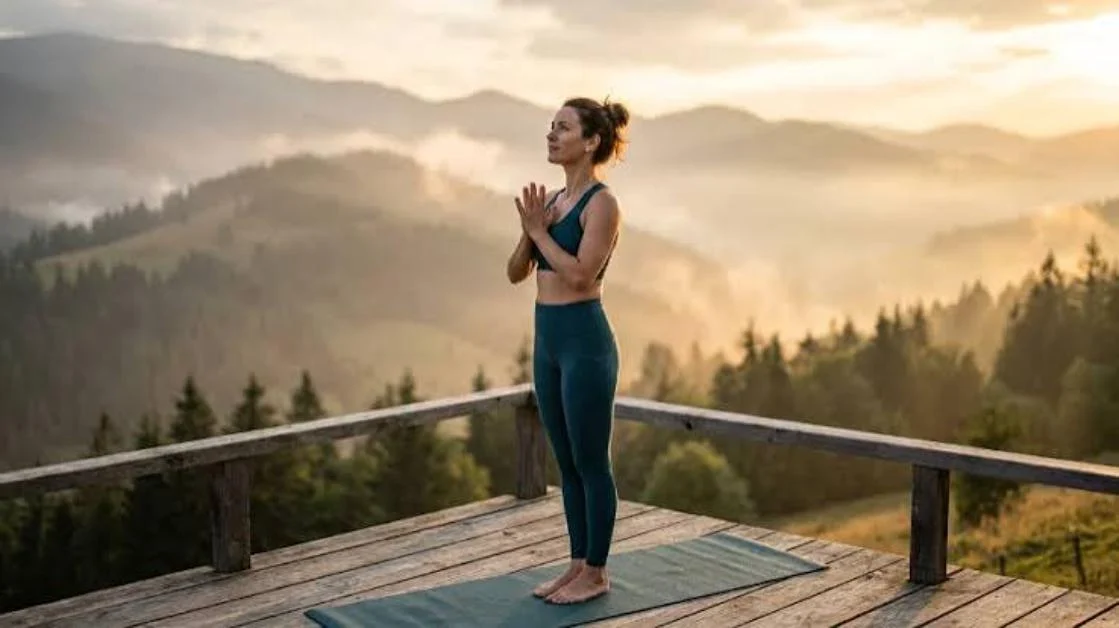
If you have ever seen someone write “Namaste” in a message, social media post, yoga class, or conversation, you may have wondered about the exact Namaste meaning.
Is it simply another way to say hello, or does it have a deeper meaning? The answer is both simple and interesting.
Namaste is a traditional greeting with roots in Sanskrit and South Asian culture. Today, people use it in many settings, from face-to-face conversations to WhatsApp, Instagram, TikTok, and Snapchat. It can express respect, greeting, kindness, or a peaceful attitude.
People often search for the meaning of Namaste because they see it online or hear it while traveling, practicing yoga, or learning about Indian culture.
This guide explains what Namaste means, where it comes from, how people use it in chats, and how to reply when someone says it.
What Does Namaste Mean in Text & Chat?
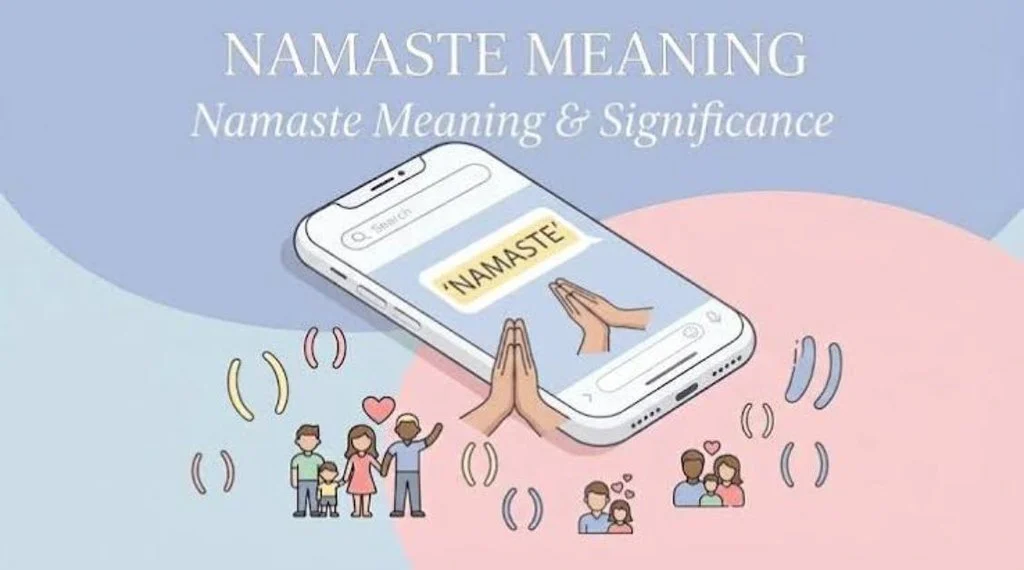
In text messages and online chats, Namaste usually means hello, greetings, or respectful salutations. Its meaning can change slightly depending on the conversation.
When someone sends “Namaste” at the beginning of a chat, they may simply be greeting you. It can feel warmer or more respectful than a basic “hi.”
The word can also carry a sense of peace and respect. Because of this, people sometimes use it when they want their message to sound calm, friendly, or thoughtful.
For example:
- “Namaste 🙏 How are you?” — A respectful way to say hello.
- “Namaste everyone!” — A greeting to a group.
- “Namaste 🙏 Have a peaceful day.” — A greeting with a peaceful tone.
- “Namaste, my friend!” — A warm and friendly greeting.
- “Namaste 🙏” — A short greeting or respectful acknowledgment.
In digital communication, the folded-hands emoji 🙏 is often placed next to Namaste. However, the emoji does not automatically mean Namaste in every situation. It can also represent thanks, prayer, gratitude, or respect.
The important point is that Namaste does not have one special internet-only meaning. Unlike many abbreviations and slang terms, its traditional meaning remains largely the same online.
In a casual chat, you can usually understand it as:
Namaste = Hello + respect + goodwill
The exact feeling depends on who sends it and why.
For related slang and abbreviation meanings, consider internal links such as [What Does WYD Mean?], [What Does WBU Mean?], and [What Does TY Mean in Text?].
Full Form, Stands For & Short Meaning of Namaste
A common question is whether Namaste has a full form like internet abbreviations such as LOL, BRB, or IDK.
The answer is no.
Namaste is not an acronym, so it does not technically “stand for” a group of English words. It is a traditional word with Sanskrit roots.
The word is commonly explained as coming from two Sanskrit elements:
- Namas — a respectful salutation, bowing, or showing reverence.
- Te — meaning “to you.”
Together, namas + te can be understood as a respectful greeting directed toward another person.
A simple modern explanation is:
Namaste means “I bow to you” or “salutations to you.”
The deeper cultural interpretation can go beyond a literal translation. In spiritual or philosophical settings, Namaste may express respect for the person or the inner dignity of the person being greeted.
You may also see the word written as:
- Namaste
- Namasté
- Namaskar
- Namaskaram
These forms are related but are not always used in exactly the same way across different languages and regions.
The accent in Namasté is sometimes used in English writing to guide pronunciation, but Namaste without the accent is the common spelling.
It is also important not to invent a “full form” for Namaste. Some websites or social posts give creative letter-by-letter explanations of the word. Those explanations may be inspirational, but they are not the actual linguistic origin of the word.
So, if someone asks:
“What does Namaste stand for?”
A good answer is:
“Namaste does not stand for anything because it is not an acronym. It is a Sanskrit-derived greeting meaning a respectful salutation, commonly translated as ‘I bow to you.’”
Origin, History & First Known Use of Namaste
The history of Namaste goes back much further than modern texting, social media, or even the English language.
Namaste is connected to Sanskrit, one of the major classical languages of South Asia. The word is related to the Sanskrit expression namas te, built from the idea of offering a respectful salutation to another person.
The root associated with namas carries the sense of bowing, paying respect, or offering a salutation. This same linguistic family appears in other traditional words and expressions connected with respect.
There is no simple modern “first use” date for Namaste that can accurately be treated as the beginning of the word. It belongs to an old linguistic and cultural tradition that developed over centuries.
The greeting became closely associated with South Asian customs in which people show respect through words, gestures, or both. One familiar gesture involves bringing the palms together near the chest and slightly bowing the head.
Over time, Namaste became widely recognized outside South Asia as well.
Its international popularity grew through:
- Indian culture and travel
- Yoga and meditation
- Spiritual teaching
- Indian dance
- Films and television
- Tourism
- Social media
- Cross-cultural communication
Today, people in many countries recognize the word even if they do not speak an Indian language.
The history of Namaste is therefore more complex than saying it simply means “hello.” It is a greeting with cultural and linguistic roots that have traveled into modern global communication.
It is also worth remembering that cultural meanings can differ by region, language, family, and situation. Not every person who uses Namaste intends the same philosophical meaning.
In everyday English, the safest interpretation is usually a respectful greeting or salutation.
How People Use Namaste in Daily Conversations
In everyday conversations, Namaste can work as a greeting, a respectful acknowledgment, or a polite closing. Its meaning depends heavily on the situation.
Someone may say Namaste when meeting another person, especially in a formal, traditional, spiritual, or culturally familiar setting.
It can also be used playfully among friends.
For example:
- Meeting someone: “Namaste! Nice to meet you.”
- Greeting an older person: “Namaste, Uncle.”
- Starting a group conversation: “Namaste, everyone.”
- Welcoming guests: “Namaste! Please come in.”
- Ending a peaceful conversation: “Namaste 🙏 Take care.”
- In yoga: “Namaste, everyone. Thank you for joining today.”
The word can sound more formal than “hi,” but this is not always the case. Younger speakers and online users may use it casually.
The accompanying gesture can also change the feeling. A spoken “Namaste” with folded hands may communicate traditional respect. A person typing “Namaste 😂” may be using it humorously.
Context matters.
For example, imagine someone says:
“Namaste, sir.”
This is likely a respectful greeting.
Now imagine a friend writes:
“Namaste bro 😂”
That could simply be a playful way to say hello.
Namaste can also appear in professional communication, especially when the sender wants to use a culturally respectful greeting. However, it is not necessary to use it in every formal situation.
If you are unsure whether Namaste is appropriate, a normal greeting such as “hello” is usually safe.
The most useful rule is simple:
Namaste is generally a respectful greeting, but the tone comes from the context, relationship, and setting.
Namaste Meaning Across WhatsApp, Instagram, TikTok & Snapchat
The Namaste meaning does not change completely from one social media platform to another. However, the style and tone can change.
On WhatsApp, Namaste is often used as a direct greeting.
Examples:
- “Namaste 🙏 How have you been?”
- “Namaste everyone! Hope you’re doing well.”
- “Good morning 🙏 Namaste.”
It may also appear in family groups, community groups, religious discussions, and personal messages.
Instagram users may use Namaste in captions, comments, Stories, or direct messages.
Examples:
- “Namaste 🙏 Feeling grateful today.”
- “Namaste from Delhi!”
- “Peace, love, and Namaste ✨”
On Instagram, the word may have a more spiritual, travel-related, or lifestyle-focused tone.
TikTok
On TikTok, Namaste can appear in videos about:
- Yoga
- Meditation
- Indian culture
- Travel
- Wellness
- Comedy
- Cultural education
Creators may also use it humorously depending on the video.
Snapchat
On Snapchat, Namaste is more likely to appear in casual conversations or captions.
For example:
- “Namaste 😂”
- “Namaste from the squad 🙏”
- “Morning, Namaste!”
The important point is that there is no special WhatsApp-only, Instagram-only, TikTok-only, or Snapchat-only definition.
Across these platforms, Namaste generally communicates a greeting, respect, peace, or cultural connection.
Different Meanings of Namaste in Other Fields

Namaste can have slightly different meanings depending on the field in which it appears.
Yoga
In yoga classes, Namaste is often used at the end of a session. The teacher and students may bring their hands together and say Namaste.
In this setting, it can represent gratitude, respect, acknowledgment, or a peaceful closing to the practice.
However, not every yoga teacher uses the word, and its meaning can vary.
Meditation
In meditation spaces, Namaste may be associated with calmness, gratitude, respect, and spiritual awareness.
Indian Dance
Traditional and classical dance forms may use gestures and greetings connected with respectful salutations. Namaste can therefore have a cultural and ceremonial role.
Religion and Spirituality
Namaste can appear in Hindu and broader South Asian spiritual contexts. Some people give it a deeper philosophical meaning connected with recognizing the divine, sacred, or inner self in another person.
That interpretation is more spiritual than the basic dictionary-style meaning of “hello.”
Travel and Tourism
Travelers may use Namaste when visiting India, Nepal, or communities where the greeting is familiar.
Business and Formal Settings
Namaste may be used as a respectful greeting in some professional and cultural settings, although local customs differ.
Because the word has several layers of meaning, it is better not to assume that every use is religious. Sometimes it simply means hello.
Common Confusions, Mistakes & Wrong Interpretations
Namaste is a simple word, but several misunderstandings are common.
Mistake 1: Thinking Namaste is an acronym
Namaste does not have an official English letter-by-letter full form.
If a website says each letter represents a different English word, that is usually a creative interpretation rather than the linguistic origin.
Mistake 2: Thinking Namaste only means hello
“Hello” is a useful short translation, but Namaste can also carry ideas of respect, salutation, or goodwill.
Mistake 3: Assuming 🙏 always means Namaste
The folded-hands emoji can have several meanings.
It may express:
- Thanks
- Prayer
- Gratitude
- Respect
- Hope
- A request
- Namaste
Context determines the intended meaning.
Mistake 4: Assuming every use is religious
Namaste can have spiritual or religious meanings, but it is also used as an everyday greeting.
Mistake 5: Treating Namaste as universal slang
Namaste is not exactly internet slang. It is an older cultural greeting that has entered modern digital communication.
Mistake 6: Assuming everyone uses it the same way
Language and customs vary across South Asia and among different communities. The meaning can depend on culture, region, and personal preference.
A good approach is to understand Namaste as a respectful salutation whose exact tone depends on context.
Similar Terms, Alternatives & Related Slang
If you are learning the Namaste meaning, it helps to compare it with similar greetings.
Namaskar
Namaskar is closely related to Namaste and is another respectful form of greeting. In some regions and situations, it may be preferred.
Hello
“Hello” is the most general English alternative. It is neutral and works in almost any everyday situation.
Hi
“Hi” is shorter and more casual than Namaste.
Greetings
“Greetings” sounds more formal and is often used in written communication.
Salaam
Salaam is another common greeting in South Asia and beyond. It has Arabic roots and is associated with peace and respectful greeting.
Good morning
This is a time-specific greeting rather than a direct equivalent of Namaste.
Welcome
“Welcome” is used when receiving someone rather than simply greeting them.
Quick comparison:
- Namaste — respectful traditional greeting
- Namaskar — related respectful salutation
- Hello — neutral English greeting
- Hi — casual greeting
- Greetings — formal or written greeting
- Salaam — respectful greeting associated with peace
For your website’s internal linking strategy, you can link this article to related pages such as [Salaam Meaning], [Namaskar Meaning], [Hello Meaning in Text], [TY Meaning in Text], and [WYD Meaning in Text].
These related pages can help readers move from one slang or greeting definition to another.
Examples of Namaste in Real Chat Situations
Here are natural examples showing how Namaste may appear in real conversations.
Example 1: Friendly greeting
A: “Namaste 🙏 How are you doing?”
B: “I’m good! How about you?”
Here, Namaste simply works as a warm greeting.
Example 2: Respectful message
A: “Namaste, sir. I hope you’re having a good day.”
B: “Namaste. Thank you. I’m doing well.”
The word adds a respectful tone.
Example 3: Family group
A: “Namaste everyone 🙏 Good morning!”
B: “Good morning!”
This is a polite group greeting.
Example 4: Yoga conversation
A: “Namaste 🙏 How was your first yoga class?”
B: “It was amazing! I really enjoyed it.”
Here, Namaste connects naturally with the yoga setting.
Example 5: Social media
Comment: “Namaste from Pakistan 🙏”
Reply: “Beautiful! Sending good wishes your way.”
The word expresses goodwill and cultural connection.
Example 6: Casual joke
A: “Namaste 😂 I finally finished the assignment.”
B: “Haha, congratulations!”
In this example, the sender is probably using Namaste playfully rather than making a formal cultural statement.
Example 7: Short reply
A: “Namaste 🙏”
B: “Namaste 🙏”
A simple repetition can be a perfectly natural response when both people understand the greeting.
How to Reply When Someone Says Namaste
If someone says Namaste to you, you have several easy options.
The simplest response is:
“Namaste 🙏”
You can also reply with:
- “Namaste! 😊”
- “Namaste, how are you?”
- “Namaste 🙏 Nice to meet you.”
- “Hello! Namaste.”
- “Namaskar 🙏”
- “Thank you, Namaste.”
If the person is greeting you formally, matching their respectful tone is a good choice.
If the conversation is casual, you do not need to make your reply complicated.
For example:
Them: “Namaste 🙏”
You: “Namaste! Hope you’re doing well 😊”
That sounds friendly and natural.
If you are not familiar with the word, you can simply say:
“Hello! 😊”
You do not have to use Namaste just because the other person did.
When the greeting is part of a yoga, meditation, cultural, or spiritual setting, a respectful “Namaste 🙏” is often the most natural response.
The key is to match the tone.
Quick reply guide
- Formal: “Namaste 🙏”
- Friendly: “Namaste! 😊”
- Casual: “Hello!”
- Yoga setting: “Namaste 🙏”
- Not sure what it means: “Hello! Nice to meet you.”
Is Namaste Still Popular? Trends & Online Usage
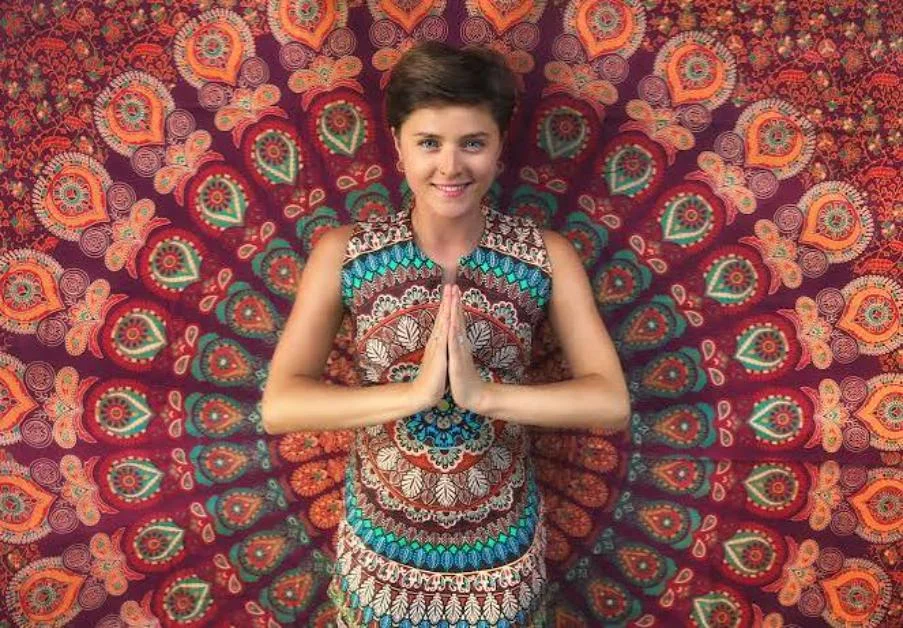
Yes, Namaste remains widely recognizable and is still used in both real-life and online communication.
Its online presence is especially noticeable in conversations involving:
- Indian culture
- South Asian culture
- Yoga
- Meditation
- Wellness
- Travel
- Spirituality
- Cultural education
- Greetings and celebrations
Social media has also made the word familiar to people who may never have used it in daily conversation.
The rise of emojis has helped reinforce its visual association with the folded-hands symbol 🙏. However, it is important to remember that the emoji has meanings beyond Namaste.
Online usage also varies by audience.
Someone posting a yoga video may use Namaste in a serious and respectful way. A friend may type “Namaste 😂” simply as a joke. A traveler may use it to show appreciation for a culture they are visiting.
So, the word has moved comfortably between traditional and modern communication.
It is also useful to separate popularity from meaning. The fact that Namaste appears frequently online does not create a new official definition. Its traditional meaning remains the foundation.
In digital communication, it generally continues to work as a greeting or expression of respect.
For SEO content, this is also why the phrase “Namaste meaning” can be useful as a search topic. People may encounter the word in many different contexts and want a quick explanation of what it means.
The best answer remains simple:
Namaste is a respectful greeting with Sanskrit roots, commonly understood as “I bow to you” or “salutations to you.”
Frequently Asked Questions
What does Namaste mean?
Namaste is a traditional greeting with Sanskrit roots. It is commonly understood as a respectful salutation and is often translated as “I bow to you.”
Is Namaste a full form?
No. Namaste is not an acronym, so it does not have an official English full form.
What does Namaste mean in text?
In text messages, Namaste usually means hello, greetings, respect, or goodwill. The exact tone depends on the conversation.
What does Namaste 🙏 mean?
“Namaste 🙏” usually represents a respectful greeting. The folded-hands emoji can also mean thanks, prayer, gratitude, or respect, depending on context.
How do you reply to Namaste?
The easiest reply is “Namaste 🙏.” You can also say “Namaskar,” “Hello,” or “Namaste! How are you?”
Is Namaste a religious word?
Namaste can have spiritual or religious significance, but it is also used as an everyday greeting. Its meaning depends on the context and the person using it.
What is the difference between Namaste and Namaskar?
Namaste and Namaskar are closely related respectful greetings. Their use can vary by region, language, and situation.
Is Namaste only used in India?
No. Namaste is widely recognized outside India and may be used around the world, especially in yoga, travel, wellness, cultural, and online settings.
Does Namaste mean “hello”?
Yes, “hello” is a simple way to explain its everyday use. However, Namaste can carry an additional sense of respect or salutation.
Can I use Namaste in a text message?
Yes. You can use Namaste in a text message when greeting someone or expressing respect. For example: “Namaste 🙏 Hope you’re doing well!”
Conclusion:
The Namaste meaning is simple at first glance but has a much richer history. Namaste is a traditional Sanskrit-derived greeting commonly understood as a respectful salutation or “I bow to you.”
It can mean hello in everyday conversation while also expressing respect, goodwill, gratitude, or peace depending on the setting.
Today, people use Namaste in face-to-face conversations, yoga classes, cultural events, WhatsApp messages, Instagram posts, TikTok videos, and other online spaces.
It is not an acronym and does not have an official English full form.
If someone sends you “Namaste 🙏,” the easiest response is “Namaste 🙏” back. When used naturally and respectfully, the word remains a simple way to greet another person while carrying a long cultural tradition.
