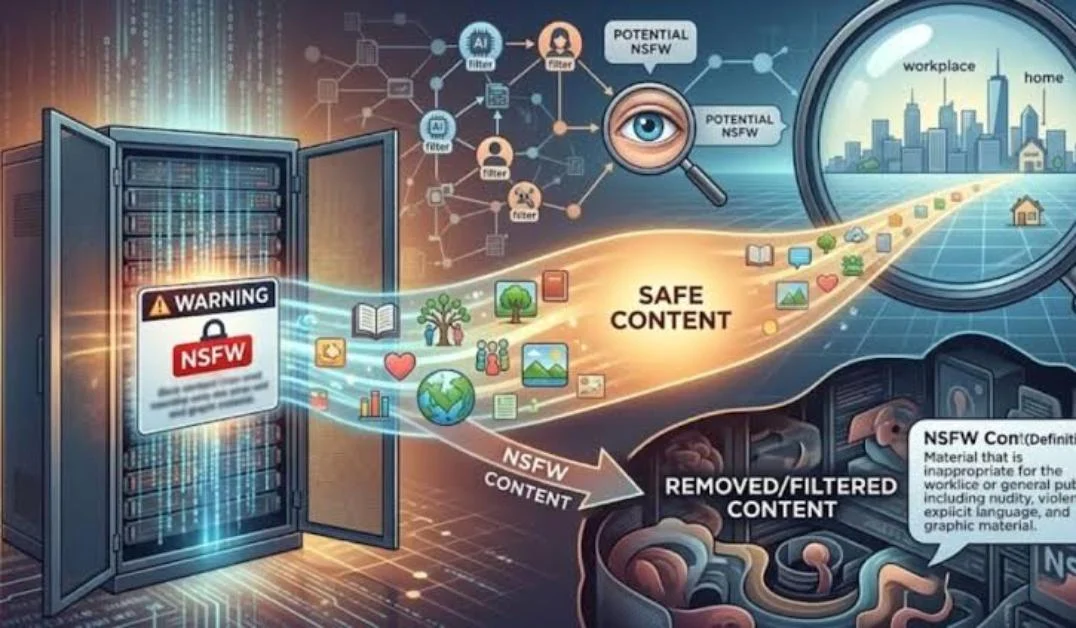
If you have seen “SFW” in a text message, social media post, meme, or online conversation, you may wonder what it means.
The SFW meaning in text is usually “Safe for Work.” People use this abbreviation to tell others that a photo, video, joke, link, or piece of content is generally suitable to view in a workplace or public setting.
You may come across SFW on platforms such as WhatsApp, Instagram, TikTok, Snapchat, Reddit, Discord, and other online communities.
It is especially useful when people share content that could have different levels of appropriateness.
Understanding SFW is simple once you know the basic idea. In this guide, we will explain what SFW means, where it came from, how people use it, what it means on different platforms, and how you can reply when someone uses it.
What Does SFW Mean in Text & Chat?

SFW means “Safe for Work” in text and online chat. It is used to describe content that is considered appropriate to open or view in a professional or public environment.
The phrase does not always mean that the content is formal or business-related. Instead, it usually suggests that the content does not contain material that could be embarrassing, sexually explicit, extremely violent, or otherwise unsuitable for a workplace.
For example, imagine that a friend sends you a link while you are sitting at work. They might write:
- “This video is SFW.”
- “Don’t worry, the link is SFW.”
- “I found an SFW version of that meme.”
- “Is this SFW? 😂”
In these examples, SFW works as a quick warning or reassurance.
The exact standard for “safe” can vary from person to person. A funny meme may be SFW for one person but inappropriate in a very formal workplace. So, SFW is not a strict legal or professional rating.
You can think of it as a simple online label:
SFW = Safe to view around coworkers, family, or in public.
The opposite abbreviation is usually NSFW, which means “Not Safe for Work.” NSFW warns people that content may be sexual, graphic, offensive, or otherwise unsuitable for certain environments.
SFW is popular because typing three letters is much faster than writing “This should be safe to open at work.”
Full Form, Stands For & Short Meaning of SFW
The full form of SFW is “Safe for Work.”
Its short meaning is:
- SFW = Safe for Work
- Meaning: Suitable or generally appropriate to view in a workplace or public setting.
- Opposite: NSFW = Not Safe for Work.
- Common use: Texting, social media, forums, messaging apps, and online communities.
The word “safe” in SFW does not necessarily mean that the content is completely harmless. It mainly refers to whether the content is appropriate for viewing around coworkers or in professional surroundings.
For instance, someone might send a funny picture and say, “SFW 😂.” They are telling you that the picture should not contain anything embarrassing or inappropriate.
You may also see SFW used before a link:
- “SFW link.”
- “This one is SFW.”
- “I made a SFW version.”
- “SFW meme coming up.”
Sometimes people use SFW as a category or filter. A website or online community may separate content into SFW and NSFW sections so users can choose what they want to see.
It is also common to see the abbreviation written in capital letters because it is an initialism. However, informal internet conversations may use lowercase forms such as “sfw.”
The easiest way to remember the SFW meaning in text is:
SFW tells you that content is generally okay to view in a work or public environment.
If you see NSFW, think of it as the warning label that means the opposite.
Quick Example
- Friend: “Check out this meme. It’s SFW.”
- You: “Perfect, I’m at work 😂.”
Origin, History & First Known Use of SFW
The abbreviation SFW developed alongside internet culture and the growing need to label online content. As people began sharing images, videos, jokes, links, and other media through forums, email, chat rooms, and social platforms, users needed a quick way to warn others about potentially inappropriate material.
The more widely recognized related term is NSFW, meaning “Not Safe for Work.” SFW naturally developed as its positive counterpart.
The idea behind these labels became especially useful as internet users started accessing online content from workplaces, schools, libraries, and other shared environments. A person might want to browse entertainment or social content without unexpectedly opening something embarrassing or inappropriate in front of coworkers.
Rather than writing a long warning, users could simply add “NSFW” or “SFW.”
Over time, these abbreviations became part of everyday internet language.
Today, SFW can appear in:
- Online forums
- Messaging apps
- Social media
- Discord communities
- Reddit discussions
- Meme groups
- Email conversations
- Workplace chats
- Content-sharing websites
There is not one single moment when SFW suddenly became popular. Internet slang usually develops gradually as communities adopt convenient expressions. SFW became useful because it solved a simple communication problem: How can I quickly tell someone whether content is appropriate to open right now?
Its meaning has remained fairly stable even as the internet has changed.
You may now see SFW alongside newer labels, content warnings, age ratings, and platform-specific safety tools. Even with these newer systems, the abbreviation remains easy to understand because its basic message is straightforward.
How People Use SFW in Daily Conversations

People use SFW in casual conversations whenever they want to describe the nature of content before someone views it.
It is most often used when sharing something that could potentially raise a question about whether it is appropriate.
For example, a friend might send you a strange-looking link and say:
- “It’s SFW, I promise.”
- “SFW version here.”
- “This meme is SFW 😂.”
- “Can I send you something SFW?”
- “The original was NSFW, but I found an SFW edit.”
SFW can therefore work as both a warning and a reassurance.
It is also useful when people are working or studying. Someone may want to share a funny video without causing an awkward situation if a manager, teacher, parent, or coworker happens to see the screen.
Natural Chat Examples
- Friend: “Want to see the video?”
- You: “Is it SFW?”
- Friend: “Yep, totally SFW.”
Another example:
- A: “I found a hilarious meme.”
- B: “Send it!”
- A: “SFW, so you’re good 😂.”
Sometimes people use SFW jokingly. A person may label something “SFW” even though it is simply silly, weird, or mildly embarrassing.
The meaning can also depend on the group. In a professional conversation, SFW may be used more seriously. Among friends, it may simply be a playful content label.
One important point is that SFW does not guarantee that everyone will like the content. It only suggests that the content is generally suitable for viewing in a public or work setting.
SFW Meaning Across WhatsApp, Instagram, TikTok & Snapchat
The SFW meaning in text generally stays the same across WhatsApp, Instagram, TikTok, and Snapchat: Safe for Work.
What changes is how people use the abbreviation.
On WhatsApp, friends may use SFW before sending a picture, video, meme, or link.
- “SFW 😂”
- “This one is SFW.”
- “Sending the SFW version.”
Because WhatsApp is often used for personal and group conversations, SFW can act as a quick reassurance.
On Instagram, SFW may appear in direct messages, captions, comments, or conversations about posts.
Someone might say:
“The reel is SFW, you can watch it at work.”
Instagram users may also use the term when discussing different versions of an image or video.
TikTok
TikTok content can cover almost any subject, so users may use SFW when recommending a video to someone who wants something appropriate for public viewing.
For example:
- “This TikTok is SFW 😂.”
- “Finally found an SFW version.”
Snapchat
On Snapchat, SFW may appear in direct messages when someone wants to tell a friend that a snap is safe to open around other people.
Across all four platforms, the basic meaning remains unchanged.
SFW = Safe for Work.
The abbreviation is not specific to any one social media platform.
Different Meanings of SFW in Other Fields
Although SFW most commonly means “Safe for Work” online, abbreviations can have different meanings in specialized fields.
This is why context matters.
In everyday texting, social media, and internet slang, SFW almost always refers to content that is suitable for a workplace or public environment. However, technical industries, organizations, and professional documents may use the same letters differently.
For example, a company, software project, academic subject, or organization could use SFW as an internal abbreviation. The meaning would depend on that specific field.
When you see SFW in a casual message such as:
“This photo is SFW.”
the meaning is almost certainly Safe for Work.
But if you see SFW inside a technical report or professional document, do not automatically assume it has the internet slang meaning.
How to Identify the Correct Meaning
Look at the words around the abbreviation.
- “Is this SFW?” → probably Safe for Work.
- “SFW meme” → Safe for Work.
- “SFW version” → likely a suitable version of content.
- SFW in a technical report → may have another meaning.
This is a useful rule for understanding almost any abbreviation online.
Context is the key.
If the conversation involves pictures, videos, jokes, memes, links, or social media, SFW almost certainly means “Safe for Work.”
Common Confusions, Mistakes & Wrong Interpretations
One common mistake is thinking that SFW means the content is completely harmless or appropriate for everyone.
That is not necessarily true.
SFW means “Safe for Work,” not “safe for every person in every situation.”
For example, something could be SFW but still contain a controversial opinion, mild language, political discussion, or a joke that someone personally dislikes.
Another common confusion is mixing up SFW and NSFW.
Remember:
- SFW = Safe for Work
- NSFW = Not Safe for Work
The “N” changes the meaning completely.
People may also assume that SFW is an official rating system. It usually is not. It is an informal internet label. Different people and communities may have different ideas about what qualifies as safe for work.
Common Mistakes
- Thinking SFW means “safe for everyone.”
- Confusing SFW with NSFW.
- Assuming SFW is an official content rating.
- Using SFW without considering the audience.
- Assuming that every platform uses the label in exactly the same way.
If someone tells you that something is SFW, they are usually giving you a practical heads-up rather than making a formal guarantee.
When in doubt, you can simply ask:
“SFW as in safe to open at work?”
That makes the meaning clear.
Similar Terms, Alternatives & Related Slang
SFW belongs to a larger group of internet abbreviations used to describe online content.
The most important related term is NSFW, which means “Not Safe for Work.”
Here are some related expressions:
- SFW — Safe for Work
- NSFW — Not Safe for Work
- PG — Generally mild or suitable for a broad audience
- PG-13 — May contain material unsuitable for younger audiences
- 18+ — Intended for adults
- Content warning — A notice about potentially sensitive material
- CW — Content Warning
- TW — Trigger Warning
These terms are not perfect substitutes for one another.
For example, SFW specifically focuses on whether something is suitable to view in a workplace or public setting. A content warning may instead focus on a particular subject, such as violence, disturbing imagery, or sensitive topics.
Internal Linking Suggestions
For an abbreviation-focused website, you could naturally link SFW to related pages such as:
- What Does NSFW Mean in Text?
- What Does BTW Mean in Text?
- What Does FYI Mean in Text?
- What Does IMO Mean in Text?
- What Does TBH Mean in Text?
- What Does LOL Mean in Text?
- What Does IDK Mean in Text?
- What Does IRL Mean in Text?
These internal links can help readers discover related slang without forcing keywords into every paragraph.
Examples of SFW in Real Chat Situations
Seeing SFW in real conversations makes the meaning much easier to remember.
Example 1: Sharing a Meme
- Alex: “I found the funniest meme 😂”
- Sam: “Send it.”
- Alex: “It’s SFW, don’t worry.”
- Meaning: The meme should be appropriate to view around coworkers.
Example 2: Asking Before Opening a Link
- You: “What’s that link?”
- Friend: “Just a video.”
- You: “SFW?”
- Friend: “Yep 👍”
Here, the person is asking whether it is safe to open the video in a public or professional setting.
Example 3: Sending an Alternative Version
- A: “The original image is NSFW.”
- B: “Do you have an SFW version?”
- A: “Yep, sending it now.”
Here, SFW describes a version that has been edited or selected to be more appropriate.
Example 4: Workplace Chat
- Coworker: “I found a funny clip for the team.”
- You: “Is it SFW?”
- Coworker: “Definitely 😂”
The question is simply checking whether the clip is suitable for a professional group.
Example 5: Social Media
- Friend: “This TikTok is hilarious and SFW.”
- You: “Okay, I’ll watch it now.”
In every example, SFW gives the same basic message: the content should be appropriate to view around other people, including coworkers.
How to Reply When Someone Says SFW
Your response depends on why the person used SFW.
If they say “This is SFW,” you can simply acknowledge it.
Simple Replies
- “Perfect, thanks!”
- “Good to know 👍”
- “Awesome, send it.”
- “Nice 😂”
- “Okay, I’ll check it out.”
- “Thanks for the warning!”
If you are unsure what they mean, ask for clarification:
- “SFW as in safe for work?”
- “You mean it’s okay to open here?”
- “No NSFW stuff?”
If someone asks “Is this SFW?”, you can answer directly:
- “Yes, it’s SFW.”
- “Yep, totally safe.”
- “Probably not 😂.”
- “I’d wait until you’re somewhere private.”
The best reply is usually short because SFW itself is a quick internet abbreviation.
If you are talking to someone who may not know internet slang, it can also help to avoid abbreviations and say:
“Yes, it’s safe to view at work.”
That removes any possible confusion.
Is SFW Still Popular? Trends & Online Usage
Yes, SFW is still understood and used in online conversations, especially when people discuss links, images, videos, memes, forums, and social media content.
However, the way people communicate online keeps changing. Younger users may sometimes use plain language instead of abbreviations. Someone might say “safe to open” or “nothing inappropriate” rather than typing SFW.
Even so, SFW remains useful because it is short and widely recognizable among internet users.
Its popularity is also connected to the continuing need for content warnings. People access social media and messaging apps from many different places, including offices, schools, public transportation, and shared spaces. A quick SFW label can help prevent an awkward situation.
You may see it used alongside NSFW, content warnings, age labels, and other informal tags.
Why SFW Remains Useful
- It is short and easy to type.
- Most internet users can understand it from context.
- It gives a quick content warning.
- It works across many platforms.
- It is useful when sharing links or media.
- It pairs naturally with the opposite term, NSFW.
SFW may not appear in every conversation, but its meaning remains fairly stable.
If you see SFW today in a message about a meme, image, video, or link, the safest interpretation is still “Safe for Work.”
Frequently Asked Questions
What does SFW mean in texting?
SFW means “Safe for Work.” It tells you that the content is generally suitable to view in a workplace or public setting.
What does SFW mean on Instagram?
On Instagram, SFW usually means Safe for Work. People may use it when describing a reel, image, post, or message that is suitable to view around coworkers or other people.
What is the opposite of SFW?
The opposite of SFW is NSFW, which means “Not Safe for Work.” It is commonly used as a warning for content that may be inappropriate for a workplace or public environment.
Does SFW mean safe for everyone?
No. SFW does not necessarily mean content is suitable for every person or every situation. It mainly means the content is generally appropriate for viewing at work or in public.
Is SFW a bad word?
No. SFW is simply an abbreviation for Safe for Work. It is commonly used as an informal content label.
What does SFW mean in a message?
In a message, SFW usually tells you that a photo, video, link, joke, or other content is appropriate to open around coworkers or in a public place.
Why do people say SFW before sending a link?
People use SFW to reassure the receiver that the link should not contain embarrassing, explicit, or otherwise inappropriate material.
Is SFW the same as PG?
Not exactly. SFW focuses on suitability for a workplace or public environment, while PG is a content-rating term. They can overlap, but they do not have exactly the same meaning.
Conclusion:
The SFW meaning in text is simple: SFW stands for “Safe for Work.” People use it online to tell others that a photo, video, meme, link, joke, or other content is generally appropriate to view in a workplace or public setting.
You can find SFW in messages, forums, social media posts, and online communities. It is especially common when someone wants to give a quick warning before sharing content. Its opposite, NSFW, tells you that content may not be suitable for work or public viewing.
Remember that SFW is an informal label, not a guarantee that everyone will consider the content appropriate.
When you see it in a casual online conversation, though, “Safe for Work” is almost always the intended meaning.
Once you know SFW, you can easily understand phrases such as “SFW meme,” “SFW version,” and “Is this SFW?” without guessing what the sender means.
