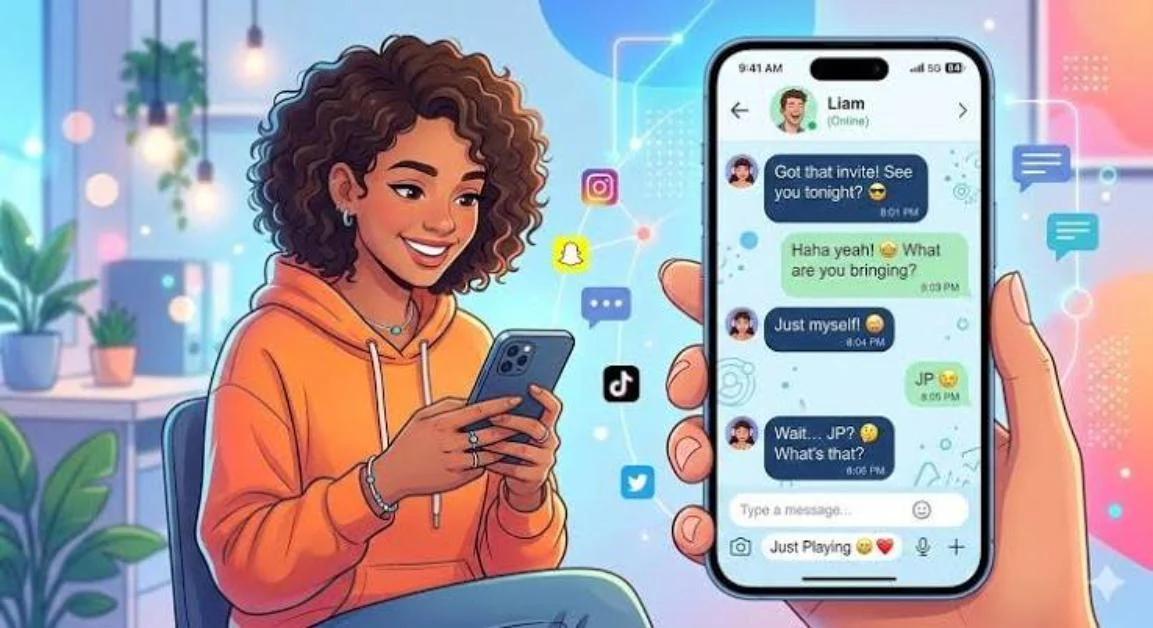
If you have received a message containing “JP”, you may have wondered what those two letters mean.
Is it slang, a joke, a person’s initials, or something else? The JP meaning in text usually depends on the conversation around it.
In casual texting, JP commonly means “Just Playing.” It tells someone that the previous comment was meant as a joke, tease, or playful remark rather than a serious statement.
People search for JP meaning because short forms are now common in text messages, WhatsApp chats, Instagram DMs, TikTok comments, Snapchat messages, and online communities.
The tricky part is that JP can also have other meanings in different situations.
In this guide, you will learn what JP means, where it comes from, how people use it, what it means on popular social apps, and how to reply naturally.
What Does JP Mean in Text & Chat?
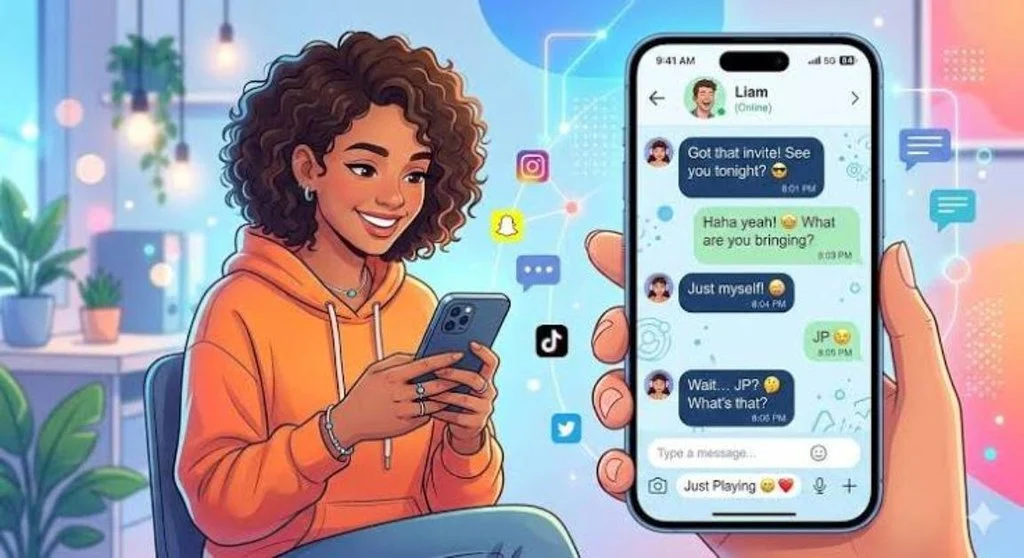
In casual text and chat, JP usually means “Just Playing.” It is a short way to tell someone that you are joking, teasing, exaggerating, or simply not being serious.
Think of JP as a small signal that helps explain your tone.
For example:
- “You have to buy dinner for everyone. JP 😂”
- “I’m blocking you right now. JP 😭”
- “Your singing is terrible, JP 😂”
- “I already ate your fries. JP!”
In each example, the sender is not necessarily making a serious statement. The JP tells the reader to take the previous words lightly.
This is useful because text messages do not have the facial expressions, voice tone, or body language that we normally use in face-to-face conversations. A sentence that sounds funny when spoken can look serious when written.
JP in simple words
- JP = Just Playing
- It usually means “I’m joking.”
- It can mean “I’m only teasing you.”
- It may soften a sarcastic comment.
- It is generally casual and informal.
- The exact meaning always depends on context.
JP is not as universally recognized as abbreviations such as LOL, BRB, IDK, or JK, so not everyone will understand it immediately. If you are talking to someone who may not know the abbreviation, writing “just kidding” or “I’m joking” can be clearer.
The best way to understand JP is to look at the sentence before it. If that sentence sounds playful or exaggerated, “Just Playing” is usually the most natural interpretation.
Full Form, Stands For & Short Meaning of JP
The most common texting full form of JP is “Just Playing.”
In this use, “playing” does not necessarily mean playing a sport or video game. It means playing around, joking, or teasing someone.
JP full form
- J = Just
- P = Playing
- JP = Just Playing
A simple definition would be:
JP means that the speaker was not being completely serious about what they just said.
For example:
- “You owe me $500 for that coffee. JP 😂”
- “I’m never speaking to you again. JP.”
- “You are officially banned from my house. JP 😅”
The phrase can serve almost the same purpose as “just kidding” or “I’m joking.”
However, JP does not always mean “Just Playing.” The abbreviation can have different meanings when the subject changes.
For example:
- Japan — in travel, gaming, geography, or regional discussions.
- Justice of the Peace — in legal or formal contexts.
- Personal initials — when referring to someone named with J.P.
- Japanese/Japan-related shorthand — in some online communities.
- Specialized abbreviations — in professional, technical, or hobby-related conversations.
This is why you should not automatically translate every JP as “Just Playing.” Context is the key.
If someone says, “JP is coming to the party,” they are probably talking about a person whose initials are JP.
If someone says, “Choose JP server,” the meaning may relate to Japan rather than texting slang.
So, the short answer is JP = Just Playing in casual texting, but the surrounding words determine whether that meaning makes sense.
Origin, History & First Known Use of JP
The exact first use of JP as texting slang is difficult to pin down. There is no single confirmed person or date that can be credited with inventing it.
What we can say is that JP belongs to a larger tradition of online abbreviations. As internet chat, instant messaging, SMS, forums, and gaming communities became popular, people began shortening common expressions to make conversations faster.
Abbreviations such as LOL, BRB, IDK, BTW, and JK became part of online communication. JP follows the same basic idea: take a longer phrase and reduce it to a few letters.
The phrase “just playing” itself is older than texting. People have long used phrases such as “I’m just playing” or “I’m only playing” after teasing someone. Digital communication simply made it possible to shorten the expression.
Early online conversations also created a need for short tone markers. Without a voice or facial expression, a joke could easily be misunderstood.
For example:
“You are the worst friend ever.”
That sentence could sound genuinely angry.
But:
“You are the worst friend ever 😂 JP.”
has a much more playful feel.
This helps explain why abbreviations like JP became useful in casual online communication.
Current slang references identify “Just Playing” as a texting meaning of JP, while also warning that it can have other meanings depending on context.
It is also important not to claim that JP has always been a major or universally popular abbreviation. Compared with highly established slang such as JK, JP is relatively less familiar to many users.
So its history is best understood as part of the broader development of short, informal digital language, rather than as a slang term with one clearly documented invention date.
How People Use JP in Daily Conversations
People generally use JP when they want to make a playful comment without having the other person take it literally.
It can appear at the end of a message, after a joke, or as a quick follow-up to something that might otherwise sound serious.
Example 1: Friendly teasing
- “Your cooking is dangerous 😂 JP.”
Here, the sender is probably teasing the other person rather than seriously criticizing their cooking.
Example 2: A fake threat
- “I’m deleting your number right now. JP 😭”
The first sentence sounds serious, but JP changes the intended tone.
Example 3: Playful exaggeration
- “I’m the best gamer alive. JP 😂”
The sender is making a humorous claim rather than seriously declaring themselves the world’s best gamer.
Example 4: A harmless prank
- “I told Mom you broke the TV. JP 😂”
The sender reveals that the statement was not true.
Why people use JP
JP can help with:
- Making a joke clearer.
- Showing that teasing is friendly.
- Reducing the chance of a message sounding harsh.
- Keeping a conversation relaxed.
- Signaling that an exaggerated statement should not be taken literally.
However, JP does not automatically make every joke acceptable. A sensitive comment can still hurt someone’s feelings even when followed by “JP.”
The relationship between the people matters too. A joke between close friends may sound very different from the same joke sent to a stranger or coworker.
For that reason, JP works best in casual conversations where both people already understand each other’s sense of humor.
JP Meaning Across WhatsApp, Instagram, TikTok & Snapchat
The basic JP meaning in text does not usually change just because you move from one social platform to another. When used as casual slang, it can still mean “Just Playing.”
However, each platform has a slightly different communication style.
JP on WhatsApp
WhatsApp conversations often involve friends, family, classmates, and coworkers.
Example:
- “I’m not coming to your birthday party. JP 😂”
The sender is likely saying that they are joking.
JP on Instagram
Instagram DMs and comments often use short slang expressions.
Example:
- “That outfit is illegal 😂 JP.”
Here, JP can show that the dramatic statement is playful.
JP on TikTok
TikTok comments often contain jokes, sarcasm, and exaggerated reactions.
Example:
- “I’m deleting TikTok after this video. JP 😭”
The abbreviation tells readers that the statement is not meant literally.
JP on Snapchat
Snapchat is highly casual and often relies on quick messages, photos, and reactions.
Example:
- “I’m exposing your embarrassing photo 😂 JP.”
Again, JP can signal that the sender is only teasing.
Important point
There is no need to assume that JP has an official platform-specific definition. It is better to read the entire message.
If a Snapchat message says:
“JP is coming over.”
JP could be someone’s initials.
If a TikTok comment says:
“You actually believed me? JP 😂”
it is much more likely to mean “Just Playing.”
So, the platform can provide clues, but the conversation itself is more important than the app.
Different Meanings of JP in Other Fields
Although “Just Playing” is the main meaning discussed in casual texting, JP can mean completely different things in other fields.
This is one reason context matters so much.
1. Japan
JP can be used as a short country or regional reference in certain online, technical, gaming, shopping, and travel contexts.
For example:
- “The JP version has different features.”
- “Try the JP server.”
Here, JP is related to Japan, not “Just Playing.”
2. Justice of the Peace
In legal and formal settings, JP can stand for Justice of the Peace. This is a completely different meaning from internet slang.
For example:
- “The document needs to be witnessed by a JP.”
A legal context makes the intended meaning much easier to identify.
3. Personal initials
JP can simply be someone’s initials.
For example:
- “JP called me this morning.”
- “Ask JP if he is joining us.”
Here, there is no slang meaning at all.
4. Japan-related abbreviations
In gaming, entertainment, software, or product discussions, JP may identify a Japanese version, region, server, or release.
For example:
- “The JP release is available first.”
The easiest way to choose the correct meaning
Ask yourself:
- Is someone joking? → Just Playing
- Is the conversation about a person? → Possibly initials
- Is it about a country or region? → Possibly Japan
- Is it a legal conversation? → Justice of the Peace
- Is it a specialized topic? → Check the surrounding terminology
Never force the slang definition when the sentence clearly points toward another meaning.
Common Confusions, Mistakes & Wrong Interpretations
The biggest problem with JP meaning in text is that two letters can be unclear without context.
One common mistake is assuming that JP always means “Just Playing.” It does not.
For example:
“JP will meet us at 7.”
This probably refers to a person.
Another common mistake is confusing JP with JK.
- JP = Just Playing
- JK = Just Kidding
Both can signal a joke, but they are not the same abbreviation.
Another issue is assuming JP automatically means that someone is being friendly. The abbreviation only tells you how the sender says they intended the comment. It does not guarantee that the joke will feel funny to the receiver.
Common mistakes to avoid
- Assuming JP always means “Just Playing.”
- Treating JP as a formal abbreviation in casual slang.
- Confusing JP with JK.
- Reading too much into JP when it follows a flirtatious message.
- Assuming JP proves someone is flirting.
- Using JP in a serious professional message.
- Ignoring the sentence surrounding the abbreviation.
For example:
“You are so annoying. JP 😂”
could be friendly teasing between close friends.
But the same sentence from someone you barely know might still feel rude.
Another mistake is assuming that every short abbreviation has one universal definition. Internet slang changes across communities, countries, age groups, and platforms.
When you are unsure, the safest response is simple:
- “What do you mean by JP?”
- “JP as in just playing?”
- “Wait, what does JP mean here? 😅”
A quick clarification is better than replying based on the wrong meaning.
Similar Terms, Alternatives & Related Slang
If someone uses JP to mean “Just Playing,” several other expressions can communicate a similar idea.
JK
JK means “Just Kidding.”
Example:
- “I hate your new haircut. JK 😂”
This is probably the closest common alternative to JP.
Just kidding
This is the full phrase behind JK.
Example:
- “I’m taking your fries. Just kidding 😂”
It is clearer than JP when you are unsure whether the other person knows the abbreviation.
I’m joking
This is another simple alternative.
- “I’m joking 😅”
- “Relax, I’m joking.”
Just messing with you
This phrase is common when someone is teasing another person.
- “You actually believed me? I’m just messing with you 😂”
LOL
LOL usually means “laughing out loud.” It does not directly mean “I was joking,” but it can make a message feel lighter.
Related slang at a glance
- JP — Just Playing
- JK — Just Kidding
- LOL — Laughing Out Loud
- LMAO — Laughing Very Hard
- TBH — To Be Honest
- IDK — I Don’t Know
- BTW — By The Way
- LMK — Let Me Know
If you want maximum clarity, use the full phrase instead of relying on slang.
For example, “I’m just kidding 😂” is much easier for everyone to understand than an abbreviation that someone may never have seen before.
For internal SEO linking, useful related pages could include:
- [JK meaning in text]
- [LOL meaning in text]
- [LMAO meaning in text]
- [IDK meaning in text]
- [TBH meaning in text]
- [BTW meaning in text]
- [Texting abbreviations and slang]
These links can help readers move naturally between related abbreviation guides without forcing keywords into the article.
Examples of JP in Real Chat Situations
Seeing JP in realistic conversations makes the meaning much easier to understand.
Example 1: Friends joking
Alex: You have to pay for my dinner tonight.
Sam: Why me? 😂
Alex: Because I said so. JP 😭
Meaning: Alex is only joking.
Example 2: Playful insult
Alex: Your music taste is awful.
Sam: Wow 😭
Alex: JP 😂
Meaning: The insult was intended as friendly teasing.
Example 3: Fake bad news
Alex: I lost your favorite hoodie.
Sam: WHAT?!
Alex: JP 😅 It’s right here.
Meaning: Alex was pretending to have lost the hoodie.
Example 4: TikTok comment
User 1: I’m deleting this app after watching that.
User 2: 😂
User 1: JP.
Meaning: The person is exaggerating for humor.
Example 5: Snapchat
Friend: I’m posting that picture of you.
You: Don’t you dare 😭
Friend: JP 😂
Meaning: The friend is teasing you.
Example 6: Possible different meaning
Person A: Is JP coming to the meeting?
Person B: Yes, he said he would.
Here, JP is probably someone’s initials, not “Just Playing.”
Example 7: Japan-related context
Gamer: Which server are you using?
Friend: JP server.
Here, JP likely refers to the Japan/Japanese region, because the conversation is about servers.
The lesson is simple: look at the words around JP before deciding what it means.
How to Reply When Someone Says JP
If someone sends JP after making a joke, your reply can be just as casual.
You do not always need to explain anything.
Friendly replies
- “Haha, I knew you were joking 😂”
- “You got me 😭”
- “Very funny 😂”
- “I almost believed you!”
- “Bro, you had me worried 😭”
- “Okay, okay 😂”
- “I knew it!”
If you did not understand JP
You can simply ask:
- “JP means just playing?”
- “What does JP mean here? 😅”
- “Wait, were you joking?”
This is especially useful if the conversation is with someone you do not know well.
If the joke was confusing
Try:
- “I wasn’t sure if you were serious 😂”
- “You need to give me a warning next time!”
- “For a second, I believed you 😭”
If JP appears in a serious context
Do not automatically treat it as “Just Playing.”
For example:
“JP will send the documents.”
A better response would be:
“Do you mean JP the person?”
Context should guide your response.
If someone uses JP while flirting
Do not assume that JP itself means they like you.
For example:
“You’re actually cute. JP 😂”
This could be playful flirting, ordinary teasing, or simply a joke. The rest of the conversation matters more than the abbreviation itself.
Is JP Still Popular? Trends & Online Usage

JP is still used in casual online conversations, but it is important to put its popularity into perspective.
Unlike very established abbreviations such as LOL, OMG, IDK, BRB, and JK, JP is not equally familiar to every internet user. Current slang references describe “Just Playing” as a texting meaning, while also noting that it can be relatively uncommon and context-dependent.
This means you may see JP in one online community often and rarely see it somewhere else.
Its use makes sense in fast conversations because two letters are quicker than typing:
“I’m only joking.”
Social media also encourages short messages, quick reactions, and informal language. That environment gives abbreviations like JP a natural place.
However, slang changes quickly. A term that feels normal to one group may seem unfamiliar to another.
Where JP may appear
- Private text messages
- WhatsApp chats
- Instagram DMs
- Snapchat
- TikTok comments
- Gaming chats
- Discord conversations
- Informal online communities
Why people still use short forms
- They save typing time.
- They make messages feel casual.
- They fit fast conversations.
- They can add personality.
- They help show tone.
Still, clarity is more important than being short. If you think the person may not know JP, simply write “just kidding” or “I’m joking.”
That is often the better choice.
FAQs
What does JP mean in text?
JP usually means “Just Playing” in casual texting. It tells the reader that a previous statement was meant as a joke, tease, or playful comment.
Does JP mean just kidding?
Not exactly. JP normally stands for “Just Playing,” while JK stands for “Just Kidding.” However, both can serve a similar purpose by showing that someone is not being serious.
What does JP mean on WhatsApp?
On WhatsApp, JP can mean “Just Playing” when it follows a joke or teasing comment. The exact meaning still depends on the conversation.
What does JP mean on Instagram?
In Instagram DMs or comments, JP can be used as casual slang for “Just Playing.” It may also have another meaning if the discussion is about a person, country, or specialized subject.
What does JP mean on TikTok?
On TikTok, JP may be used after a playful or exaggerated comment to show that the person is joking. It does not have to be a TikTok-specific abbreviation.
What does JP mean on Snapchat?
On Snapchat, JP can mean “Just Playing” when used after teasing or joking. Look at the message before JP to understand the intended meaning.
Is JP the same as JK?
They are similar but not identical. JP means “Just Playing,” while JK means “Just Kidding.” Both can be used to show that a statement was not serious.
Can JP mean Japan?
Yes. In travel, gaming, regional, product, or country-related contexts, JP can refer to Japan. Context determines whether it means Japan or “Just Playing.”
Can JP mean a person’s name?
Yes. JP can be someone’s initials. For example, “JP is waiting outside” probably refers to a person rather than texting slang.
Does JP mean someone is flirting?
Not by itself. JP only tells you something about the tone of the message. Whether someone is flirting depends on the wider conversation, relationship, and other signals.
Is JP appropriate for professional messages?
Usually, it is better to avoid slang abbreviations such as JP in formal emails or important professional communication. Writing “I’m joking” or another clear phrase is safer.
Conclusion:
The JP meaning in text is usually “Just Playing.” In casual chats, people use it to show that a previous statement was meant as a joke, tease, exaggeration, or playful comment.
It works in much the same conversational space as “just kidding” or “I’m joking,” although JP is less universally understood than some older texting abbreviations.
At the same time, JP does not always mean “Just Playing.” It can refer to Japan, someone’s initials, Justice of the Peace, or another term depending on the subject.
The easiest rule is to check the context. If JP appears directly after a funny or exaggerated statement, “Just Playing” is probably the right meaning.
If the conversation is about a person, country, law, gaming, or another specialized topic, consider the alternative meanings fi
