Have you ever received a message that simply says “WTH?” and wondered what those three letters mean? If so, you are not alone.
Short forms are everywhere in texting and social media, and new slang can be confusing when you see it for the first time.
The WTH meaning in text is usually “What the hell?” or “What the heck?” People use it to show surprise, confusion, disbelief, shock, or mild frustration. The exact meaning depends on the person and the conversation.
WTH is common in casual messages, comments, group chats, gaming conversations, and social media. It is short, expressive, and easy to type.
However, it is informal, so it is not a good choice for every situation.
In this guide, you will learn what WTH means, where it came from, how people use it, what it means on popular apps, and how to reply when someone sends it.
What Does WTH Mean in Text & Chat?
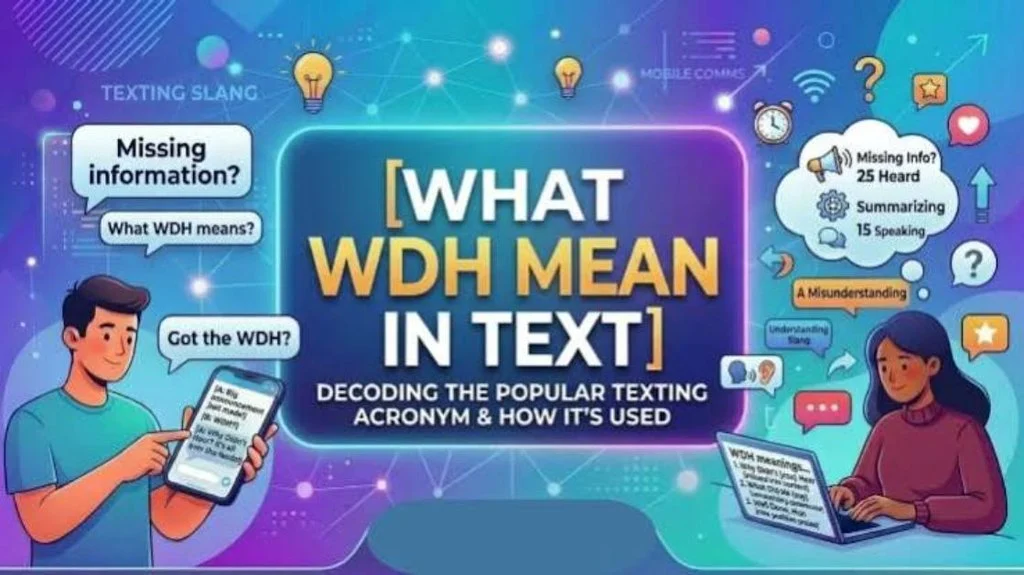
In text messages and online chats, WTH usually means “What the hell?” or “What the heck?” It is an informal reaction used when something seems surprising, confusing, strange, unbelievable, or annoying.
The two possible phrases have slightly different levels of intensity:
- What the heck? — milder and more family-friendly.
- What the hell? — stronger and more expressive.
- WTH? — short, casual, and dependent on context.
For example, imagine your friend tells you that they accidentally deleted an important file.
Friend: “I deleted the whole project by mistake.”
You: “WTH?! 😭”
Here, WTH does not necessarily mean you are angry. You may simply be shocked by what happened.
WTH can also appear inside a sentence:
- “WTH is going on?”
- “WTH happened here?”
- “WTH are you doing? 😂”
- “WTH, I cannot believe you did that.”
- “WTH was that?”
The emotional meaning changes with the situation. A message such as “WTH 😂” may sound playful. Meanwhile, “WTH are you doing?” can sound annoyed.
Another important point is that WTH is usually not meant as a literal question. It often works as an emotional reaction. Someone may type it because they are surprised rather than because they genuinely expect a detailed answer.
That is why understanding the surrounding conversation is important.
Full Form, Stands For & Short Meaning of WTH
The most common full forms of WTH in texting are:
- What the hell
- What the heck
Both versions communicate a similar idea, but “what the heck” is generally softer. Online slang references commonly describe WTH as a reaction to surprise, confusion, disbelief, or frustration.
WTH at a glance
| Term | Meaning | Tone |
|---|---|---|
| WTH | What the hell / What the heck | Casual |
| What the heck? | Mild surprise or confusion | Softer |
| What the hell? | Stronger surprise or frustration | More intense |
| WTH?! | Strong emotional reaction | Depends on context |
In simple English, WTH can mean “What is going on?”, “What happened?”, or “I cannot believe this.”
For example:
- “WTH is this?” = “What is this?”
- “WTH happened?” = “What happened?”
- “WTH are you doing?” = “Why are you doing that?”
- “WTH?! No way!” = “I am shocked!”
The abbreviation saves time and adds emotion at the same time.
WTH is also sometimes used as a softer alternative to WTF, which carries a much stronger and more vulgar expression. If someone wants to show surprise without using stronger profanity, WTH may feel more comfortable.
Related internal link suggestion: Link this section to your pages about [WTF Meaning in Text], [OMG Meaning in Text], and [SMH Meaning in Text].
Origin, History & First Known Use of WTH
The exact first use of WTH is difficult to pin down. Internet slang often develops informally across many chat rooms, forums, messaging services, and text conversations, so there is not always one documented person or date that can be called the inventor.
WTH became associated with the broader growth of online shorthand during the early internet and SMS era. People were becoming accustomed to shortening common phrases into a few letters. Similar abbreviations such as LOL, OMG, BRB, IDK, and WTF developed within the same broader culture of fast digital communication.
Early text messaging also encouraged short expressions because typing on older mobile phones could be slow and inconvenient. A three-letter reaction was much quicker than typing an entire phrase.
Over time, WTH moved beyond simple texting. As internet communication expanded, people began using short forms in:
- Online chat rooms
- Forums
- Instant messaging
- Gaming communities
- SMS conversations
- Social media comments
- Group chats
Its meaning also became more flexible. Some people interpret WTH as “What the hell?”, while others use it as “What the heck?” The softer version is especially useful when someone wants to express surprise without sounding too harsh.
Modern social media has helped keep abbreviations like WTH recognizable. It can now appear in captions, comments, memes, reaction posts, and private messages.
However, it would be inaccurate to claim that one specific website or platform created WTH. Its history is better understood as part of the larger development of internet and texting shorthand.
How People Use WTH in Daily Conversations
People normally use WTH when they need a quick way to react to something unexpected.
The emotion can range from simple confusion to strong disbelief. The words around WTH usually tell you which meaning is intended.
WTH for surprise
Someone may send WTH after hearing unexpected news.
- “I just won the competition.”
- “WTH?! Seriously? 😳”
Here, WTH expresses surprise.
WTH for confusion
Someone may use it when a situation does not make sense.
- “WTH is happening with the internet?”
- “WTH is this button supposed to do?”
This use is closer to asking, “What is going on?”
WTH for frustration
The abbreviation can also show annoyance.
- “WTH did you change the settings?”
- “WTH happened to my order?”
The tone is stronger in these examples.
WTH as a joke
Friends may use WTH playfully.
- “I ate the whole cake.”
- “WTH 😂 You were supposed to save me some!”
The emoji makes the message feel less serious.
WTH for disbelief
WTH can also mean that someone cannot believe what they just heard.
- “He bought another car yesterday.”
- “WTH? He just bought one last month! 😭”
The important thing is that WTH does not always mean anger. It can be funny, surprised, confused, or annoyed.
When reading it, look at the whole message rather than focusing only on the abbreviation.
WTH Meaning Across WhatsApp, Instagram, TikTok & Snapchat
The basic WTH meaning in text stays the same across most social platforms. What changes is the style and context in which people use it.
WTH on WhatsApp
On WhatsApp, WTH often appears in private chats and group conversations.
Examples:
- “WTH 😂 Did you really send that?”
- “WTH is going on in this group?”
- “WTH, you arrived already?”
Because WhatsApp conversations are often informal, WTH can sound natural between friends.
WTH on Instagram
On Instagram, you may see WTH in comments, direct messages, captions, and replies.
For example:
- “WTH is this outfit? 🔥”
- “WTH, this photo is amazing!”
- “WTH did I just see? 😂”
The meaning can be positive or negative. Context matters.
WTH on TikTok
TikTok comments often use short expressions to react quickly to unexpected videos, jokes, trends, or plot twists.
Examples include:
- “WTH did I just watch? 😭”
- “WTH was that ending?”
- “WTH 😂 I was not ready for this.”
Here, WTH is often humorous rather than genuinely angry.
WTH on Snapchat
On Snapchat, WTH can appear in direct messages, replies, or reactions to Snaps.
For example:
- “WTH happened to your hair? 😂”
- “WTH, where are you?”
- “WTH is that picture? 😭”
Because Snapchat is usually casual, slang abbreviations fit naturally into conversations.
Across all four platforms, the main idea remains the same: WTH is a quick emotional reaction to something surprising, confusing, strange, or frustrating.
Different Meanings of WTH in Other Fields
In ordinary texting, WTH almost always points readers toward “What the hell?” or “What the heck?” However, abbreviations can have different meanings in specialized settings.
A set of letters can represent a company, organization, technical term, location, project, or industry-specific phrase. Therefore, you should not automatically assume that every occurrence of WTH means internet slang.
For example, if WTH appears in a technical report, database, business document, academic paper, or specialized industry material, the surrounding words should be checked before interpreting it.
This is especially important when an abbreviation appears without a question mark or emotional context.
Compare these:
- “WTH are you doing?” → almost certainly texting slang.
- “The WTH system was updated.” → possibly a specialized abbreviation.
- “WTH?! 😂” → clearly an emotional online reaction.
The capitalization can also vary. You may see WTH, wth, or occasionally Wth. In casual communication, capitalization usually does not change the meaning.
So, when someone asks about the WTH meaning in text, the safest answer is:
WTH usually means “What the hell?” or “What the heck?”
But when WTH appears in a specialized document, always consider the subject and surrounding information.
Common Confusions, Mistakes & Wrong Interpretations
WTH looks simple, but people can still misunderstand it because its tone changes with context.
Mistake 1: Assuming WTH always means anger
This is one of the biggest mistakes.
Someone might write:
- “WTH 😂 You actually did it!”
That can show excitement or playful disbelief rather than anger.
Assuming everyone means “What the hell”
Some people use WTH as “What the heck?” The softer interpretation is common in casual and family-friendly conversations.
Thinking WTH is as strong as WTF
WTH and WTF can express similar emotions, but they do not have the same intensity.
- WTH → generally milder.
- WTF → stronger and more vulgar.
Mistake 4: Using WTH in formal writing
WTH is casual slang. It is usually better to avoid it in:
- Job applications
- Academic essays
- Business reports
- Formal emails
- Official documents
- Professional complaints
Instead of writing:
“WTH happened to the report?”
write:
“Could you please explain what happened to the report?”
Reading WTH without context
A simple “WTH?” could mean confusion, shock, humor, or irritation.
Look at:
- The previous message
- Punctuation
- Emojis
- The relationship between the speakers
- The subject being discussed
These clues can completely change the tone.
Similar Terms, Alternatives & Related Slang
Several abbreviations are related to WTH because they express surprise, confusion, disbelief, or frustration.
WTH vs WTF
Both can express shock or disbelief.
- WTH: milder.
- WTF: much stronger and more vulgar.
Example:
- “WTH is going on?”
- “WTF is going on?”
The second sentence sounds considerably more intense.
WTH vs OMG
OMG means “Oh my God.” It is usually connected with surprise, excitement, shock, or amazement.
- “OMG, you won!”
- “WTH, how did you win?”
The first focuses on surprise or excitement. The second sounds more like disbelief or confusion.
WTH vs SMH
SMH means “shaking my head.” It often shows disappointment, disbelief, or frustration.
- “WTH are you doing?”
- “You forgot your keys again. SMH.”
WTH vs WYM
WYM usually means “What do you mean?”
WTH is an emotional reaction:
- “WTH is happening?”
WYM asks for clarification:
- “WYM by that?”
Other related abbreviations
- IDK — I don’t know
- WYD — What are you doing?
- WBU — What about you?
- LOL — Laughing out loud
- BRB — Be right back
- OMG — Oh my God
- SMH — Shaking my head
- WTF — Strong expression of surprise or disbelief
Internal linking suggestions: Add contextual links to IDK Meaning in Text, WYD Meaning in Text, WYM Meaning in Text, WBU Meaning in Text, SMH Meaning in Text, and OMG Meaning in Text.
Examples of WTH in Real Chat Situations
Seeing examples is one of the easiest ways to understand the WTH meaning in text.
Example 1: Surprise
Friend: “I met our old teacher at the airport.”
You: “WTH?! What are the chances? 😳”
Meaning: “What the heck? That is surprising!”
Example 2: Confusion
Friend: “The meeting was moved to 6 AM.”
You: “WTH? Why so early?”
Meaning: “What is going on? Why did this happen?”
Example 3: Funny reaction
Friend: “I just tried to cook and burned the water.”
You: “WTH 😂 How do you burn water?”
Meaning: playful disbelief.
Example 4: Mild frustration
Friend: “I changed the password again.”
You: “WTH? You just changed it yesterday.”
Meaning: mild annoyance or confusion.
Example 5: Shock
Friend: “He sold his house without telling anyone.”
You: “WTH?! 😭”
Meaning: strong surprise.
Example 6: Social media comment
Video: A dog suddenly jumps into a swimming pool.
Comment: “WTH 😂”
Meaning: “What the heck was that?”
Quick examples
- “WTH is going on?”
- “WTH did I just watch? 😭”
- “WTH, that was unexpected.”
- “WTH 😂 You actually did it.”
- “WTH happened here?”
- “WTH are you talking about?”
These examples show why context matters. The same three letters can sound funny in one conversation and annoyed in another.
How to Reply When Someone Says WTH
Your best response depends on what the person is reacting to.
If they seem confused, explain the situation.
Them: “WTH happened?”
You: “The app crashed, so I had to restart everything.”
If they seem surprised, give them more information.
Them: “WTH?! You won?”
You: “Yep! I still cannot believe it 😂”
If they are joking, you can joke back.
Them: “WTH 😂 You ate the whole pizza?”
You: “I was hungry! 😭”
If they sound annoyed, stay calm and explain.
Them: “WTH did you change that?”
You: “I changed it because the old setting was causing an error.”
Simple replies to WTH
You can respond with:
- “Haha, I know 😂”
- “What happened?”
- “I’ll explain.”
- “Long story 😭”
- “I was surprised too!”
- “Nothing serious.”
- “Wait until you hear the rest.”
- “I honestly don’t know.”
If someone sends only “WTH?”, you do not always need to treat it as an insult. Check the conversation first.
If the message feels aggressive, a calm response is usually better than replying with another slang abbreviation.
Is WTH Still Popular? Trends & Online Usage
WTH remains recognizable in modern online communication, especially in casual messages and social media. Current slang references continue to define it as an abbreviation for “what the heck” or “what the hell,” particularly as a reaction to surprise, confusion, or disbelief.
However, internet slang is always changing. New expressions, emojis, memes, and platform-specific phrases appear constantly. That does not mean older abbreviations disappear immediately.
WTH has an advantage because it is easy to understand once someone knows the full phrase. It also sits between a normal question and a stronger reaction.
Today, you may see WTH in:
- Text messages
- WhatsApp chats
- Instagram comments
- TikTok comments
- Snapchat messages
- Gaming chats
- Group conversations
- Memes
- Online discussions
Its use is generally casual rather than formal.
Another reason WTH remains useful is that it can express several emotions without requiring a long sentence. A person can type “WTH 😭” and communicate surprise, confusion, humor, and disbelief at once.
Still, popularity does not mean it belongs everywhere. Professional communication should normally use clear, complete language instead.
The best way to think about WTH is as a casual reaction abbreviation. It is useful when chatting with friends or responding to informal online content, but it is not a replacement for professional language.
Is WTH Rude or Offensive?
WTH is usually considered mild, but its tone depends on what the speaker means by the letters.
When WTH means “What the heck?”, it is relatively soft.
When it means “What the hell?”, it can sound more aggressive or mildly profane.
For example:
- “WTH 😂 That is hilarious!” → playful.
- “WTH are you doing?” → possibly annoyed.
- “WTH is wrong with you?” → much more confrontational.
This is why punctuation and context matter.
A close friend may use WTH casually without intending any offense. The same phrase from a stranger, customer, teacher, manager, or colleague could sound less appropriate.
If you are unsure about your audience, use a clearer alternative:
- “What happened?”
- “What is going on?”
- “What do you mean?”
- “Could you explain?”
- “Are you serious?”
These alternatives communicate the same basic reaction without slang.
WTH vs What the Heck vs What the Hell
These three expressions are closely connected, but they have different tones.
WTH is the abbreviation. The reader has to infer whether it means “what the heck” or “what the hell.”
What the heck? is softer and often sounds playful or family-friendly.
What the hell? is stronger and can show greater frustration or disbelief.
Compare:
- “WTH is happening?”
- “What the heck is happening?”
- “What the hell is happening?”
All three can describe the same situation. The difference is mainly in style and intensity.
WTH is especially useful when typing quickly. The full versions are clearer for people who may not know internet slang.
If you are writing for a broad audience, spelling out the phrase can prevent confusion. If you are chatting casually with someone who already understands texting slang, WTH is perfectly understandable.
When Should You Use WTH?
WTH works best when the conversation is informal.
Good situations for WTH
- Casual texting
- Friends and family chats
- Social media comments
- Gaming conversations
- Memes and reaction posts
- Informal group chats
Situations where you should avoid WTH
- Job applications
- Formal emails
- School assignments
- Academic writing
- Business reports
- Official documents
- Serious customer-service communication
The simple rule is:
Use WTH when the conversation is casual and the other person understands internet slang.
If the situation is formal, choose complete and polite language instead.
Frequently Asked Questions
What does WTH mean in a text message?
WTH usually means “What the hell?” or “What the heck?” It is used to express surprise, confusion, disbelief, shock, or frustration.
Is WTH a bad word?
Not exactly. WTH is an abbreviation. If it means “what the heck,” it is fairly mild. If it means “what the hell,” some people may consider it mildly rude or inappropriate in formal settings.
Is WTH the same as WTF?
No. Both can express surprise or disbelief, but WTF is generally much stronger and more vulgar. WTH is often used as a milder alternative.
What does WTH mean on WhatsApp?
On WhatsApp, WTH normally has the same meaning as in other chats: “What the heck?” or “What the hell?” It can show surprise, confusion, frustration, or disbelief.
What does WTH mean on Instagram?
On Instagram, WTH is commonly used in comments, DMs, and reactions. It can mean “What the heck?” or “What the hell?” depending on context.
What does WTH mean on TikTok?
On TikTok, people often use WTH when reacting to a surprising, strange, funny, or unexpected video.
What does WTH mean on Snapchat?
On Snapchat, WTH is usually a casual reaction meaning “What the heck?” or “What the hell?” The tone depends on the conversation.
Can WTH be used in a professional message?
It is better to avoid it in professional communication. Use phrases such as “What happened?”, “Could you clarify?”, or “What is going on?” instead.
Does WTH always mean “What the hell”?
No. Many people use WTH to mean “What the heck?” The intended version depends on the speaker and context.
What is a polite alternative to WTH?
Good alternatives include:
- “What happened?”
- “What is going on?”
- “What do you mean?”
- “Could you explain?”
- “Are you serious?”
Conclusion:
The WTH meaning in text is usually “What the hell?” or “What the heck?” It is a casual abbreviation used to express surprise, confusion, disbelief, shock, or mild frustration.
The exact emotion depends on the conversation, punctuation, emojis, and relationship between the people involved.
You may see WTH in WhatsApp messages, Instagram comments, TikTok videos, Snapchat chats, gaming conversations, and other informal online spaces.
While it is usually less intense than WTF, it can still sound rude if used in the wrong situation.
The easiest way to understand WTH is to read it as a quick emotional reaction. If a friend writes “WTH 😂”, they may simply be surprised or joking. If they write “WTH are you doing?”, they may be annoyed.
So, the next time you see WTH in a message, you will know that it usually means “What the heck?” or “What the hell?”—with the real tone coming from the context.
