If someone sends you “wat” in a text, chat, or social media message, you may wonder what they mean. Is it a typo? Is it slang? Or does it have another meaning? In most casual online conversations, “wat” is a playful or informal spelling of “what.
” People often use it when they are confused, surprised, shocked, or simply asking someone to explain something.
The word became popular through internet culture, memes, gaming, and casual messaging. Its unusual spelling can make a message feel more relaxed or humorous than the standard word “what.”
In this guide, we will explain the wat meaning in text, how people use it on popular social platforms, what it can mean in different situations, and how you can reply naturally. We will also cover common mistakes and related internet slang.
What Does Wat Mean in Text & Chat?
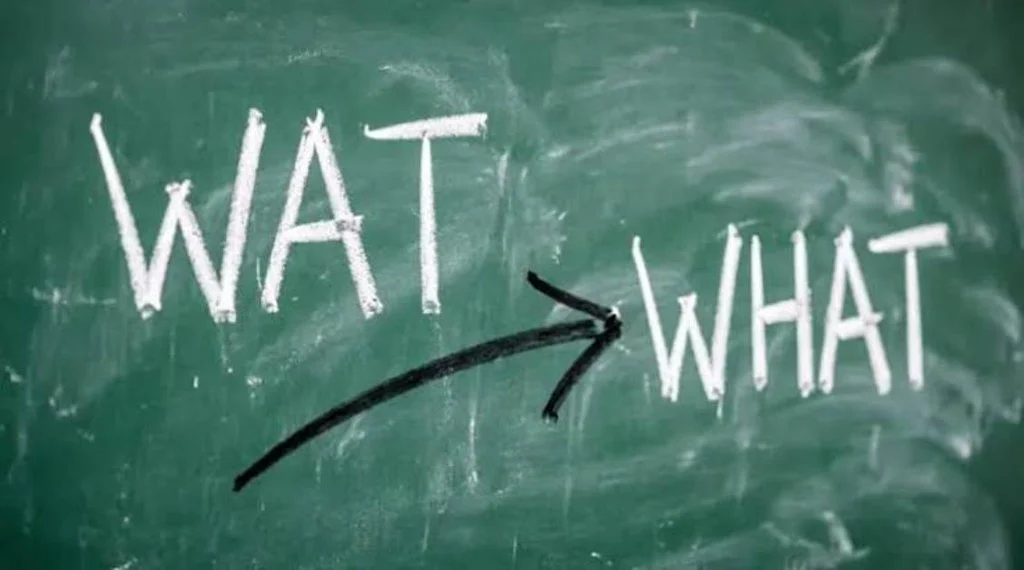
In text messages and online chats, “wat” usually means “what.” It is an informal spelling that people use to show surprise, confusion, disbelief, or curiosity.
The meaning is often clear from the conversation around it. For example, if a friend tells you something unexpected and you reply “wat?”, you are basically saying, “What?” or “What do you mean?”
Unlike formal English, texting often allows people to change spelling for fun. Words such as “wat,” “wut,” “gonna,” and “lemme” can appear in casual conversations.
Common meanings of “wat” include:
- What? — when you did not understand something.
- Really? — when you are surprised.
- What do you mean? — when you need more information.
- Seriously? — when something sounds unbelievable.
- Huh? — when something is confusing.
Examples:
- Friend: “I just won a free phone 😂”
- You: “Wat?! 😳”
Here, “wat” expresses surprise.
Another example:
- Friend: “The meeting is at 6 AM.”
- You: “Wat 😭”
Here, “wat” means something like “What?! Why is it so early?”
The tone depends heavily on punctuation and context. “wat?” may sound confused, while “WAT?!” can show strong surprise.
Full Form, Stands For & Short Meaning of Wat
There is no single official full form of “wat” when it is used as casual texting slang. In most messages, it is simply a playful spelling of “what.”
So, if someone asks “What does wat stand for in text?”, the simplest answer is:
- Wat = What
- Short meaning = What? / Huh? / What do you mean?
- Type = Internet slang or informal spelling
- Common use = Texting, chats, memes, gaming, and social media
It is important to understand that “wat” is not normally an abbreviation where every letter represents another word. It is closer to a spelling variation.
For example:
- “wat happened?” = “what happened?”
- “wat are you doing?” = “what are you doing?”
- “wat?! No way!” = “what?! No way!”
- “wat is this 😂” = “what is this?”
People may also write “wut” or “whut” for a similar effect. These spellings are usually intended to sound casual, funny, exaggerated, or deliberately incorrect.
In formal writing, however, “what” is the correct spelling. You should normally avoid “wat” in school assignments, professional emails, business documents, and other formal situations.
Quick answer
- Wat in texting: Usually “what”
- Wat meaning: Confusion, surprise, or a question
- Formal English: Use “what”
- Online use: Casual and playful
Origin, History & First Known Use of Wat
The modern internet use of “wat” grew from the way people communicate online. Internet users have long changed normal spelling to make messages shorter, funnier, or more expressive.
As online forums, chat rooms, gaming communities, memes, and social networks became popular, unusual spellings became part of internet language. “Wat” developed as one of many informal versions of “what.”
Its popularity is also connected to meme culture. Online humor often uses intentionally incorrect spelling to create a certain voice or reaction. Writing “wat” can make a response look confused, shocked, silly, or exaggerated.
The exact history of the word is difficult to reduce to one person or one website. It is better understood as part of a broader internet-language trend rather than a term created at one clearly documented moment.
Why did “wat” become popular?
- It is quick to type.
- It looks informal.
- It can make a reaction funnier.
- It works well in memes.
- It can express confusion without a long sentence.
- It fits the playful style of internet conversations.
The use of “wat” is also related to other creative spellings such as “wut,” “whut,” and “whaaat.” Each version can give a slightly different emotional tone.
Today, “wat” is best understood as a piece of informal online language rather than standard English.
How People Use Wat in Daily Conversations
People usually use “wat” when they want to react quickly. It can replace a complete question or appear inside a longer sentence.
The most common use is as a reaction to unexpected information.
For example:
- “Wat? You already left?”
- “Wat happened?”
- “Wat are you talking about?”
- “Wat 😂”
- “WAT?! That actually happened?”
The spelling can also change the mood. A lowercase “wat” may feel casual and relaxed. Capital letters such as “WAT?!” can make the reaction look much stronger.
Punctuation matters too.
Compare these examples:
- “wat?” — mild confusion
- “wat” — casual disbelief
- “wat? 😂” — amused confusion
- “WAT?!” — strong surprise
- “whaaat?” — exaggerated confusion or disbelief
Friends may also use “wat” jokingly even when they understand the situation.
For example:
“I ate the whole pizza.”
“wat 😭”
The second person may not literally be asking for information. They may simply be reacting to the statement.
Because “wat” is informal, it works best in relaxed settings. It may be perfectly normal between friends but inappropriate in a professional message.
Good places to use it:
- Casual texts
- Group chats
- Gaming chats
- Memes
- Social media comments
- Friendly conversations
Avoid it in:
- Job applications
- Formal emails
- Academic writing
- Business reports
- Official documents
Wat Meaning Across WhatsApp, Instagram, TikTok & Snapchat
The wat meaning in text stays mostly the same across major social platforms. Whether someone sends it on WhatsApp, Instagram, TikTok, or Snapchat, it usually means “what?”
However, the tone can change depending on the platform and conversation.
On WhatsApp, “wat” is common in quick conversations between friends.
- “Wat are you doing?”
- “Wat 😂”
- “Wat happened?”
It can simply make the conversation feel informal.
On Instagram, you may see “wat” in comments or direct messages. It can be used as a short reaction to a surprising photo, video, or statement.
- “Wat is this 😭”
- “WAT 😂”
- “Wat did I just watch?”
TikTok
TikTok comments often use exaggerated internet language. “Wat” may appear as a humorous reaction to an unusual or confusing video.
For example:
- “Wat did I just see 💀”
- “WAT 😭”
- “Wat is happening?”
Snapchat
Snapchat conversations are usually quick and casual, so “wat” can be used as a short reaction.
- “Wat??”
- “wat u mean?”
- “WAT 😂”
Across all four platforms, context is more important than the platform itself. The word generally keeps the same basic meaning.
Different Meanings of Wat in Other Fields
Although “wat” usually means “what” in texting, the same letters can mean something completely different in another field.
This is why context matters.
For example, in technology, WAT may appear as an acronym. In some technical discussions, it can refer to WebAssembly Text, a text-based format used with WebAssembly. This has nothing to do with the casual texting word “wat.”
In other situations, WAT may be used as an abbreviation for a term, organization, title, or technical concept. The meaning depends on the subject being discussed.
Compare the contexts:
- “wat?” in a chat → usually “what?”
- “WAT” in a technical document → may be an acronym
- “wat 😂” in a meme → likely a humorous reaction
- “WAT” in a specialized field → check the surrounding terminology
This distinction is important because people sometimes assume every use of “WAT” has the same meaning.
If you see wat in lowercase inside a casual sentence, the safest interpretation is usually “what.”
If you see WAT in capital letters inside a technical, academic, or professional document, it may be an acronym instead.
Tip
Always look at the words around “wat” before deciding what it means. A single word can have very different meanings in different communities.
Common Confusions, Mistakes & Wrong Interpretations
One common mistake is assuming that “wat” always has one fixed meaning. In casual texting, it usually means “what,” but the tone can vary.
For example, “wat?” can mean:
- “What?”
- “What do you mean?”
- “Really?”
- “Are you serious?”
- “I don’t understand.”
Another common confusion is thinking that “wat” is always a formal abbreviation. Usually, it is not. In everyday texting, it is simply an informal spelling.
People also sometimes confuse “wat” with “watt.” These are completely different.
- wat → informal spelling of “what”
- watt → a unit used to measure power
Another mistake is using “wat” in formal writing. Although people understand it online, it is not the standard spelling of “what.”
Common mistakes:
- Assuming “wat” has an official full form.
- Using “wat” in formal business writing.
- Confusing “wat” with “watt.”
- Assuming every “WAT” is texting slang.
- Ignoring the tone created by punctuation and emojis.
When in doubt, read the whole message. The surrounding words usually make the intended meaning clear.
Similar Terms, Alternatives & Related Slang
Several internet expressions can perform the same job as “wat.” They may express confusion, surprise, disbelief, or a request for clarification.
Common alternatives:
- What? — standard and neutral
- Wut? — playful spelling of “what”
- Whut? — exaggerated or humorous version
- Huh? — confusion
- Wdym? — “What do you mean?”
- Wtf? — strong surprise or confusion; contains profanity
- Seriously? — disbelief
- Really? — surprise or doubt
- Huh?? — stronger confusion
For example, these can have similar meanings:
- “Wat?”
- “Wut?”
- “Huh?”
- “Wdym?”
But they are not always identical.
“Wdym?” directly asks for an explanation. “Wat?” can be more emotional or playful. “Huh?” often sounds like you did not understand something.
Internal linking suggestions
If you are building an abbreviation or slang website, you can naturally link this page to related topics such as:
- What Does Wdym Mean in Text?
- What Does Wut Mean in Text?
- What Does Huh Mean in Text?
- What Does LOL Mean in Text?
- What Does BTW Mean in Text?
- What Does IDK Mean in Text?
- What Does IMO Mean in Text?
- What Does FR Mean in Text?
These internal links can help readers discover related slang without forcing keywords into the article.
Examples of Wat in Real Chat Situations
The easiest way to understand wat meaning in text is to see it in realistic conversations.
Example 1: Surprise
- Alex: “I bought a new car today.”
- Sam: “Wat?! 😳”
- Meaning: “What?! Really?”
Example 2: Confusion
- Alex: “The class moved to Friday.”
- Sam: “Wat? I thought it was Monday.”
- Meaning: “What? I thought it was Monday.”
Example 3: Funny reaction
- Alex: “I just ate six burgers.”
- Sam: “Wat 😂”
- Meaning: “What?! That’s crazy.”
Example 4: Asking for clarification
- Alex: “You need to bring the blue thing.”
- Sam: “Wat thing?”
- Meaning: “What thing?”
Example 5: Shock
- Alex: “He quit his job and moved to another country.”
- Sam: “WAT?! 😭”
- Meaning: “What?! Seriously?”
Example 6: Social media reaction
- Comment: “Wat am I watching 💀”
- Meaning: “What am I watching?”
Quick rule
If you can replace “wat” with “what” and the sentence still makes sense, it is probably being used as informal internet slang.
How to Reply When Someone Says Wat
Your response depends on why the person said “wat.” If they are confused, explain what you mean. If they are surprised, give them more information.
If they seem confused:
- “I mean the meeting is tomorrow.”
- “Sorry 😂 I meant the blue one.”
- “Let me explain.”
If they seem surprised:
- “Yep, seriously 😭”
- “I know, crazy right?”
- “Haha, I was surprised too!”
If they are joking:
- “You heard me 😂”
- “WAT indeed!”
- “I know, I know 😭”
If you are not sure what they mean:
You can simply ask:
- “What part?”
- “What do you mean?”
- “Confused? 😂”
You do not need a complicated response. Since “wat” is usually casual slang, a short and natural reply works best.
Is Wat Still Popular? Trends & Online Usage
“Wat” is still understandable and appears in casual online conversations, especially when people want to create a humorous, surprised, or exaggerated reaction.
However, internet slang changes quickly. Different platforms and communities develop their own favorite expressions. Some users may prefer “wut,” “wdym,” “huh,” “what,” or an emoji instead.
The important point is that “wat” has remained recognizable because its meaning is easy to understand from context.
It also continues to fit internet humor. A deliberately misspelled word can make a reaction feel more playful than standard English.
You may still see:
- “wat”
- “wut”
- “WAT?!”
- “wat 😂”
- “wat is this”
- “wat am I seeing”
- “wat happened”
The style is especially common in casual messages, comments, memes, gaming conversations, and humorous posts.
That said, “wat” should not be treated as a formal replacement for “what.” If you are writing for school, work, customers, or a professional audience, use the standard spelling.
FAQs
What does “wat” mean in texting?
“Wat” usually means “what.” It is an informal and playful spelling commonly used in texts, chats, memes, and social media.
Is “wat” a real word?
“Wat” is not the standard English spelling of “what.” In internet conversations, it is commonly used as slang or a deliberate misspelling.
What does “wat?” mean from a girl or guy?
Usually, there is no special gender-based meaning. “Wat?” generally means “What?” and may show confusion, surprise, or a request for clarification.
Is “wat” rude?
Not usually. It is generally casual and harmless. However, the tone can depend on the conversation. A message such as “WAT?!” may look more shocked or dramatic.
What is the difference between “wat” and “what”?
“What” is the correct standard English spelling. “Wat” is an informal internet spelling often used for humor, casual conversation, or exaggerated reactions.
What is the difference between “wat” and “wut”?
Both are playful spellings of “what.” The exact tone depends on the person and context, but “wut” can sometimes look more deliberately silly or humorous.
Can I use “wat” in formal writing?
It is best not to. Use “what” in professional emails, academic assignments, business documents, and formal communication.
Does WAT have other meanings?
Yes. In technical or professional contexts, WAT can be an acronym with a completely different meaning. Always use the surrounding context to determine what it means.
Conclusion:
The simplest answer to “wat meaning in text” is “what.
” In casual online communication, people use “wat” as a playful spelling to show confusion, surprise, disbelief, or curiosity.
The exact feeling depends on the message, punctuation, capitalization, and emojis around it.
You may see “wat” in WhatsApp chats, Instagram comments, TikTok discussions, Snapchat messages, gaming chats, and memes. Similar forms include “wut,” “whut,” and “huh?”
Remember that “wat” is informal. It works well with friends and online communities, but “what” is the better choice for formal writing.
If you see “wat” in a message, do not overthink it. In most casual conversations, simply read it as “what?” and use the rest of the conversation to understand the tone.
