Wondering about the TTS meaning in text? You are not alone.
TTS can have different meanings depending on where you see it and how someone uses it. In everyday digital conversations, the meaning may depend on the topic, platform, and sentence around it.
In technology, TTS commonly means text-to-speech, a system that turns written words into spoken audio. In casual texting, however, people may use TTS as a short form for phrases such as “talk to you soon.”
People often search for the TTS meaning in text because abbreviations can be confusing. A short three-letter term can mean something very different in a chat than it does in an app or technical article.
This guide explains the main meanings of TTS in simple language. You will also see examples, social media uses, common mistakes, related slang, and easy ways to reply when someone sends “TTS.”
What Does TTS Mean in Text & Chat?
The TTS meaning in text and chat depends on the conversation. There is no single meaning that works in every situation.
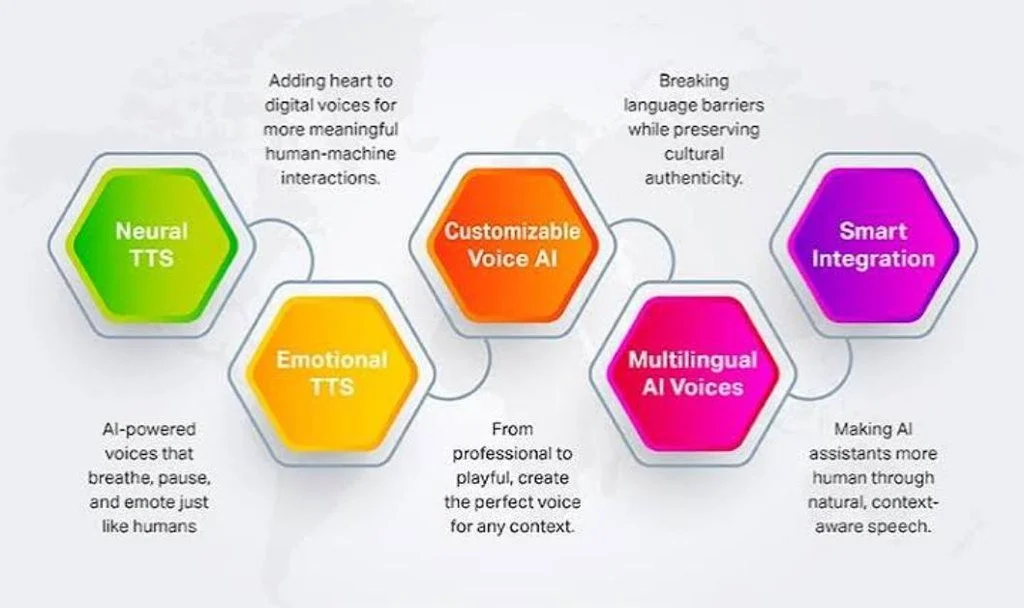
The most established meaning of TTS is text-to-speech. It describes technology that reads written text aloud using a computer-generated or synthetic voice. You may see TTS mentioned when people talk about phones, accessibility tools, gaming, videos, virtual assistants, or voice apps.
In casual texting, TTS can also be used as shorthand for “talk to you soon.” This use is less universal, so the surrounding message matters.
For example:
- “I have to go now, TTS!” → likely “talk to you soon.”
- “Turn on TTS in the settings.” → likely “text-to-speech.”
- “This game has great TTS voices.” → likely “text-to-speech.”
- “Can you explain the TTS feature?” → likely “text-to-speech.”
When someone uses TTS at the end of a friendly conversation, it may be a quick goodbye. When the term appears next to words such as voice, audio, speech, narrator, read aloud, or accessibility, it almost certainly refers to text-to-speech.
The easiest way to understand TTS is to look at the full sentence instead of the abbreviation alone.
Full Form, Stands For & Short Meaning of TTS
The most common full form of TTS is Text-to-Speech.
Text-to-speech is a technology that converts written words into spoken words. It can read messages, documents, webpages, game dialogue, or other digital text aloud.
A simple definition is:
- TTS = Text-to-Speech
- Meaning: Technology that reads written text aloud.
- Main use: Turning written content into computer-generated speech.
- Common areas: Phones, computers, apps, games, websites, education, and accessibility.
In casual messaging, TTS may also be understood as “talk to you soon.” This meaning is based on informal abbreviation habits rather than the technical meaning of the term.
For example, imagine someone writes:
“I need to finish dinner. TTS 😊”
Here, the person probably means “talk to you soon.”
Now consider:
“The app uses TTS to read the article.”
Here, TTS clearly means text-to-speech.
This is why context is important. Unlike some popular texting abbreviations, TTS does not always have one obvious informal meaning.
You may also encounter TTS in technical discussions about artificial intelligence, voice generation, accessibility, and digital content. Modern TTS systems can produce voices that sound increasingly natural and can sometimes support different languages, accents, speaking styles, and emotional tones.
So, if someone asks, “What does TTS stand for?”, the safest general answer is “text-to-speech.” If they ask about TTS at the end of a casual chat, check the context because “talk to you soon” may be intended.
Origin, History & First Known Use of TTS
The history of TTS, when it means text-to-speech, is connected to the development of computers and speech technology.
The basic idea is simple: a machine receives written language and produces an audible version of it. Researchers began exploring machine-generated speech long before modern smartphones and artificial intelligence became common.
Early speech systems were very different from the natural voices people hear today. They often sounded robotic and had limited vocabulary. Researchers had to solve several difficult problems, including how to represent language, pronounce words, and create understandable speech.
Over time, computers became faster and digital audio improved. This helped TTS move from research laboratories into practical tools.
Today, text-to-speech can be found in many places:
- Screen readers for people with visual disabilities
- Navigation systems
- E-books and reading apps
- Language-learning tools
- Video creation software
- Games
- Virtual assistants
- Customer-service systems
- Accessibility features
- Educational software
The informal use of TTS in texting developed from the broader habit of shortening phrases. Online communication often favors quick abbreviations because people want to type less while keeping conversations moving.
However, it is important not to assume that “talk to you soon” is the original or standard meaning of TTS. Text-to-speech is the widely recognized technical expansion.
The meaning can also change between communities. A gamer, software developer, content creator, and casual texter may use the same three letters in completely different ways.
That is why the history of TTS is best understood in two parts: its established technical meaning and its informal use as a chat abbreviation.
How People Use TTS in Daily Conversations
People use TTS in different ways depending on whether they are discussing technology or having a casual conversation.
In everyday chat, a person may use TTS as a quick way to end a conversation. If it appears after a goodbye, it may mean “talk to you soon.”
Examples include:
- “I have class now, TTS!”
- “Gotta run. TTS 😊”
- “I’ll message you later. TTS.”
- “Good talking to you! TTS 👋”
In these examples, the abbreviation saves time and has a friendly tone.
TTS is also common when people discuss technology. Someone might say:
- “Does your phone support TTS?”
- “I use TTS to listen to articles.”
- “The game has a new TTS voice.”
- “This website has a TTS option.”
Here, the meaning is text-to-speech.
The easiest clue is the position and purpose of the abbreviation. If TTS appears as a goodbye, an informal chat meaning is possible. If it appears in a sentence about software, audio, voices, or reading, text-to-speech is the clear choice.
People also use TTS when talking about accessibility. A person who finds it difficult to read large amounts of text may use a TTS tool to listen instead. This can make digital information easier to access.
Because TTS has more than one possible meaning, you should avoid interpreting it too quickly. Look at the words around it first.
When in doubt, a simple question works:
“Do you mean text-to-speech or talk to you soon?”
That removes confusion without making the conversation awkward.
TTS Meaning Across WhatsApp, Instagram, TikTok & Snapchat
The TTS meaning in text can vary across social media platforms, but the platform itself does not always determine the meaning.
On WhatsApp, TTS may appear in a normal chat. If someone writes “TTS” after saying goodbye, they could mean “talk to you soon.” If they are discussing a phone feature or voice tool, it probably means text-to-speech.
On Instagram, TTS is often connected to content creation and technology. Creators may discuss text-to-speech voices used in videos, reels, captions, or accessibility features. In a casual direct message, the informal meaning may still be possible.
On TikTok, TTS commonly refers to text-to-speech, especially when people discuss computer-generated voices that read text in videos. TikTok-style content can use synthetic narration to speak words displayed on screen.
On Snapchat, the meaning depends heavily on the conversation. A quick “TTS” at the end of a chat may be informal shorthand, while a discussion about voice features can point to text-to-speech.
Quick guide:
- WhatsApp: Could mean “talk to you soon” or “text-to-speech.”
- Instagram: Often connected with voice and content tools, but context matters.
- TikTok: Usually associated with text-to-speech when discussing video voices.
- Snapchat: Can be either casual slang or a technology reference.
The key point is that TTS does not have a completely different dictionary definition on every platform. Instead, users apply the abbreviation according to the conversation.
If you see TTS in a social media comment, read the sentence before it. That usually gives you enough information to identify the intended meaning.
Different Meanings of TTS in Other Fields
TTS has several meanings outside ordinary texting. The exact definition depends on the field.
Technology
In technology, TTS usually means text-to-speech. It describes systems that convert written text into spoken audio.
Accessibility
TTS is important in accessibility because it can read digital content aloud. It can help people interact with written information in a different way.
Gaming
Gamers may use TTS when talking about voices that read messages, game text, commands, or chat content aloud.
Content Creation
Video creators may use TTS tools to generate narration without recording their own voice. This can be useful for tutorials, short videos, explainers, and other content.
Education
Teachers and students may use text-to-speech tools to listen to lessons, articles, notes, or other written material.
Artificial Intelligence
TTS is also closely related to modern AI voice systems. These tools can turn written prompts or scripts into spoken audio.
Casual Messaging
In informal chat, TTS can sometimes mean “talk to you soon.” This meaning is less standardized than text-to-speech.
A quick comparison:
- TTS in software: Text-to-speech
- TTS in accessibility: Text-to-speech
- TTS in gaming: Usually text-to-speech
- TTS in video creation: Text-to-speech
- TTS in casual goodbye messages: Possibly “talk to you soon”
This shows why the same abbreviation can be confusing. Always consider the topic before choosing a meaning.
Common Confusions, Mistakes & Wrong Interpretations
One of the biggest mistakes people make with TTS meaning in text is assuming that every use has the same definition.
If someone says:
“I turned on TTS.”
They are probably talking about text-to-speech.
But if someone says:
“Okay, I have to go. TTS!”
They may mean “talk to you soon.”
Another common mistake is treating TTS as a universally accepted texting abbreviation. It is not as clear or standardized in casual chat as abbreviations such as LOL, BRB, or BTW.
Common misunderstandings include:
- Assuming TTS always means “talk to you soon”
- Assuming TTS always means “text-to-speech”
- Ignoring the rest of the sentence
- Confusing TTS with similar abbreviations
- Using TTS without considering whether the other person knows the abbreviation
Context solves most of these problems.
For example, if a friend says:
“The new app has TTS and several voice options.”
It would make little sense to interpret TTS as “talk to you soon.” The technical context makes the meaning obvious.
Likewise:
“I’m heading out now. TTS ❤️”
does not sound like a discussion about software. Here, the informal meaning is much more likely.
If you are writing for a broad audience, spelling out text-to-speech the first time is usually better. After that, you can use TTS.
The safest rule is simple: do not guess from the abbreviation alone. Read the whole message.
Similar Terms, Alternatives & Related Slang
If you are learning internet abbreviations, TTS belongs to a large group of short terms used in digital conversations.
When TTS means “talk to you soon,” related phrases include:
- TTYL — Talk to you later
- CU — See you
- CYA — See ya
- BRB — Be right back
- GTG / G2G — Got to go
- L8R — Later
- BBS — Be back soon
These abbreviations are not exact replacements for TTS. Their meanings and tones can differ.
For example:
“GTG, talk later!”
means the person has to leave.
“TTYL 😊”
usually means the person expects to talk again later.
“TTS!”
may be understood as “talk to you soon,” but this interpretation depends more strongly on context.
When TTS means text-to-speech, related terms include:
- Speech synthesis
- Voice generation
- AI voice
- Screen reader
- Voice narration
- Synthetic speech
- Read-aloud technology
These terms are connected, but they are not always identical. For example, a screen reader can use text-to-speech to speak information from a digital interface, while an AI voice generator may focus on creating realistic narration.
Internal linking suggestions
For a website about texting slang and abbreviations, useful internal links could include:
- TTYL Meaning in Text
- BRB Meaning in Text
- BTW Meaning in Text
- GTG Meaning in Text
- LOL Meaning in Text
- IDK Meaning in Text
- TBH Meaning in Text
- What Does Text-to-Speech Mean?
These related pages can help readers move naturally from one abbreviation to another.
Examples of TTS in Real Chat Situations
The best way to understand the TTS meaning in text is to see it in real-looking conversations.
Example 1: Casual goodbye
Alex: “I need to finish my homework.”
Sam: “No worries. TTS 😊”
Here, TTS can mean “talk to you soon.”
Example 2: Technology
Alex: “How does this app read messages aloud?”
Sam: “It uses TTS.”
Here, TTS means text-to-speech.
Example 3: Gaming
Alex: “Can the game read chat messages?”
Sam: “Yes, turn on the TTS setting.”
Here, TTS clearly means text-to-speech.
Example 4: Quick message
Alex: “Dinner is ready. I have to go!”
Sam: “Okay! TTS 👋”
The informal meaning is likely “talk to you soon.”
Example 5: Content creation
Alex: “I don’t want to record my voice for this video.”
Sam: “You could try a TTS tool.”
Here, TTS means text-to-speech.
Quick examples
- “Gotta go, TTS! 👋” → Talk to you soon
- “This app has TTS.” → Text-to-speech
- “Enable TTS for narration.” → Text-to-speech
- “Okay, TTS 😊” → Probably talk to you soon
- “The game uses TTS voices.” → Text-to-speech
Notice how the words around TTS reveal its meaning. This is the most useful trick to remember.
How to Reply When Someone Says TTS
Your reply depends on what the person means by TTS.
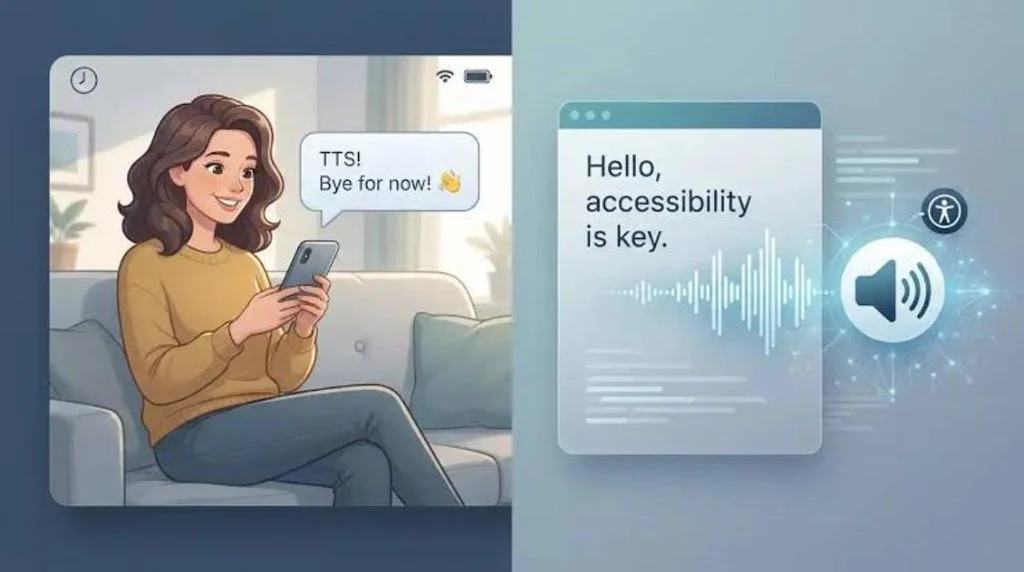
If they are using TTS to mean “talk to you soon,” you can respond naturally with another friendly goodbye.
Examples:
- “Talk soon! 😊”
- “See you later!”
- “Sure, catch you soon 👋”
- “Okay, take care!”
- “TTS 😊”
You do not need to write a long response.
If the person is talking about text-to-speech, your reply should match the technology topic.
For example:
“Does TTS work with other languages?”
You could answer:
“Yes, many TTS tools support multiple languages.”
Or:
“Which TTS tool are you using?”
If you are unsure which meaning they intended, ask directly:
“Do you mean text-to-speech?”
That is especially useful when the conversation is short.
Easy reply guide
- TTS as goodbye: “Talk soon! 😊”
- TTS as technology: “Yes, I know the text-to-speech feature.”
- Unclear meaning: “Do you mean text-to-speech?”
- Very casual chat: “TTS 👋”
The goal is not to make the reply complicated. Match the tone and meaning of the original message.
Is TTS Still Popular? Trends & Online Usage
Yes, TTS is still widely used, especially when it means text-to-speech.
The technology has become part of everyday digital life. People encounter text-to-speech in phones, apps, websites, games, accessibility tools, video software, and other digital services.
The rise of AI-generated voices has also made TTS more visible. Modern systems can produce speech that sounds much more natural than older computer voices. This has increased interest in voice generation, narration, accessibility, and automated content.
TTS is particularly useful when people want to consume written information without looking at a screen. It can also help creators produce spoken content from written scripts.
In casual messaging, however, the use of TTS as “talk to you soon” is less predictable. Some people may understand it immediately, while others may think of text-to-speech first.
This makes TTS different from very common texting abbreviations such as LOL or OMG. The meaning is more dependent on context and the community using it.
Current usage can be summarized like this:
- Technology: Very common
- Accessibility: Important and widely used
- Gaming: Common
- Video creation: Common
- AI voice tools: Increasingly visible
- Casual texting: Possible, but less standardized
So, if you see TTS online, do not assume it is automatically slang. In many cases, especially in technology-related conversations, text-to-speech is the intended meaning.
FAQs
What does TTS mean in text messages?
TTS can mean “talk to you soon” in casual messages, especially when it appears as a goodbye. It can also mean “text-to-speech,” so the context matters.
What does TTS stand for?
The most widely recognized full form of TTS is Text-to-Speech. It refers to technology that converts written text into spoken audio.
Does TTS mean “talk to you soon”?
It can. In an informal conversation, especially at the end of a message, TTS may be used as shorthand for “talk to you soon.” However, this is not the only meaning.
What does TTS mean on TikTok?
On TikTok and other content platforms, TTS commonly refers to text-to-speech, particularly when people discuss computer-generated voices that read text aloud.
What does TTS mean on WhatsApp?
On WhatsApp, TTS can mean either “talk to you soon” or “text-to-speech.” Look at the surrounding message to determine which meaning makes sense.
Is TTS the same as AI voice?
Not exactly. TTS is a method of turning written text into spoken audio. Some modern TTS systems use artificial intelligence, but not every AI voice system should be treated as exactly the same thing.
Is TTS a common texting abbreviation?
TTS is recognized in some casual conversations, but its informal use is not as universal as abbreviations such as LOL, BRB, or TTYL. The technical meaning, text-to-speech, is much more established.
What should I reply to “TTS”?
If TTS means “talk to you soon,” you can reply with “Talk soon!”, “See you later!”, or “Take care!” If the meaning is unclear, simply ask what they mean.
Conclusion:
The TTS meaning in text depends on context. The most established meaning of TTS is text-to-speech, a technology that turns written words into spoken audio. It is widely used in phones, apps, games, accessibility tools, education, content creation, and AI voice systems.
In casual conversations, TTS can also mean “talk to you soon,” especially when it appears at the end of a goodbye message.
However, this informal meaning is less standardized, so you should always look at the surrounding words.
The easiest rule is simple: technology context usually means text-to-speech, while a casual goodbye may mean talk to you soon.
If you are ever unsure, ask for clarification. A few extra words can prevent a confusing conversation and help you understand exactly what the sender intended.
