If you have seen someone write “habibi” in a text, WhatsApp message, Instagram comment, or TikTok video, you may wonder what it really means.
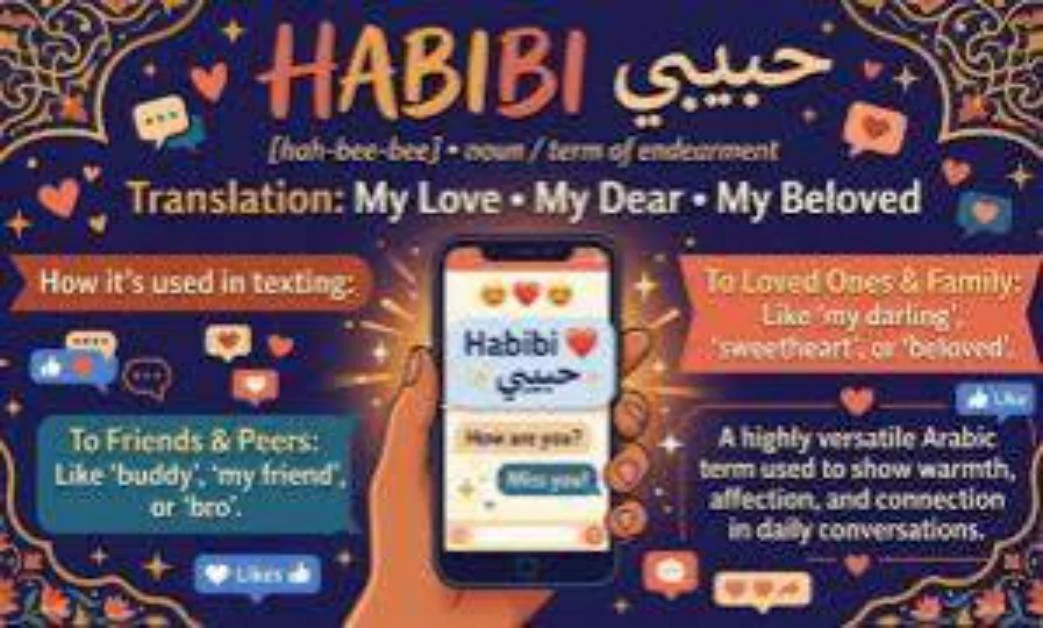
The word sounds warm and friendly, but its meaning can change depending on who says it and how they use it. Habibi is an Arabic word that is commonly used to mean “my love,” “my dear,” or “my beloved.” It can be romantic, friendly, playful, or simply affectionate.
That is why people often search for the habibi meaning when they see it online. The word has also become popular outside Arabic-speaking communities because of music, movies, social media, memes, and everyday internet slang.
In this guide, we will explain what habibi means, where it comes from, how people use it, and how you can reply when someone calls you habibi.
What Does Habibi Mean in Text & Chat?
In text messages and online chats, habibi usually means “my dear,” “my love,” “darling,” or “my beloved.” The exact meaning depends on the relationship between the people talking.
The word comes from Arabic. Habibi (حبيبي) literally carries the sense of “my beloved” or “my dear.” It is traditionally used when speaking to a male. When speaking to a female, the common form is habibti (حبيبتي).
However, casual internet use is much less strict. People may use “habibi” simply to sound friendly, funny, caring, or dramatic.
For example:
- “Thanks, habibi ❤️” — Thanks, my dear.
- “Come on, habibi 😂” — A playful way to address someone.
- “Good night, habibi.” — A loving or romantic message.
- “Habibi, you have to see this!” — Friendly and excited.
- “Relax, habibi 😭” — Playful reassurance.
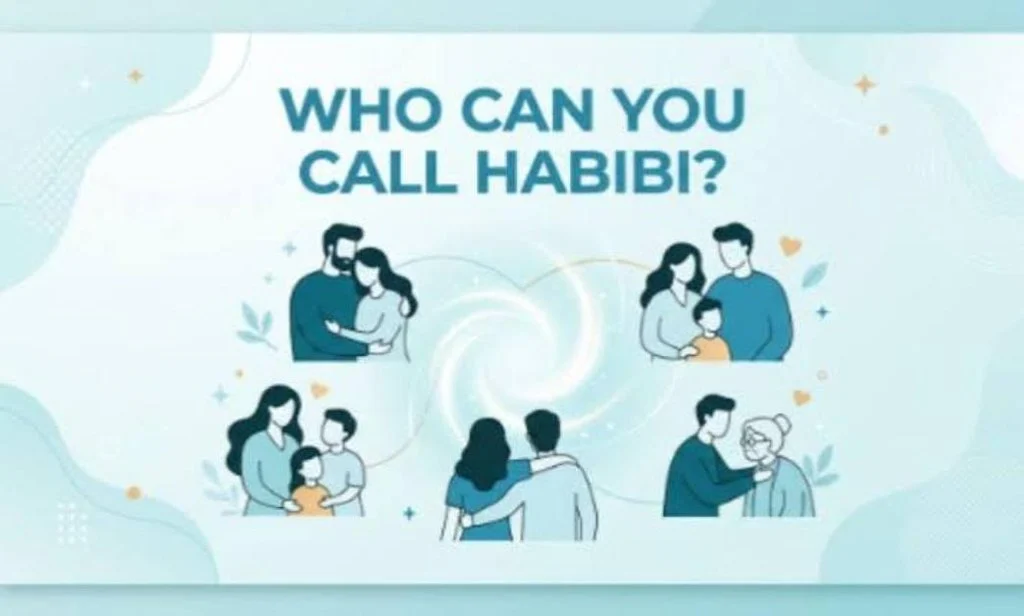
The important point is that habibi does not automatically mean romantic love. Friends can use it with each other, especially in cultures where affectionate terms are common.
In social media comments, someone might even use “habibi” toward a stranger as a humorous or warm expression. Context matters more than the word alone.
So, when you see habibi in a chat, think of meanings such as:
- My love
- My dear
- Darling
- My beloved
- Dear friend
- Buddy, in a playful context
Full Form, Stands For & Short Meaning of Habibi
One common question is whether habibi has a full form. The answer is simple: habibi is not an abbreviation or acronym, so it does not have a “full form” in the usual sense.
It is an Arabic word written as حبيبي and commonly transliterated into English as habibi.
Its basic meaning is:
- Habibi = my beloved / my dear / my love
- Arabic: حبيبي
- Common pronunciation: ha-BEE-bee
- Common feminine form: habibti (حبيبتي)
The word is connected to the Arabic word habib, which means something like “beloved” or “dear.” The ending in habibi expresses possession, giving the sense of “my beloved” or “my dear.”
You may see different spellings online. For example:
- Habibi
- Habiby
- Habeebi
- Habibee
- Habibi ❤️
These spellings usually try to represent the Arabic pronunciation using English letters. Because Arabic sounds do not always map neatly onto English spelling, several informal spellings can appear.
There is also a difference between habibi and habibti:
- Habibi: traditionally addressed to a male.
- Habibti: traditionally addressed to a female.
Still, online speakers sometimes use “habibi” more broadly, without focusing on grammatical gender.
So if someone asks, “What does habibi stand for?”, the best short answer is:
Habibi means “my love,” “my dear,” or “my beloved” in Arabic. It is a term of affection, not an acronym.
Origin, History & First Known Use of Habibi
Habibi comes from Arabic, one of the world’s major languages with a long written and spoken history. The word is related to the Arabic root ḥ-b-b, which is associated with love, affection, and being beloved.
The Arabic word habib (حبيب) can refer to a beloved or dear person. Habibi (حبيبي) adds the meaning of “my,” creating the affectionate sense of “my beloved” or “my dear.”
It is difficult to give one exact “first use” date for habibi because it is not a modern internet invention. The word belongs to a much older Arabic language system and has been used in Arabic speech and writing for centuries.
Today, habibi can be heard across many Arabic-speaking communities. Its meaning may also shift slightly depending on the country, dialect, relationship, and situation.
The word became especially familiar to non-Arabic speakers through:
- Arabic music
- Middle Eastern films and television
- Travel and cultural exchange
- Sports and entertainment
- Memes
- TikTok videos
- Instagram posts
- YouTube content
- Global pop culture
This wider exposure has made habibi one of the Arabic words that many English speakers recognize even if they do not speak Arabic.
It is also worth remembering that Arabic has many dialects. People may pronounce or use affectionate words differently from one region to another. The general idea remains connected to affection and closeness.
Therefore, the history of habibi is much older than its current internet popularity. Social media did not create the word. Instead, modern platforms helped introduce an already established Arabic expression to a much larger international audience.
How People Use Habibi in Daily Conversations
In everyday conversation, habibi can express affection, friendship, warmth, concern, or playful teasing. Its meaning depends heavily on tone and context.
A romantic partner might say:
“I missed you, habibi.”
Here, the meaning is clearly affectionate and may be translated as “I missed you, my love.”
But a friend might say:
“Habibi, where have you been?”
That does not necessarily suggest romance. It can simply mean “my friend” or “my dear.”
People may also use habibi when offering comfort:
“Don’t worry, habibi. Everything will be okay.”
The word can make the sentence feel softer and more caring.
It can also be humorous:
“Habibi, what did you do? 😂”
Here, the speaker may be teasing someone after they made a mistake.
Quick examples:
- “Morning, habibi ☀️” — affectionate greeting.
- “Thank you, habibi!” — warm appreciation.
- “Habibi, listen to me.” — friendly or serious emphasis.
- “No way, habibi 😂” — playful reaction.
- “Take care, habibi.” — caring farewell.
The relationship matters. A romantic partner, close friend, family member, and stranger may all use the same word, but the emotional meaning can be very different.
This is why translating habibi as only “boyfriend” or “romantic partner” is incorrect. The word expresses affection, but affection does not always equal romance.
Habibi Meaning Across WhatsApp, Instagram, TikTok & Snapchat
The habibi meaning on social media is usually similar to its traditional meaning, but online culture has made the word more flexible.
On WhatsApp, habibi is often used in private conversations.
Examples:
- “Good night habibi ❤️”
- “Where are you, habibi?”
- “Thanks for helping me, habibi!”
The relationship determines whether it sounds romantic, friendly, or caring.
On Instagram, people may use habibi in comments, captions, or direct messages.
For example:
- “Looking amazing, habibi 🔥”
- “My habibi ❤️”
- “Habibi, you did it!”
It can also appear as part of jokes, memes, or cultural references.
TikTok
TikTok has helped make habibi recognizable around the world. Users may say it for humor, affection, dramatic reactions, or references to Arabic and Middle Eastern culture.
A video might use:
“Habibi, come to Dubai.”
This may be a playful internet phrase rather than a serious invitation.
Snapchat
On Snapchat, habibi can appear in quick messages, stories, captions, and jokes. Since Snapchat is often casual, the word can feel especially informal.
Remember that social media usage does not always follow traditional language rules. Someone may use “habibi” simply because they like how it sounds.
Different Meanings of Habibi in Other Fields
The meaning of habibi can change slightly when the word appears in different cultural or professional settings.
In music, habibi is often connected with love, longing, romance, or emotional closeness. Many songs use the word because it carries a strong feeling of affection.
In films and television, a character may call another person habibi as a romantic term, a friendly expression, or a culturally natural form of address.
In sports, fans or players may use it casually toward teammates, friends, or supporters. The word can express closeness without romantic meaning.
In travel and tourism, visitors may hear habibi used in everyday conversation. A traveler should not assume that every use has a romantic meaning.
In fashion and branding, businesses may use Arabic words such as habibi because the word is recognizable and has a warm emotional feel.
Online, it can also become a meme expression. In meme culture, “habibi” may be exaggerated for comedic effect.
For example:
- “Habibi, we have a problem 😂”
- “Habibi, that was not the plan.”
- “Habibi, you cannot be serious.”
In these cases, the word may be closer to “bro,” “my friend,” or “my dear” than “my love.”
So there is no single translation that works in every situation. The surrounding words, speaker, relationship, culture, and tone all affect the meaning.
Common Confusions, Mistakes & Wrong Interpretations
One of the biggest mistakes people make is assuming that habibi always means “my boyfriend” or “my lover.” That is not correct.
Habibi is a term of affection. It can be romantic, but it can also be friendly or familiar.
Another common mistake is treating it as an acronym. Habibi does not have a full form. It is an Arabic word.
People also sometimes confuse habibi and habibti.
- Habibi: traditionally used for a male.
- Habibti: traditionally used for a female.
Another misunderstanding comes from translating every use word-for-word. A phrase may sound romantic in English but be completely normal and friendly in Arabic.
For example, translating every “habibi” as “my lover” can create an awkward or incorrect meaning.
Common mistakes include:
- Assuming it always means romance.
- Calling it an abbreviation.
- Thinking it has one fixed English translation.
- Assuming every person uses it the same way.
- Confusing habibi with habibti.
- Believing social media slang always follows traditional Arabic usage.
- Treating a meme use as a literal translation.
The safest approach is to look at the context.
If someone you are dating says “habibi,” it may be romantic. If your friend says “habibi, calm down 😂,” it is probably friendly or playful.
Similar Terms, Alternatives & Related Slang
Several Arabic words and English expressions can be related to habibi, although they are not exact replacements.
Habibti
Habibti is the commonly used feminine form. It carries the same basic idea of “my dear,” “my beloved,” or “my love” when addressing a female.
Habib
Habib can mean “beloved” or “dear.” It is also used as a name in some cultures.
Ya Habibi
You may also see “ya habibi.” The word ya is used when directly calling or addressing someone. Depending on context, “ya habibi” can mean something like “oh, my dear” or “my beloved.”
English alternatives
Depending on the situation, possible English equivalents include:
- My love
- My dear
- Darling
- Sweetheart
- Dear
- Buddy
- Bro
- Friend
These are not perfect translations in every situation. “Habibi” has its own cultural and emotional feel.
Related internet slang
If you are researching online expressions, you may also want to explore:
- Bro meaning
- Bae meaning
- BFF meaning
- Bestie meaning
- Babe meaning
- OMG meaning
- LOL meaning
Internal linking suggestion: Add links from this article to related pages such as “Bae Meaning,” “Bro Meaning,” “BFF Meaning,” “Bestie Meaning,” and “Babe Meaning.” These pages can help readers understand other affectionate and casual terms used in online chats.
Examples of Habibi in Real Chat Situations
The easiest way to understand habibi meaning in chat is to look at realistic examples.
Romantic conversation
Person A: I can’t wait to see you tonight.
Person B: Me neither, habibi ❤️
Here, habibi is clearly affectionate and likely romantic.
Close friends
Person A: I forgot my wallet again.
Person B: Habibi 😂 How do you keep doing this?
Here, the word is playful and friendly.
Comforting someone
Person A: Today was such a bad day.
Person B: I’m sorry, habibi. Get some rest ❤️
The word adds warmth and care.
Saying thank you
Person A: I sent you the notes.
Person B: Thank you, habibi! 🙏
This can be friendly and does not automatically suggest romance.
Social media comment
Person A: Finally finished my project! 🎉
Person B: You did it, habibi! 🔥
This sounds supportive and cheerful.
A funny reaction
Person A: I bought another phone even though mine works perfectly.
Person B: Habibi, why? 😭😂
Here, “habibi” is simply a humorous way to address the person.
These examples show why context is essential. The same word can carry different feelings depending on the people involved.
How to Reply When Someone Says Habibi
Your best reply depends on who said it and what kind of relationship you have.
If a romantic partner says “habibi,” you can respond warmly:
- “Aww, habibi ❤️”
- “Miss you too.”
- “My love ❤️”
- “Hey, habibi 😊”
If a friend uses it casually, you can keep your answer playful:
- “Haha, what’s up?”
- “Yes, my friend 😂”
- “What happened?”
- “Tell me everything.”
If you are unsure whether the person is flirting, do not assume immediately. Look at the rest of the conversation.
For example:
Them: “You look amazing today, habibi ❤️”
This may have a romantic tone.
But:
Them: “Habibi, send me that photo 😂”
This could simply be friendly.
You can also mirror the person’s tone. If they are joking, joke back. If they are being affectionate, respond warmly if you feel comfortable.
If you do not want to use Arabic terms, there is no need to force it. A simple response such as “Thanks 😊” works perfectly.
Is Habibi Still Popular? Trends & Online Usage
Yes, habibi is still widely recognized and used, both by Arabic speakers and by people who encounter the word through global culture.
Its popularity online comes from several sources. Arabic music, entertainment, travel content, social media creators, memes, and international communities have helped spread the word beyond Arabic-speaking countries.
On platforms such as TikTok, Instagram, Snapchat, and WhatsApp, habibi can be used in both serious and humorous ways. Its short spelling also makes it easy to use in captions and messages.
However, online popularity does not mean everyone uses the word in exactly the same way.
Current internet culture often turns traditional words into flexible slang. A person might write “habibi” because:
- They genuinely speak Arabic.
- They are talking to an Arabic-speaking friend.
- They want to sound affectionate.
- They are making a joke.
- They are using a popular meme.
- They enjoy Arabic or Middle Eastern culture.
- They picked up the word from music or social media.
The word has therefore moved beyond a simple dictionary translation. For many internet users, habibi now carries a general feeling of affection, friendliness, humor, or warmth.
Still, understanding its Arabic roots helps avoid incorrect assumptions. It is an established Arabic term of affection, not merely a social media trend.
FAQs
What does habibi mean in English?
Habibi generally means “my love,” “my dear,” or “my beloved” in English. It is an Arabic term of affection.
Is habibi romantic?
It can be romantic, but not always. Friends, family members, and other people may use habibi in a friendly or affectionate way.
Is habibi for a boy or a girl?
Traditionally, habibi is used when addressing a male. Habibti is the common feminine form used when addressing a female.
What does habibi mean on WhatsApp?
On WhatsApp, habibi usually means “my dear,” “my love,” or “darling.” The exact meaning depends on the relationship and the tone of the conversation.
Does habibi mean boyfriend?
No. Habibi does not specifically mean boyfriend. It is an affectionate term that can be used for a romantic partner, friend, or someone else.
Is habibi a bad word?
No. Habibi is generally a positive and affectionate Arabic word. However, the tone can change depending on the situation.
What does “ya habibi” mean?
Ya habibi is a way of directly addressing someone and can be understood as “oh, my dear” or “my beloved,” depending on context.
Can I call my friend habibi?
Yes. In many contexts, habibi can be used between friends. Just remember that cultural and personal preferences differ.
What is the difference between habibi and habibti?
The main difference is grammatical gender in traditional Arabic usage. Habibi is masculine, while habibti is feminine.
Conclusion:
The habibi meaning is simple at its core but flexible in everyday use. It is an Arabic term that can mean “my love,” “my dear,” “darling,” or “my beloved.
” While it can be romantic, it is not limited to romantic relationships. Friends and other people can also use it as a warm or playful form of address.
In traditional usage, habibi is generally directed toward a male, while habibti is used for a female. On WhatsApp, Instagram, TikTok, Snapchat, and other platforms, however, people often use the word more casually.
The best way to understand habibi is to consider the context, relationship, and tone. Whether you see it in a romantic message, a funny meme, or a friendly comment, the word usually carries a sense of warmth and affection.
