If someone sends you a funny moving image in a text, you may wonder what a GIF meaning in text actually is.
You have probably seen GIFs in WhatsApp chats, Instagram comments, TikTok conversations, Snapchat messages, and other social platforms. A GIF is a short animated image that can show a reaction, joke, emotion, or quick moment without using many words.
People search for the meaning of GIF because the term appears everywhere online.
It can be used as a noun, a reaction, or even as part of casual internet slang. Understanding it makes online conversations much easier to follow.
In simple terms, a GIF is a short image file that can display several frames in a loop.
Today, people mostly use GIFs to make digital conversations more expressive, funny, and personal. Let’s explore what GIF means, where it came from, and how people use it in everyday chats.
What Does GIF Mean in Text & Chat?
In text messages and online chats, GIF usually means Graphics Interchange Format. It is an image format that can contain multiple frames, allowing it to create a short animation that repeats automatically.
However, when people say “GIF” in a conversation, they are usually talking about the animated image rather than the technical file format.
A GIF can communicate an emotion or reaction without a long explanation. For example, instead of typing “I cannot believe you did that,” someone might send a GIF of a person looking shocked.
Common uses include:
- Showing laughter 😂
- Expressing surprise
- Saying “well done”
- Showing excitement
- Reacting to bad news
- Making a joke
- Showing confusion
- Expressing embarrassment
- Celebrating something
- Replying without words
For example:
- Friend: “I accidentally sent the message to my boss.”
- You: “😂” + a laughing GIF
Here, the GIF adds emotion to the conversation. It may not have a literal meaning, but its reaction helps the other person understand your mood.
A GIF can also be used to emphasize a written message:
- “That was so awkward 😭”
- “Me trying to understand this homework 🤯”
- “Finally finished! 🎉”
The meaning of a GIF depends heavily on the image, situation, and relationship between the people chatting.
So, if you see a GIF in a text, do not always look for a dictionary definition. Think of it as a visual reaction or animated expression.
Full Form, Stands For & Short Meaning of GIF
The full form of GIF is Graphics Interchange Format.
It is an image file format created to store digital images using a relatively small amount of data. One of its most famous features is the ability to display multiple frames in sequence. That feature made GIFs popular for short animations.
The simple meaning is:
GIF = Graphics Interchange Format = a digital image format often used for short animations and reactions.
In everyday internet language, however, GIF has a more practical meaning. People often use the word to describe a short looping animation that communicates an idea or emotion.
GIF meaning in simple words
- Full form: Graphics Interchange Format
- Short meaning: A short animated image
- Used for: Reactions, jokes, emotions, and visual messages
- Common online use: Chatting and social media
- Typical length: A few seconds or less, although GIFs can vary
For example, someone might write:
“Send me a GIF!”
They usually do not mean, “Send me a file using the Graphics Interchange Format.” They simply want a funny or relevant animated reaction.
You may also see GIF used as a verb in informal conversations. Someone might say:
“I GIF everything.”
This means the person likes using GIFs to communicate online.
Related abbreviation pages
For an abbreviation-focused website, you could internally link this page to related terms such as:
- LOL meaning in text
- LMAO meaning in text
- BRB meaning in text
- OMG meaning in text
- IDK meaning in text
- BTW meaning in text
- TBH meaning in text
- IRL meaning in text
These related pages can help readers move naturally from one internet term to another.
Origin, History & First Known Use of GIF
The GIF format has a much older history than many people realize. It was developed by CompuServe, an early online service, and introduced in 1987.
The format was designed to make digital images easier to store and share online. At that time, internet connections and computer storage were much more limited than they are today. A compact image format was therefore very useful.
The original GIF format supported basic images and a limited color palette. Later improvements made it possible to store multiple images in one file. That feature eventually allowed GIFs to become animated.
The animated GIF became especially popular on the early web. People used small animations on personal websites, forums, blogs, and message boards. Some early examples were simple, such as spinning icons, blinking text, or moving objects.
Over time, GIFs changed from basic website decorations into a major form of online communication.
Social media helped push GIFs into everyday conversations. Instead of typing a complete reaction, users could choose a short animation that expressed the feeling instantly.
The development can be viewed roughly like this:
- 1987: GIF format is introduced.
- Early web: GIFs become useful for simple graphics.
- 1990s: Animated GIFs become common on websites.
- 2000s: Forums and blogs use GIFs for reactions and humor.
- 2010s: GIF search becomes common in messaging and social platforms.
- Today: GIFs are widely used as visual reactions and internet expressions.
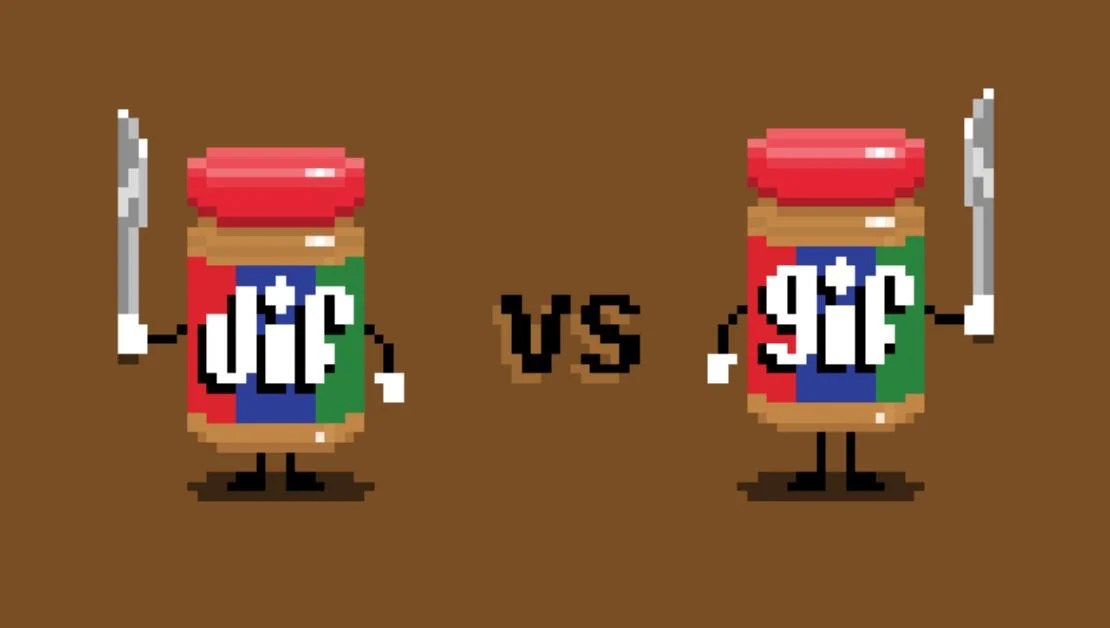
The word also has a famous pronunciation debate. Some people pronounce it with a soft “G,” similar to “jif,” while others pronounce it with a hard “G,” as in “gift.” Both pronunciations are widely heard.
The history of GIF shows how a technical image format became an everyday part of digital communication.
How People Use GIF in Daily Conversations

People use GIFs because they can communicate feelings quickly. A short animation can sometimes say more than a full sentence.
Imagine that your friend tells you they finally passed an exam. You could write:
“Congratulations! I knew you could do it!”
Or you could send a celebration GIF. The GIF gives the conversation a more playful and emotional feel.
Here are some common situations where people use GIFs:
- Laughing: A funny reaction GIF can replace “LOL.”
- Excitement: A dancing or cheering GIF can show happiness.
- Shock: A surprised character can communicate disbelief.
- Agreement: A nodding or approving GIF can mean “Exactly.”
- Disappointment: A sad reaction can show sympathy.
- Confusion: A confused character can represent “What?”
- Celebration: A party GIF can celebrate good news.
- Awkwardness: An uncomfortable reaction can say “This is awkward.”
- Sarcasm: A dramatic reaction can make a joke more obvious.
- Flirting: A playful GIF can add personality to a message.
- “You actually remembered my birthday? 🥹”
- “That meeting could have been an email.” + laughing GIF
- “Me waiting for your reply…” + waiting GIF
- “I have no idea what is happening 😂” + confused GIF
The key is context. A crying GIF could mean genuine sadness, laughing so hard that you are crying, or exaggerated humor.
That is why GIFs are powerful in casual conversations. They are visual, emotional, and often humorous.
GIF Meaning Across WhatsApp, Instagram, TikTok & Snapchat
The basic meaning of GIF remains the same across social platforms, but people may use GIFs differently depending on the platform.
On WhatsApp, GIFs are commonly used in private chats and group conversations. Someone may send a GIF instead of typing a reaction.
Examples:
- Friend sends good news → celebration GIF
- Friend makes a joke → laughing GIF
- Someone says something unbelievable → shocked GIF
WhatsApp GIFs are often personal and conversational.
Instagram users may use GIFs in Stories, messages, comments, or other creative content where GIF features are available. GIFs can make a post or message feel more expressive.
For example:
- “Mood” + a tired GIF
- “Weekend!” + a dancing GIF
- “This is me” + a relatable GIF
TikTok
TikTok is strongly focused on short-form visual communication, so GIF-like reactions and animated content fit naturally into its culture. Users may use short visual reactions to support jokes, comments, or conversations.
Snapchat
Snapchat is built around visual communication. Animated stickers, GIF-style elements, and reactions can add humor or emotion to conversations.
Across all these platforms, the main idea is similar:
A GIF helps people communicate a reaction visually instead of using only words.
One important point is that platform features can change. A particular app may support GIF search, stickers, animations, or other formats differently over time.
Different Meanings of GIF in Other Fields
The word GIF is mainly associated with digital images, but its meaning can look different depending on the context.
In technology, GIF specifically refers to the Graphics Interchange Format. It is a raster image format that supports animation and transparency under certain conditions.
In web design, GIFs may be used for small animations, simple visual effects, or decorative elements. However, modern websites often use other formats when they need better compression or richer animation.
In marketing, GIFs can be used to attract attention. A short animation can demonstrate a product feature, show a reaction, or make an advertisement more engaging.
In education, GIFs can demonstrate a process. For example, an animated image might show how a simple machine works or how a software feature is used.
In social communication, the technical meaning becomes less important. Most people simply think of a GIF as a short looping animation.
This distinction is useful because “GIF” can refer to both:
- The technical file format
- The animated visual people share online
There are also other image and animation formats that may appear in similar contexts. PNG and JPEG are common image formats, while newer formats may offer better compression or animation capabilities.
For casual texting, though, you usually do not need to understand the technical details. If someone asks for a GIF, they almost certainly want a short animated visual.
Common Confusions, Mistakes & Wrong Interpretations
GIFs are easy to understand most of the time, but they can still cause confusion.
One common mistake is assuming every GIF has one fixed meaning. It does not. The same GIF can mean different things depending on the conversation.
For example, a GIF showing someone crying could mean:
- “I am genuinely sad.”
- “That is so funny I am crying.”
- “I cannot handle this.”
- “This situation is ridiculous.”
The surrounding message provides the context.
Another common confusion involves GIF pronunciation. You may hear both:
- “JIF”
- “GIF”
People have debated the pronunciation for years, so hearing either version is normal.
Some people also confuse GIFs with videos. They can look similar because both may show movement. However, a GIF is an image format, while a video generally uses a video container and codec system.
Another mistake is sending a GIF that is too dramatic for the situation. A friend may make a small joke, but responding with an extremely emotional reaction GIF could make your reply seem strange.
Quick tips:
- Read the conversation before choosing a GIF.
- Match the mood.
- Consider your relationship with the person.
- Avoid overly dramatic reactions when the situation is serious.
- Remember that humor does not always translate well.
If someone sends you a GIF that you do not understand, look at the words around it. The written message often explains the intended meaning.
Similar Terms, Alternatives & Related Slang
GIFs are part of a larger group of online communication tools. People use many abbreviations, emojis, stickers, memes, and reactions to express themselves quickly.
Some related terms include:
Meme
A meme is usually an image, video, phrase, or idea that is shared and adapted online. A GIF can become part of a meme, but not every GIF is a meme.
Emoji
An emoji is a small digital symbol or picture used to express an idea or emotion.
Examples include:
- 😂 laughter
- ❤️ love
- 😭 sadness or exaggerated emotion
- 🤔 thinking
- 🔥 excitement or approval
Sticker
A sticker is a visual graphic used in messaging apps. Stickers are often larger and more flexible than standard emojis.
Reaction
A reaction is a quick response to a message, post, or comment. It may be an emoji, button, GIF, or other visual response.
Meme GIF
A meme GIF is an animated image taken from a popular scene, show, movie, interview, or online moment and used as a reaction.
Short video
A short video can serve a similar purpose to a GIF, but it is technically different. Videos can contain sound and generally use different file technologies.
Related slang and abbreviation topics worth exploring include:
- LOL
- LMAO
- ROFL
- OMG
- WTF
- IDK
- TBH
- IMO
- BRB
- BTW
These terms can be useful internal-link targets for an abbreviation or internet-slang website.
Examples of GIF in Real Chat Situations
The easiest way to understand GIF meaning in text is to see it in realistic conversations.
Example 1: Good news
Friend: “I got the job! 🎉”
You: “NO WAY! Congratulations!”
You: Sends a celebration GIF.
Meaning: You are showing excitement and support.
Example 2: Something funny
Friend: “I walked into the wrong classroom and sat there for ten minutes 😂”
You: Sends a laughing GIF.
Meaning: “That is hilarious.”
Example 3: Shock
Friend: “He actually bought the car.”
You: Sends a shocked GIF.
Meaning: “I cannot believe that!”
Example 4: Waiting
Friend: “Give me five minutes.”
You: Sends a GIF of someone waiting.
Meaning: “Sure, I’ll wait.”
Example 5: Agreement
Friend: “We should order pizza tonight.”
You: Sends an enthusiastic GIF.
Meaning: “Absolutely!”
Example 6: Awkward moment
Friend: “I accidentally called my teacher ‘Mom.’ 😭”
You: Sends an awkward reaction GIF.
Meaning: “That is painfully awkward.”
Quick examples
- “That movie was amazing!” + celebration GIF
- “I have no words.” + shocked GIF
- “Same 😂” + relatable GIF
- “Me right now…” + tired GIF
- “You did WHAT?” + surprised GIF
These examples show why the exact meaning of a GIF depends on context. The animation provides emotion while the conversation provides the meaning.
How to Reply When Someone Says GIF
If someone says “send me a GIF”, they are usually asking you to send an animated image that fits the conversation.
Your reply depends on what they want.
You can respond with:
- A funny GIF
- A reaction GIF
- A celebration GIF
- A cute GIF
- A confused GIF
- A GIF related to the current topic
For example:
Friend: “Send me a GIF that describes your mood.”
You: “This one is literally me 😂” + tired GIF.
If someone sends you a GIF without text, you can respond based on its emotion.
Examples:
- Laughing GIF → “😂😂”
- Shocked GIF → “Exactly!”
- Dancing GIF → “Let’s gooo!”
- Sad GIF → “Aww 😭”
- Confused GIF → “Same. I’m lost too.”
You do not always need a full sentence. A matching emoji or another GIF can be a perfectly normal response.
If you are unsure what their GIF means, ask naturally:
“Wait 😂 what does this mean?”
That is better than assuming the wrong emotion.
Remember that online communication is informal. Your response should match the tone of the conversation.
Is GIF Still Popular? Trends & Online Usage
Yes, GIFs remain a familiar part of online communication. They have survived for decades because they solve a simple communication problem: sometimes an image can express a reaction faster than words.
GIFs are especially useful in casual conversations because they are:
- Quick to send
- Easy to understand
- Visually expressive
- Often funny
- Useful across different situations
- Easy to combine with text and emojis
Their role has also changed over time. Early GIFs were often used as website decorations. Today, people are more likely to use GIFs as reactions or visual jokes.
The rise of stickers, short videos, emojis, and newer image formats has not made the basic idea of animated reactions disappear. Instead, online communication now has more choices.
A person might choose:
- A GIF for a quick reaction
- An emoji for a simple emotion
- A sticker for a larger visual response
- A meme for humor
- A short video for a longer reaction
GIFs therefore remain part of the broader language of internet culture.
Their popularity also comes from the fact that people can recognize many GIFs without needing an explanation. A familiar facial expression or famous scene can instantly communicate an emotion.
So, while the exact way people use GIFs may continue to change, the basic idea remains strong: use a short visual to say something without typing a long message.
FAQs
What does GIF mean in text?
GIF means Graphics Interchange Format. In text conversations, the term usually refers to a short animated image used to express a reaction, emotion, joke, or idea.
What does GIF stand for?
GIF stands for Graphics Interchange Format. It is an image format that can contain multiple frames and is commonly used for short animations.
Is a GIF a video?
Not exactly. A GIF is an image format that can display multiple frames. It can look like a short video, but technically it is different from a typical video file.
What does sending a GIF mean in chat?
Sending a GIF usually means the person wants to express an emotion or reaction visually. The exact meaning depends on the GIF and the surrounding conversation.
Why do people use GIFs in messages?
People use GIFs because they are quick, entertaining, and expressive. A GIF can communicate laughter, surprise, excitement, confusion, or many other reactions without a long message.
Is GIF pronounced “gif” or “jif”?
Both pronunciations are commonly heard. Some people use a hard “G” sound, while others use a soft “G” sound similar to “jif.” The pronunciation has been debated for many years.
Can GIFs have sound?
Traditional GIFs do not normally contain audio. If you need sound, a video format is usually more suitable.
What is the difference between a GIF and a meme?
A GIF is an image format, while a meme is a piece of internet culture that can take many forms. A GIF can be used as a meme, but the two terms do not mean the same thing.
Conclusion:
The GIF meaning in text is simple: GIF stands for Graphics Interchange Format, and in everyday online conversations, it usually refers to a short animated image used as a visual reaction.
People use GIFs to show laughter, excitement, surprise, confusion, awkwardness, support, and many other emotions.
GIFs have come a long way since their introduction in the early days of the web. What began as a technical image format became an important part of online communication.
Whether you see a GIF on WhatsApp, Instagram, TikTok, Snapchat, or another platform, the most important thing is context.
The same animation can communicate different feelings in different conversations.
So, the next time someone sends you a GIF, look at the situation and the emotion behind it. You may find that the moving image says exactly what words cannot.
