
When someone sends “DND” in a text or chat, you may wonder what they mean. Is it a simple request not to be disturbed, or does it have another meaning? In most online conversations, DND means “Do Not Disturb.”
People use it when they are busy, sleeping, studying, working, driving, or simply taking a break from messages. The term is also connected to the “Do Not Disturb” setting found on smartphones and social apps. However, DND can have other meanings depending on the topic and context.
This guide explains the DND meaning in text in 2026, including its full form, common uses, social media meanings, examples, related slang, and ways to reply.
Whether you saw DND on WhatsApp, Instagram, TikTok, Snapchat, or in a private message, you’ll know exactly what it means by the end.
What Does DND Mean in Text & Chat?

In text messages and online chats, DND usually means “Do Not Disturb.” It is a short way to tell someone that you do not want to be interrupted or contacted for a while.
People often use DND when they need some quiet time. It can be a serious request, but it can also be casual. The exact tone depends on the conversation.
For example:
- “DND, I’m studying.” → Please do not disturb me because I am studying.
- “Going DND for the night.” → I will not be available tonight.
- “DND rn, call you later.” → Do not disturb me right now; I’ll call you later.
- “My phone is on DND.” → Notifications are currently being silenced.
- “DND 😂 I need some peace.” → I want some quiet time, said in a lighthearted way.
DND can also appear as a status or profile message. Someone might write “DND until 8 PM” to show that they are unavailable.
The phrase is especially common because phones have a built-in Do Not Disturb mode. When this mode is turned on, notifications may be silenced or limited.
So, if someone simply texts “DND,” the safest interpretation is:
“Please don’t disturb me right now.”
Context still matters. In gaming, business, or other communities, DND may have a completely different meaning.
Full Form, Stands For & Short Meaning of DND
The most common full form of DND in texting is Do Not Disturb.
Here is the quick version:
- DND = Do Not Disturb
- Short meaning = Don’t bother me right now
- Common purpose = Showing that someone is unavailable
- Tone = Usually neutral, but it can sound firm
- Common places = Texting, WhatsApp, Instagram, Snapchat, TikTok, Discord, and gaming chats
DND is useful because it says a lot with only three letters. Instead of typing “I am busy right now, so please message me later,” someone can simply write “DND.”
It can also describe a phone setting.
For example:
“I was on DND and didn’t see your message.”
Here, the person is talking about the phone feature rather than directly asking someone not to contact them.
Another example is:
“Put your phone on DND during the meeting.”
In this case, DND means activating the device’s Do Not Disturb mode.
The phrase can sometimes be written in different ways:
- DND
- dnd
- Do Not Disturb
- on DND
- going DND
- DND mode
- DND rn
Capitalization usually does not change the meaning.
It is also worth remembering that DND does not always mean Do Not Disturb. In a gaming conversation, for example, DND may refer to Dungeons & Dragons. That is why looking at the surrounding words is important.
If you are building an abbreviation glossary, this page could internally link to related entries such as [BRB meaning in text], [AFK meaning in text], [IDK meaning in text], and [TBH meaning in text].
Origin, History & First Known Use of DND
The idea behind DND is much older than texting. “Do Not Disturb” has long been used as a polite or firm request for privacy.
Before smartphones, people commonly saw “Do Not Disturb” signs on hotel doors, offices, and other private spaces. A person could use the phrase to show that they did not want visitors or interruptions.
Digital technology later gave the phrase a new life.
As mobile phones became a major part of daily communication, people needed a way to control constant notifications. Smartphone operating systems introduced Do Not Disturb features that could silence calls, alerts, and notifications during selected periods.
The abbreviation DND naturally developed alongside this feature.
Today, DND can describe both:
- A person’s request for privacy.
- A phone’s notification setting.
The exact history of the three-letter abbreviation is less important than its modern use. Online communication favors short expressions, so abbreviations such as DND became convenient.
Texting culture also helped popularize short forms. People already used terms such as BRB, AFK, and GTG to communicate availability. DND fits naturally into this group.
For example:
“DND for 2 hours. Exam prep 😭”
This message quickly tells friends why the person will not respond.
The meaning has stayed simple even as communication platforms have changed. Whether someone uses DND in an SMS, group chat, social media message, or gaming community, the surrounding context usually reveals what they mean.
How People Use DND in Daily Conversations
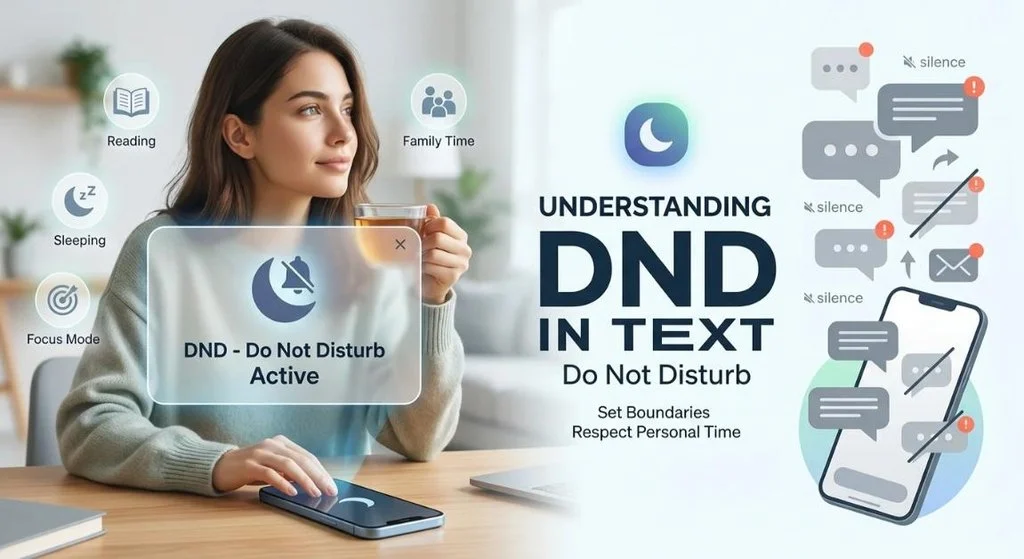
People use DND in everyday conversations whenever they want to communicate that they are unavailable or need uninterrupted time.
The reason can be practical, personal, or humorous.
Common situations include:
- Studying for an exam.
- Working on an important task.
- Sleeping.
- Driving.
- Watching a movie.
- Attending a meeting.
- Exercising.
- Taking a break from social media.
- Spending time with family.
- Wanting some personal space.
For example:
Friend: “Are you free?”
You: “Not right now. DND until 6.”
This clearly tells the friend to wait.
DND can also be used as a status:
“DND — studying 📚”
This is helpful in group chats because it lets others know that a quick reply may not come.
Sometimes the word is playful:
“DND. I’m watching the final episode 😂”
Here, the person is not necessarily annoyed. They simply do not want interruptions.
The phrase can also be more direct:
“DND please.”
That means the person wants others to stop messaging or calling for the moment.
A useful detail is that DND does not automatically mean someone is angry. New users sometimes assume that a DND message sounds rude. In reality, it depends on the relationship and wording.
Compare:
- “DND, talk later.” → Neutral.
- “DND please, I’m working.” → Polite and clear.
- “DND!!!” → Could sound annoyed or urgent.
Tone, punctuation, emojis, and previous messages can all change how DND feels.
DND Meaning Across WhatsApp, Instagram, TikTok & Snapchat
The basic DND meaning in text stays the same across most social platforms: Do Not Disturb.
However, the way people use it can change slightly depending on the platform.
On WhatsApp, someone may write:
“DND rn, will reply later.”
They are telling you that they are temporarily unavailable.
A person may also say:
“Phone on DND.”
This usually means notifications are being silenced.
On Instagram, DND may appear in a bio, Note, Story, or direct message.
For example:
“DND until tomorrow.”
It can mean the person does not want to answer DMs for a while.
TikTok
TikTok users may use DND casually in comments, messages, or captions.
Example:
“DND, watching TikToks 😂”
The meaning remains “do not disturb,” even when the person is joking.
Snapchat
On Snapchat, someone may send:
“DND tonight.”
This usually means they are not available for chats or calls.
The important point is that DND is not a special secret meaning for one particular social platform. Its standard texting meaning is generally the same.
However, context can change everything. For example, a gaming community may use DND to mean Dungeons & Dragons.
So before interpreting DND, look at the words around it.
Different Meanings of DND in Other Fields
Although Do Not Disturb is the most common texting meaning, DND has several other meanings.
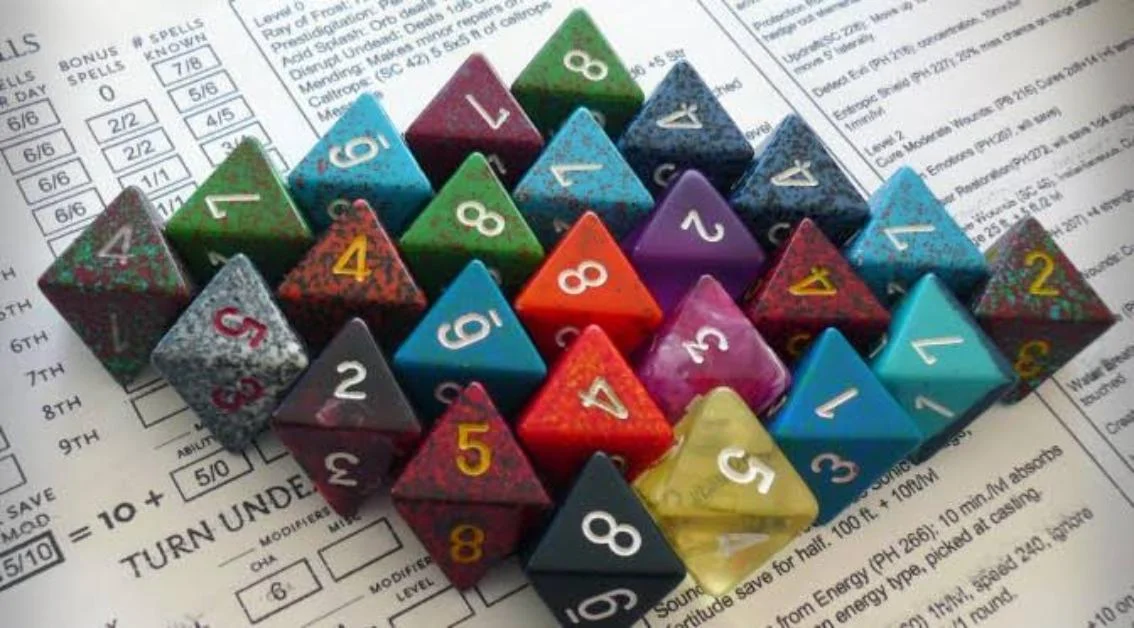
The most well-known alternative is Dungeons & Dragons, a popular tabletop role-playing game.
In a gaming conversation, someone might say:
“Are you playing DND tonight?”
Here, DND almost certainly means Dungeons & Dragons, not Do Not Disturb.
Other possible uses can appear in specialized areas, organizations, or technical contexts. The correct meaning depends heavily on the subject being discussed.
A quick comparison:
| Context | DND Meaning |
|---|---|
| Texting | Do Not Disturb |
| Phone settings | Do Not Disturb |
| Social media | Usually Do Not Disturb |
| Tabletop gaming | Dungeons & Dragons |
| Gaming groups | Often Dungeons & Dragons |
| Business or technical settings | Depends on the organization/context |
This is why it is risky to assume that every DND message means the same thing.
Consider these two sentences:
- “I put my phone on DND.”
- “We are playing DND tonight.”
The first clearly refers to Do Not Disturb.
The second most likely refers to Dungeons & Dragons.
When DND appears by itself, ask what the conversation is about. If people are discussing phones, notifications, sleep, or being busy, Do Not Disturb is the likely answer.
If they are discussing characters, dice, campaigns, dragons, or tabletop games, Dungeons & Dragons is much more likely.
Common Confusions, Mistakes & Wrong Interpretations
DND is simple, but short abbreviations can still cause confusion.
One common mistake is assuming that DND always means “Do Not Disturb.” That is not true in every conversation.
Another mistake is thinking that DND means someone is angry.
For example:
“DND for a while.”
This does not necessarily mean the person is upset with you. They may simply be working, studying, sleeping, or taking a break.
People can also confuse DND with related terms such as AFK and BRB.
- DND = Do Not Disturb.
- AFK = Away From Keyboard.
- BRB = Be Right Back.
- GTG/G2G = Got To Go.
- Offline = Not currently connected or available.
These expressions overlap, but they are not identical.
Another mistake is treating DND as a permanent rejection.
If someone says:
“DND until 9.”
They are usually saying they do not want interruptions until 9, not that they never want to talk.
The tone can also be misunderstood. A short message such as “DND” may look harsh because it contains no explanation. Adding a reason can make it friendlier:
“DND for an hour, studying 🙏.”
When you receive DND, avoid immediately assuming something is wrong. Check the context and give the person the space they requested.
Similar Terms, Alternatives & Related Slang
Several abbreviations communicate a similar idea to DND.
Here are some of the most useful ones:
- AFK — Away From Keyboard.
- BRB — Be Right Back.
- GTG/G2G — Got To Go.
- Busy — Not available right now.
- Offline — Not currently available online.
- TTYL — Talk To You Later.
- L8R — Later.
- Do Not Disturb — The full phrase behind DND.
- No notifications — A casual way to say alerts are off.
There are small differences between them.
DND focuses on not wanting interruptions.
AFK focuses on being away from the device or keyboard.
BRB usually means the person expects to return soon.
TTYL means the conversation will continue later.
Examples:
- “AFK for 20 mins.” → I am away for 20 minutes.
- “BRB, dinner.” → I will be back soon.
- “DND, exam prep.” → Please do not disturb me while I study.
- “TTYL.” → I will talk to you later.
These terms are especially useful when writing related abbreviation pages. Internal links could include:
- BRB meaning in text
- AFK meaning in text
- TTYL meaning in text
- GTG meaning in text
- IDK meaning in text
- LOL meaning in text
This creates a useful topic cluster for readers searching for texting abbreviations.
Examples of DND in Real Chat Situations
Seeing DND in real conversations makes its meaning much easier to understand.
Example 1: Studying
- Friend: “Can I call?”
- You: “DND for two hours. I have an exam tomorrow 📚”
- Meaning: Please do not call right now.
Example 2: Sleeping
- Person: “Going DND. Good night 😴”
- Meaning: I do not want notifications or interruptions while I sleep.
Example 3: Work
- Coworker: “Are you free for a quick chat?”
- You: “DND until 4. I’m finishing a report.”
- Meaning: I am busy until 4.
Example 4: Casual
- Friend: “Come online!”
- You: “DND 😂 movie time.”
- Meaning: I am watching a movie and do not want interruptions.
Example 5: Phone setting
- Friend: “Why didn’t you answer?”
- You: “My phone was on DND.”
- Meaning: Notifications were silenced.
Example 6: Gaming
- Friend: “Want to play DND tonight?”
- You: “Sure!”
- Meaning: Here, DND means Dungeons & Dragons.
The last example shows why context matters.
How to Reply When Someone Says DND
When someone says DND, the best response is usually to respect their request.
You do not need to send a long message.
Simple replies include:
- “Sure, talk later.”
- “No problem 👍”
- “Okay, message me when you’re free.”
- “Got it. Good luck with your work!”
- “Sure, take your time.”
If the message sounds serious, avoid repeatedly calling or sending many messages.
For example:
Them: “DND until 8. I need to study.”
You: “No worries. Good luck! 📚”
That response acknowledges the request without creating another interruption.
If you need to discuss something urgent, you can explain why:
“I know you’re on DND, but this is urgent. Please call when you can.”
This is more respectful than repeatedly sending messages.
If you are unsure what DND means, you can simply ask:
“Do you mean you’re unavailable right now?”
That removes confusion without making assumptions.
Is DND Still Popular? Trends & Online Usage
Yes, DND is still widely understood in 2026, especially because “Do Not Disturb” remains a familiar phone feature.
Modern smartphones make the term easy to recognize. People see DND-related controls when managing notifications, sleep schedules, meetings, driving modes, and other focus periods.
Texting culture also continues to favor short expressions. Abbreviations save time and work well in quick chats.
DND is especially useful because it can communicate both availability and boundaries.
For example:
“DND until 7 PM.”
This gives another person a clear expectation. Instead of wondering why someone is not replying, they know when the person may become available.
DND also works well as a status message:
- DND — studying
- DND — sleeping
- DND — work
- DND until Monday
- DND, call later
At the same time, not everyone uses the abbreviation itself. Many people simply write “busy,” “offline,” “I’ll reply later,” or use their phone’s notification settings without mentioning DND.
So while DND is not necessarily the newest internet slang, it remains useful and recognizable.
Its popularity is partly connected to the fact that Do Not Disturb is both a common phrase and a built-in digital feature.
FAQs
What does DND mean in texting?
DND usually means “Do Not Disturb.” It tells someone that the person is unavailable or does not want interruptions for a while.
What does DND mean on WhatsApp?
On WhatsApp, DND normally means Do Not Disturb. Someone may use it to say they are busy and will respond later.
What does DND mean on Instagram?
DND on Instagram usually means Do Not Disturb. It may tell followers or friends that someone does not want to receive or answer messages right now.
Does DND mean someone is angry?
Not necessarily. DND usually means the person wants uninterrupted time. Their tone depends on the context and wording.
What does DND mean in gaming?
In gaming, DND can mean Dungeons & Dragons, especially when people are talking about tabletop role-playing games.
Is DND the same as AFK?
No. DND means Do Not Disturb, while AFK means Away From Keyboard. Both can indicate that someone is unavailable, but they describe different situations.
What should I reply to DND?
A simple reply such as “No problem, talk later 👍” is usually appropriate. The best approach is to respect the person’s request for space.
Is DND still used in 2026?
Yes. DND remains familiar because “Do Not Disturb” is commonly used in phones, messaging, social media, and everyday conversations.
Conclusion:
The most common DND meaning in text in 2026 is “Do Not Disturb.” People use it to show that they are busy, unavailable, sleeping, studying, working, or simply taking a break from messages.
It can refer to a personal request or to the Do Not Disturb feature on a phone. The abbreviation is common across texting and platforms such as WhatsApp, Instagram, TikTok, and Snapchat.
However, context is important because DND can also mean Dungeons & Dragons in gaming conversations.
If someone sends you “DND,” the safest response is to respect their space and wait until they are available.
In short, DND is a simple, useful abbreviation that remains easy to understand and relevant in modern online communication
