When someone sends you “BOL” in a text, it can be confusing if you do not know internet slang. You may wonder whether it is an abbreviation, a typo, or a phrase with a special meaning.
In most casual texting, BOL means “Best of Luck.” People use it to wish someone good luck before an exam, interview, game, trip, competition, or another important event.
The phrase is short, friendly, and easy to type, which makes it useful in fast-moving online conversations. However, abbreviations can sometimes have more than one meaning depending on the situation.
That is why people often search for BOL meaning in text, especially after seeing it in a message on WhatsApp, Instagram, TikTok, Snapchat, or another social platform.
In this guide, you will learn what BOL means, where it comes from, how people use it, and how to reply when someone sends it.
What Does BOL Mean in Text & Chat?
In text messages and online chats, BOL usually means “Best of Luck.” It is a short way to wish someone success or good fortune.
Think of BOL as a quick version of saying:
- “Good luck!”
- “Best of luck!”
- “I hope everything goes well!”
- “Wishing you success!”
- “Hope you do great!”
For example, if your friend tells you that they have an important exam tomorrow, you might reply:
- “BOL on your exam! 😊”
- “You’ve got this. BOL!”
- “BOL with the interview tomorrow.”
The tone is normally positive and friendly. It can be used between friends, classmates, coworkers, gaming partners, and online contacts.
The exact meaning can still depend on context. Some abbreviations have different meanings in different communities. So, if someone writes only “BOL” without any other information, the safest interpretation is usually “Best of Luck” when the conversation is about an upcoming event or challenge.
It is also worth remembering that texting slang is informal. BOL would be more natural in a chat or social media message than in a formal business letter or academic paper.
Quick meaning:
- BOL = Best of Luck
- Used for: wishing someone success
- Tone: friendly and casual
- Common setting: texting, social media, gaming, and online chat
Full Form, Stands For & Short Meaning of BOL
The most common texting expansion of BOL is “Best of Luck.” Each word is shortened to create a compact abbreviation that can be typed quickly.
Here is the breakdown:
- B = Best
- O = Of
- L = Luck
- BOL = Best of Luck
The abbreviation works in much the same way as other online shortcuts. Instead of typing an entire phrase, users send a few letters that carry the same basic message.
For example:
Full phrase: “Best of luck with your presentation tomorrow.”
Text version: “BOL with your presentation tomorrow!”
The shorter version saves time and fits the fast style of online communication.
BOL can also appear at the end of a message:
“Hope your match goes well. BOL!”
Or it can stand alone:
“BOL! 👍”
When it appears by itself, the surrounding conversation becomes especially important. If someone has just told you about an exam, job interview, sports match, or competition, “BOL!” is very likely a good-luck message.
One important point is that BOL is not a universal abbreviation with only one meaning everywhere. Internet slang can change between communities, countries, apps, and age groups. In a different context, the same letters may represent something else.
That is why you should look at the complete message before deciding what an abbreviation means.
For everyday texting, however, “Best of Luck” is the meaning most relevant when someone uses BOL as a supportive message.
Origin, History & First Known Use of BOL
There is no single, universally accepted date for the first use of BOL as a texting abbreviation for “Best of Luck.” Like many internet abbreviations, it developed as part of a wider culture of shortening common phrases.
Online shorthand became especially popular as people began communicating through chat rooms, instant messaging, forums, SMS, and later social media. Users wanted to type quickly, so familiar expressions were often reduced to their first letters.
Examples include:
- LOL — Laughing Out Loud
- BRB — Be Right Back
- BTW — By The Way
- IDK — I Don’t Know
- GL — Good Luck
- BOL — Best of Luck
The phrase “best of luck” itself is much older than texting. People have used it in ordinary spoken and written English for a long time when wishing someone success. The abbreviation is simply a shorter digital form.
It is difficult to identify one person or website that “invented” BOL. Internet slang usually develops through repeated use by many people rather than through an official organization.
Another reason the history can be unclear is that old online communities used abbreviations differently. A short expression could appear in forums, gaming groups, chat rooms, or private messages without leaving a clear record of who used it first.
So, rather than claiming a specific inventor or exact first date without strong evidence, it is more accurate to say that BOL emerged as part of the broader growth of digital shorthand.
Today, its meaning is easy to understand when used in a supportive context: Best of Luck.
How People Use BOL in Daily Conversations
People generally use BOL when they want to wish another person success without typing the full phrase.
It often appears before an event or activity where the other person hopes to perform well.
Common situations include:
- Before an exam
- Before a job interview
- Before a sports game
- Before a driving test
- Before a competition
- Before a presentation
- Before a performance
- Before an important meeting
- Before a difficult task
For example:
- Friend: “I have my final exam tomorrow.”
- You: “BOL! You’ll do great 😊”
Another example:
- Friend: “My interview starts in 20 minutes.”
- You: “BOL! Hope you get it.”
It can also be used after giving advice or encouragement:
- “Just stay calm and answer clearly. BOL!”
- “You’ve practiced a lot. BOL with the match!”
- “Hope everything works out. BOL 🤞”
The abbreviation usually carries a warm and supportive tone. It is not normally used to insult someone or express anger.
However, tone can change depending on the message. For example, if someone says something obviously sarcastic and adds “BOL,” it might be playful rather than serious.
The safest approach is to read BOL together with the rest of the conversation.
BOL Meaning Across WhatsApp, Instagram, TikTok & Snapchat
The BOL meaning in WhatsApp, Instagram, TikTok, and Snapchat is generally understood in the same way when it appears as a good-luck message: “Best of Luck.”
However, the way people use the abbreviation can change from platform to platform.
WhatsApp users may send BOL before an exam, interview, trip, game, or other event.
- “Exam tomorrow 😭”
- “BOL! You got this!”
On Instagram, BOL may appear in direct messages or comments. Someone might use it when replying to a post about an upcoming competition or project.
- “Your audition is tomorrow? BOL! 🔥”
TikTok
TikTok users often communicate with short slang terms because comments and direct messages are informal. BOL may be used when someone talks about an upcoming challenge.
- “Going to the finals tomorrow!”
- “BOL!! 🙌”
Snapchat
Snapchat conversations are usually quick and casual, so abbreviations can fit naturally.
- “Driving test today.”
- “BOL 😎”
The important point is that the platform does not normally change the basic meaning. Context still matters more than the app.
If someone sends “BOL” after you mention an important event, they are most likely wishing you success.
Different Meanings of BOL in Other Fields
Although BOL means “Best of Luck” in many casual texting situations, the abbreviation can have completely different meanings in other fields.
This is one reason abbreviations can be confusing.
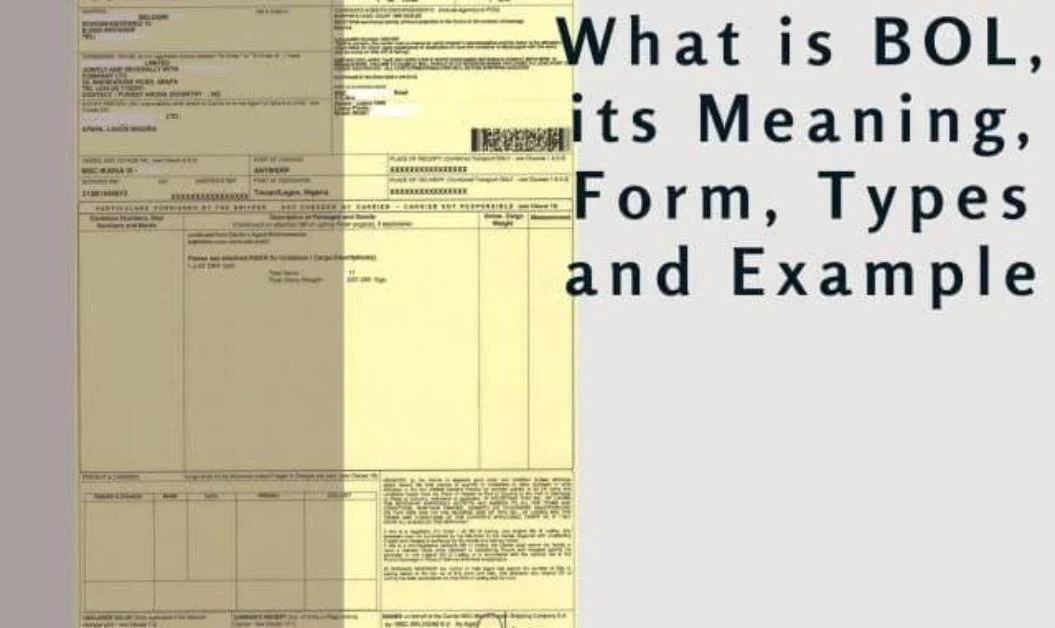
For example, in business, shipping, logistics, or transportation, BOL can commonly refer to “Bill of Lading.” A bill of lading is a document associated with the shipment and transportation of goods.
In that setting, BOL has nothing to do with wishing someone good luck.
For example:
- “Please send the BOL for the shipment.”
- “The carrier needs the BOL before pickup.”
Here, “Best of Luck” would obviously make no sense.
Other fields may also use BOL as an abbreviation for specialized terms, organizations, names, or technical expressions.
This gives us an important rule:
Never decide what an abbreviation means from the letters alone.
Look at the conversation or subject first.
A simple context guide
- Texting a friend: BOL may mean Best of Luck
- Before an exam: BOL likely means Best of Luck
- Gaming chat: BOL may be a good-luck message
- Shipping documents: BOL may mean Bill of Lading
- Business communication: Check the surrounding subject
- Technical documents: Do not assume the texting meaning
Context is the key. The same three letters can have different meanings in completely different situations.
Common Confusions, Mistakes & Wrong Interpretations
One common mistake is assuming that every person uses BOL in exactly the same way. Online abbreviations are flexible, and different communities may develop their own meanings.
Another mistake is confusing BOL with other good-luck expressions.
For example:
- GL = Good Luck
- GLHF = Good Luck, Have Fun
- BOL = Best of Luck
- BOL may have other meanings outside casual texting
A person may also mistake BOL for a typo if they have never seen the abbreviation before. This is especially common when the message contains only three letters.
For example:
“BOL!”
Without context, a new user might wonder what the sender means.
The easiest way to understand it is to check what was discussed immediately before the message.
Common mistakes
- Assuming BOL always means “Best of Luck”
- Using BOL in a formal document without explaining it
- Confusing BOL with GL or GLHF
- Thinking it is an insult because the meaning is unfamiliar
- Ignoring the conversation context
- Assuming every social media community uses the same slang
If you are unsure, asking is perfectly normal:
“What does BOL mean here?”
A simple question can prevent a misunderstanding.
Similar Terms, Alternatives & Related Slang
There are several abbreviations and phrases that can express a similar idea to BOL.
The best alternative depends on how casual you want to sound.
Common alternatives
- GL — Good Luck
- GLHF — Good Luck, Have Fun
- Good luck! — Clear and universal
- Best of luck! — Full version of BOL
- You got this! — Encouraging and friendly
- All the best! — Warm and polite
- Fingers crossed! 🤞 — Hopeful and casual
- Knock ’em dead! — Informal encouragement
- Go for it! — Motivational
For example, a gaming friend might say:
“GLHF!”
A classmate might say:
“BOL on your exam!”
A close friend might simply say:
“You got this! ❤️”
The meaning is similar, but the tone is different.
Useful related abbreviation pages
For an abbreviation-focused website, useful internal links could include:
- [GL Meaning in Text] — explain “Good Luck”
- [GLHF Meaning in Text] — explain “Good Luck, Have Fun”
- [LOL Meaning in Text] — explain “Laughing Out Loud”
- [BRB Meaning in Text] — explain “Be Right Back”
- [IDK Meaning in Text] — explain “I Don’t Know”
- [BTW Meaning in Text] — explain “By the Way”
These internal links can help readers discover related slang while also creating a stronger topic cluster for SEO.
Examples of BOL in Real Chat Situations
Seeing BOL in real conversations makes the meaning much easier to understand.
Example 1: Exam
- Alex: “I have my math exam tomorrow.”
- Sam: “BOL! 📚 You’ve studied hard.”
Here, BOL clearly means Best of Luck.
Example 2: Job Interview
- Alex: “My first job interview is at 10.”
- Sam: “BOL! Hope you get the job 😊”
Example 3: Sports
- Alex: “Our team plays the final tonight.”
- Sam: “BOL to everyone! 🏆”
Example 4: Gaming
- Alex: “Starting the tournament now.”
- Sam: “BOL! 🎮”
Example 5: Driving Test
- Alex: “Taking my driving test tomorrow.”
- Sam: “BOL! Stay calm and focus.”
Example 6: Presentation
- Alex: “I’m presenting my project in five minutes.”
- Sam: “BOL! You’ll be great.”
Quick examples
- “BOL with your exam!” → Best of luck with your exam.
- “BOL tonight!” → Best of luck tonight.
- “BOL 🤞” → Wishing you success.
- “BOL on the interview.” → Best of luck with the interview.
- “BOL, you’ve got this!” → Friendly encouragement.
These examples show that BOL usually appears around an event where someone wants support or encouragement.
How to Reply When Someone Says BOL
If someone sends you “BOL!”, they are probably wishing you good luck. You do not need a complicated response.
A simple “Thanks!” is perfectly natural.
You can also match the casual tone of the conversation.
Short replies
- “Thanks! 😊”
- “Thank you!”
- “Thanks, I appreciate it!”
- “Thanks! I’ll need it 😂”
- “Thanks! I’ve got this.”
- “Thank you, fingers crossed 🤞”
- “Thanks! Wish me luck!”
Friendly replies
If the person is a close friend, you can make the response more personal:
“Thanks! I’ll let you know how it goes 😊”
Or:
“Thanks! Hopefully everything goes well.”
If you are chatting with someone in a gaming community, something shorter may feel more natural:
“Ty!”
Here, TY means “Thank You.”
You can also return the good wishes:
“Thanks! BOL to you too!”
That works especially well when both people are about to take part in the same event.
For example:
- Friend: “BOL to us both! 😂”
- You: “Haha, thanks! We’ve got this!”
The best response depends on your relationship with the person. A casual abbreviation usually deserves a casual reply.
Is BOL Still Popular? Trends & Online Usage

BOL remains understandable as an abbreviation for “Best of Luck,” but it is not necessarily as universal as some older texting abbreviations such as LOL, BRB, or IDK.
Internet slang changes quickly. New generations of users often prefer plain language, emojis, memes, and newer abbreviations. Because of this, some older shorthand can become less common even though people still recognize it.
You may also see “GL” used more often in gaming or competitive communities because it is even shorter.
For example:
- “GL!”
- “GLHF!”
- “BOL!”
- “Good luck!”
- “You got this!”
The choice often depends on the community and the person’s personal texting style.
BOL is still useful because it is short and easy to understand once you know the meaning. It can also sound friendly without requiring a long message.
One thing to remember is that slang popularity is difficult to measure precisely. A term may be common in one group but uncommon in another. Its appearance on one platform does not automatically mean everyone uses it.
So, if you see BOL online today, “Best of Luck” is a strong interpretation when the conversation is about an upcoming challenge or event.
If the context is business, shipping, technology, or another specialized field, check the surrounding information before deciding what BOL means.
FAQs
What does BOL mean in texting?
In casual texting, BOL usually means “Best of Luck.” It is used to wish someone success before an important event or activity.
What does BOL mean on WhatsApp?
On WhatsApp, BOL can mean “Best of Luck” when someone is encouraging another person. For example, “BOL with your exam!” means “Best of luck with your exam!”
What does BOL mean on Instagram?
On Instagram, BOL can be used in DMs or comments to mean “Best of Luck.” The exact meaning should always be checked against the conversation.
What does BOL mean on Snapchat?
On Snapchat, BOL may mean “Best of Luck” when someone is wishing another person success. It is usually casual and friendly.
Is BOL the same as GL?
They are similar but not identical. GL means “Good Luck,” while BOL means “Best of Luck.” Both can be used to encourage someone.
What does BOL mean in business?
In business and shipping, BOL can mean “Bill of Lading.” This is different from the texting meaning “Best of Luck.”
How do I reply to BOL?
You can simply say “Thanks!”, “Thank you 😊,” or “Thanks, I appreciate it!” If both of you have an upcoming challenge, you can say “BOL to you too!”
Is BOL a formal abbreviation?
No. When it means “Best of Luck,” BOL is mainly a casual abbreviation for online conversations. Writing “Best of Luck” is better when you need a formal or professional tone.
Conclusion:
The BOL meaning in text is usually “Best of Luck.” People use this short abbreviation to encourage someone before an exam, interview, competition, game, presentation, or another important event. It is friendly, simple, and most common in casual digital conversations.
You may see BOL in WhatsApp messages, Instagram DMs, TikTok comments, Snapchat chats, gaming conversations, and other online spaces. However, context is important because BOL can have different meanings in other fields.
In shipping and logistics, for example, it can mean “Bill of Lading.”
If someone sends you “BOL!” after you tell them about an upcoming challenge, they are most likely wishing you success. A simple “Thanks!” is all you need to say in return. Understanding the context will help you interpret the abbreviation correctly.
