If someone sends you “SU” or “HMB” in a text, you may wonder what they are trying to say. These short forms are common in texting, social media, gaming chats, and casual online conversations.
The tricky part is that SU can have more than one meaning, while HMB usually has a more specific meaning.
People search for SU meaning in text and HMB meaning in text because online slang changes quickly. A short message can also mean something different depending on the conversation.
For example, “SU” may mean “see you” in one chat but “shut up” in another. Meanwhile, “HMB” most often means “hit me back,” which is a casual way to ask someone to reply later.
This guide explains both terms in simple language. You will learn their meanings, uses, examples, possible confusion, and how to reply naturally.
What Does SU Mean in Text & Chat?
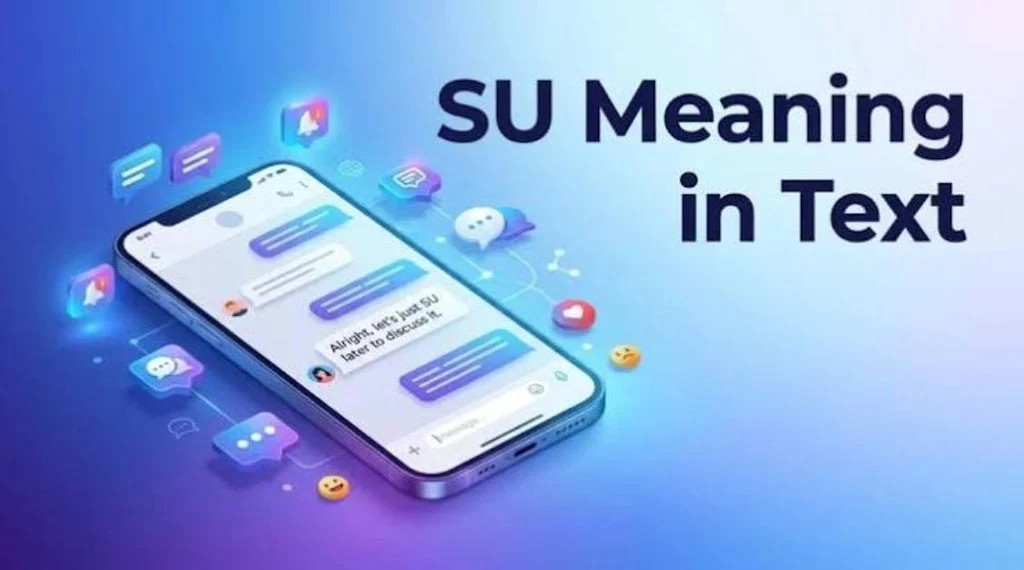
The meaning of SU in text depends heavily on the context. Unlike some texting abbreviations that have one clear definition, “SU” can stand for several phrases.
One common meaning is “see you.” In this use, “SU” is a quick way to say goodbye or tell someone that you expect to see them later. It is especially useful in short, casual messages.
For example:
- “I gotta go now. SU tomorrow!”
- “Okay, SU later 👋”
- “Leaving work now. SU soon.”
However, SU can also mean “shut up.” This version is very different. It can be playful between close friends, but it can also sound rude or aggressive. The surrounding conversation usually tells you which meaning is intended.
Examples:
- “SU 😂 You did not actually say that!”
- “Bro, SU, I’m trying to concentrate.”
- “No way! SU! 😂”
In some online conversations, people may also use “SU” as shorthand for “what’s up?” although “sup,” “s’up,” or “wassup” are more common forms for that expression.
The safest way to understand “SU” is to look at the complete message. If someone says “SU tomorrow,” they probably mean “see you.” If they respond to a surprising statement with “SU 😂,” they may mean “shut up” in a joking way.
So, there is no single answer to SU meaning in text. Context matters.
Full Form, Stands For & Short Meaning of SU and HMB
The most useful meanings of these abbreviations are fairly simple.
SU
Depending on the conversation, SU may stand for:
- See you — a casual goodbye.
- Shut up — telling someone to stop talking, sometimes jokingly.
- What’s up? — a less common shorthand related to “sup.”
- Startup — sometimes used in business or technology contexts.
- Syracuse University — in an educational context.
- Service Unit — in certain professional or technical contexts.
When someone specifically asks about SU meaning in text, the intended meaning is usually one of the casual texting meanings rather than a professional abbreviation.
HMB
HMB most commonly stands for:
- Hit me back — reply or contact me later.
- Hit me back later — a slightly more explicit version.
- Hit me back when you can — asking someone to respond when they have time.
In texting, “hit me back” does not mean physically hitting someone. It simply means “get back to me” or “send me a reply.”
For example:
- “I have to run. HMB.”
- “Check your schedule and HMB.”
- “HMB when you’re free 👍”
The short meanings are therefore:
SU = See you / Shut up, depending on context
HMB = Hit me back
Understanding the situation is more important than memorizing one fixed definition.
Origin, History & First Known Use of SU and HMB
Text abbreviations developed because people wanted to communicate quickly. Early digital communication had practical limits. Text messages were often short, typing could take time, and older mobile phones made long messages less convenient.
Abbreviations such as SU and HMB fit naturally into this style of communication. People began shortening familiar phrases by using their first letters.
HMB follows a simple pattern. “Hit me back” was already a casual spoken expression meaning “contact me again” or “reply to me.” Text users shortened it to the initials H-M-B.
SU is more complicated because the letters can represent different phrases. “See you” has long been shortened in informal communication, while “shut up” is also easily represented by its first two words. This makes SU an example of a context-dependent abbreviation.
It is difficult to identify one exact moment when either abbreviation was first typed. Internet slang rarely has a single inventor or official starting date. Many expressions spread gradually through text messages, chat rooms, forums, instant messaging, and later social media.
As mobile communication became faster, abbreviations became less necessary from a technical point of view. Modern phones have full keyboards, autocorrect, voice typing, and predictive text. Still, short forms remain popular because they can make messages feel casual and quick.
Today, SU and HMB belong to a much larger family of online abbreviations, including:
- LOL — laughing out loud
- BRB — be right back
- IDK — I don’t know
- BTW — by the way
- TBH — to be honest
- HMU — hit me up
- TTYL — talk to you later
Their history is therefore part of the wider story of internet language and casual digital communication.
How People Use SU and HMB in Daily Conversations
People usually use these abbreviations with friends, classmates, family members, gaming partners, or other people they know casually. They are less suitable for formal emails, job applications, business letters, or official documents.
SU can appear at the end of a conversation when it means “see you.”
For example:
- “I’m heading home. SU tomorrow.”
- “Okay, SU later!”
- “Gotta go now, SU soon 👋”
It can also appear as a reaction when it means “shut up.” In friendly conversations, this may express surprise rather than anger.
For example:
- “I just won the contest.”
- “SU! Seriously? 😂”
Here, “SU” could mean something like “No way!” rather than a serious command to stop speaking.
HMB is usually used when someone wants another person to contact them later.
Examples include:
- “I’m in class. HMB after 3.”
- “Let me check and HMB.”
- “I’m busy right now. HMB tonight.”
- “HMB when you get home.”
The tone of HMB is normally casual and practical.
A useful difference is that SU can communicate an emotion or farewell, while HMB usually communicates a request for future contact.
When using either abbreviation, consider who you are talking to. A close friend may understand “SU 😂” immediately. A teacher, employer, customer, or new professional contact may not.
For formal communication, write the complete phrase instead.
SU Meaning Across WhatsApp, Instagram, TikTok & Snapchat
The meaning of SU can change slightly depending on the platform, but the basic rule remains the same: context determines the meaning.
On WhatsApp, SU may mean “see you” when someone is ending a conversation.
Example:
- “I’ll call you later. SU 👋”
It can also mean “shut up” among friends:
- “You got tickets?! SU 😂”
Instagram comments and direct messages often contain slang. Here, “SU” may be used as a quick reaction, especially between friends.
For example:
- “SU 😂 that outfit is crazy!”
- “Okayyy SU, you’re too funny.”
Because Instagram conversations are informal, users may assume that close friends understand the intended tone.
TikTok
TikTok has its own fast-moving slang culture. A short abbreviation can appear in comments, captions, or private messages. SU may be interpreted based on the video and surrounding comments.
If someone writes “SU 😂” under a surprising video, it may express disbelief or playful shock.
Snapchat
Snapchat is strongly focused on quick, casual communication. SU can fit naturally into short messages.
For example:
- “SU tomorrow?”
- “SU later 👻”
- “SU 😂 no way!”
HMB can also appear on any of these platforms:
- “Busy rn, HMB.”
- “HMB when you see this.”
- “HMB after practice.”
The platform does not completely change the definition. Instead, the relationship between the people and the surrounding message helps determine what the abbreviation means.
Different Meanings of SU and HMB in Other Fields
Text slang is only one part of the story. Both abbreviations can have other meanings outside casual messaging.
For SU, different fields may use the letters for completely unrelated terms.
Examples include:
- Syracuse University in education.
- Startup in business discussions.
- Service Unit in technical or organizational settings.
- System Unit in some computing contexts.
- Other organization-specific abbreviations.
This is why seeing “SU” in a document does not automatically mean “see you” or “shut up.”
HMB can also have meanings outside texting, although “hit me back” is the dominant interpretation in casual digital communication. Organizations and technical fields may create their own abbreviations, so professional context should always be considered.
For example, compare these messages:
- “HMB when you’re free.” → likely hit me back.
- “SU meeting starts at 10.” → potentially a professional or organization-specific abbreviation.
- “SU tomorrow!” → likely see you.
- “SU 😂” → potentially shut up in a playful way.
The key lesson is simple: never interpret an abbreviation without looking at its context.
If you find SU or HMB in a school document, medical document, technical report, company message, or official notice, the intended meaning may be completely different from texting slang.
Common Confusions, Mistakes & Wrong Interpretations
The biggest problem with SU meaning in text is that two letters can represent different phrases.
A common mistake is assuming that SU always means “shut up.” That can create an awkward situation. Someone saying “SU tomorrow” is almost certainly not telling you to stop talking. They are probably using it as a casual version of “see you.”
Another mistake is assuming that HMB means something physical. In texting, “hit me back” is an idiom. It means “reply to me” or “contact me again.”
Tone can also cause confusion.
Consider:
“SU 😂”
Between close friends, this may be playful.
But:
“SU.”
With no emoji or friendly context, it can sound much harsher.
The same words can therefore have different emotional effects.
Common mistakes include:
- Assuming SU has only one meaning.
- Reading “SU” as rude when it means “see you.”
- Assuming HMB means something literal.
- Using slang with someone who may not understand it.
- Using texting abbreviations in formal writing.
- Ignoring emojis and surrounding messages.
- Treating internet slang as having one universal definition.
If you are unsure, asking is better than guessing.
You can simply say:
- “What do you mean by SU?”
- “Do you mean see you?”
- “What does HMB mean here?”
A short clarification can prevent a much bigger misunderstanding.
Similar Terms, Alternatives & Related Slang
If you are learning texting language, SU and HMB are only two examples. Several related abbreviations are useful to know.
Alternatives to SU meaning “see you”
You may also see:
- CU — see you.
- CYA — see ya.
- TTYL — talk to you later.
- L8R — later.
- See ya — informal full phrase.
For example:
- “CU tomorrow!”
- “TTYL 👋”
- “CYA later.”
Alternatives to HMB
Several phrases have a similar meaning:
- HMU — hit me up.
- Get back to me — reply later.
- Text me later — direct and clear.
- Message me when you can — polite and easy to understand.
- Lmk — let me know.
Be careful with HMU, though. “Hit me up” usually means “contact me,” while HMB specifically suggests getting a response or getting back in touch.
Quick comparison:
- HMB = Hit me back.
- HMU = Hit me up.
- LMK = Let me know.
- TTYL = Talk to you later.
- CU/CYA = See you/See ya.
These terms overlap, but they are not always interchangeable.
For related SEO pages, you could internally link this article to pages such as HMU meaning, LMK meaning, TTYL meaning, CYA meaning, and BRB meaning. This can help readers understand connected texting slang without interrupting the main article.
Examples of SU and HMB in Real Chat Situations
Seeing abbreviations inside realistic conversations makes their meanings much easier to understand.
Example 1: SU = See You
Alex: “Are you coming tomorrow?”
Sam: “Yep! SU at school 👋”
Here, SU means “see you.”
Example 2: SU = Shut Up
Alex: “I met your favorite singer today!”
Sam: “SU 😂 Are you serious?”
Here, SU is probably playful and expresses surprise.
Example 3: HMB = Hit Me Back
Alex: “I need to check my schedule first.”
Sam: “Sure, HMB when you know.”
HMB means “hit me back” or “get back to me.”
Example 4: HMB Later
Alex: “Can you talk right now?”
Sam: “No, I’m working. HMB tonight.”
The person is asking Alex to contact them again later.
Quick examples
- “Okay, SU tomorrow!” → See you
- “SU 😂 No way!” → Shut up / playful disbelief
- “HMB when you’re free.” → Hit me back
- “I’ll check and HMB.” → I’ll get back to you
- “SU later 👋” → See you later
The important point is that the sentence around the abbreviation gives you the clue.
How to Reply When Someone Says SU or HMB
Your reply should depend on what the person means.
If SU means “see you,” you can reply naturally with:
- “See you!”
- “Yep, later 👋”
- “CU!”
- “See you tomorrow.”
If SU means “shut up” in a playful conversation, you can match the friendly tone:
- “😂 Never!”
- “You wish!”
- “Haha, make me!”
- “I’m just telling the truth 😂”
Avoid treating a playful message as a serious insult unless the overall conversation suggests that the person is genuinely angry.
If someone says HMB, they usually want you to contact them again or send a response later.
You can reply:
- “Sure!”
- “Will do 👍”
- “Okay, I’ll text you later.”
- “No problem.”
- “I’ll get back to you.”
If you are unsure what HMB means in a particular conversation, ask:
“Do you mean hit me back?”
There is nothing wrong with asking. Slang changes quickly, and even frequent internet users can encounter abbreviations they have never seen before.
The best reply is one that matches the relationship and tone. With a close friend, a short slang response may feel natural. With a teacher, customer, employer, or professional contact, a complete sentence is usually better.
Is SU Still Popular? Trends & Online Usage
Texting slang is always changing. Some abbreviations become less popular, while others remain useful because they are short and easy to understand.
HMB continues to make sense in casual digital conversations because “hit me back” is a familiar phrase. It is especially useful when someone wants a reply later without writing a longer sentence.
SU is more complicated. Its use can depend on the person’s age, online community, platform, and personal texting style. Many people now simply type “see you,” “see ya,” or “see you later” because modern keyboards make full phrases easy to write.
At the same time, short forms still appear in fast-moving chats, comments, gaming communities, group messages, and direct messages.
The popularity of slang also depends on the platform. A person who uses lots of abbreviations in private messages may write much more clearly on LinkedIn or in a work email.
Online language is also influenced by emojis. A message such as “SU 😂” can look much more playful than “SU.” Emojis often provide an important clue about the speaker’s intention.
Some related abbreviations remain widely recognized:
- LOL
- IDK
- BTW
- TBH
- BRB
- TTYL
- HMU
- LMK
So, while the exact popularity of SU may vary, the basic idea behind these abbreviations remains important: people use short forms to make digital conversations faster, lighter, and more casual.
FAQs
What does SU mean in text?
SU can have different meanings in text. The most common casual meanings are “see you” and “shut up.” The exact meaning depends on the surrounding conversation.
What does HMB mean in texting?
HMB usually means “hit me back.” It is a casual way to ask someone to reply or contact you again later.
Does SU mean “shut up”?
Yes, SU can mean “shut up.” Friends may use it playfully to show surprise or disbelief. However, it can also sound rude, so context and tone matter.
Does SU mean “see you”?
Yes. SU can be used as a short form of “see you,” especially when someone is ending a conversation.
Is HMB the same as HMU?
Not exactly. HMB means “hit me back,” which usually asks someone to reply or contact you again. HMU means “hit me up,” which generally means “contact me.”
What should I reply to HMB?
You can reply with “Sure,” “Will do,” “Okay, I’ll text you later,” or another natural response. It usually means the person wants you to get back to them.
Is SU rude?
It depends. If SU means “shut up,” it can be rude in some situations but playful between close friends. If it means “see you,” it is simply a casual goodbye.
How can I know which meaning of SU someone intends?
Look at the words around SU, the conversation topic, the person’s relationship with you, and any emojis. If you are still unsure, ask what they mean.
Conclusion:
Understanding SU meaning in text and HMB meaning in text is easier once you know that online abbreviations depend on context.
SU can mean “see you” or “shut up,” and its tone can change from friendly to rude depending on how it is used. HMB is more straightforward and usually means “hit me back,” or “contact me again later.”
These abbreviations are mainly useful in casual conversations. They can save time and make messages feel relaxed, but they are not always suitable for formal communication.
When you see an unfamiliar abbreviation, do not rely only on the letters. Read the whole message and consider the situation.
Once you understand the context, phrases like SU, HMB, HMU, LMK, and TTYL become much easier to recognize. A little knowledge of texting slang can help you avoid confusion and reply with confidence.
