The word home looks simple, but its meaning can change depending on where and how people use it.
In everyday English, home usually means the place where someone lives. In texts and online chats, however, it can also express comfort, belonging, friendship, or the feeling of being safe with someone. That is why people often search for the home meaning in text, especially when they see the word used in a short message, caption, or social media post.
Home is not always about a building or an address.
It can describe a familiar place, a hometown, a country, a team’s usual ground, or even a person who makes you feel comfortable. Dictionaries also recognize home as a noun, adjective, adverb, and verb, giving it many uses beyond the basic idea of a house.
This guide explains what home means in text and chat, how people use it online, its history, related slang, common mistakes, and simple ways to reply.
What Does Home Mean in Text & Chat?

In text messages and online conversations, home usually means the place where someone lives or the place they are returning to. The meaning is often straightforward, but the tone can change with the conversation.
For example, if someone texts, “I’m home,” they normally mean they have arrived at their house or usual place of residence. If someone asks, “Are you home?” they may simply be checking whether the person is available.
However, home can have a more emotional meaning. Someone may say, “You feel like home,” to describe a person who makes them feel safe, relaxed, and accepted. In this use, home is not a physical location. It describes a feeling of comfort and belonging.
Common meanings include:
- Home = the place where you live
- Home = a place you are returning to
- Home = your hometown or country
- Home = a comfortable or familiar place
- Home = a person who makes you feel safe
- Home = a team’s usual playing location
The context is important. A message such as “Going home 🏠” is probably literal. A message such as “With you, I’m home ❤️” is more emotional.
The word can also appear in very short messages:
- “Home?”
- “I’m home.”
- “Almost home.”
- “Made it home.”
- “Are you home yet?”
- “Finally back home 😌”
So, when someone asks about the home meaning in text, the safest answer is that it usually refers to one’s place of residence, but it can also describe comfort, belonging, or emotional security.
Full Form, Stands For & Short Meaning of Home
Unlike common texting abbreviations such as “LOL” or “BRB,” home is normally a complete English word, not an acronym. It does not have a traditional “full form” made from separate letters.
The short meaning of home is simply:
Home = the place where you live or feel that you belong.
Major English dictionaries define home in several related ways. It can mean a house or other place where someone lives, a familiar setting, a place of origin, or a place where someone feels they belong.
People sometimes shorten home to “hom” in informal internet slang or texting. Some slang references list “hom” as a shortened form of “home.”
For example:
- “I’m going hom.”
- “Back at hom.”
- “See you at hom later.”
However, “hom” is not as standard as “home.” It can also have other meanings in different contexts, so readers should look at the surrounding message before assuming what it means.
A useful distinction is:
- Home: standard English word
- Hom: informal abbreviation that may mean home
- Homie: informal word for a close friend
- House: usually the physical building
- Residence: more formal word for the place where someone lives
If someone asks, “What does home stand for?” the answer is different from an acronym question. Home does not officially stand for a phrase. It is already a complete word.
For SEO readers searching for a quick answer, the simplest definition is:
Home means the place where a person lives, belongs, or feels comfortable.
Origin, History & First Known Use of Home
The word home has a very old history in English. It is not a modern internet word or recent piece of slang. Its roots go back to Old English, where related forms referred to a home, dwelling, village, or place of residence.
Merriam-Webster traces the noun home to Middle English “hom” and further back to Old English “hām.”
Over time, the word developed beyond the simple idea of a physical dwelling. It became connected with:
- A person’s place of residence
- A person’s native place
- A familiar environment
- A place of belonging
- A family’s living space
- A team’s usual location
- A place where something naturally exists
This wider meaning explains why home can sound emotional even when there is no emotional language around it.
For example, “I’m going home” normally describes movement toward a place. But “This city is my home” can describe identity and belonging.
The word also developed grammatical uses. Today, home can work as a noun, adjective, adverb, and verb. For example:
- Noun: “My home is nearby.”
- Adverb: “I’m going home.”
- Adjective: “This is a home game.”
- Verb: “The bird homed in on its destination.”
The historical development of home shows why it has so many meanings today. Its basic idea has remained connected to residence and belonging, while modern English has added many practical and figurative uses.
So, although people may now use home in WhatsApp messages, captions, memes, and TikTok comments, the word itself is much older than the internet.
How People Use Home in Daily Conversations
People use home constantly in normal conversation. It is one of those everyday words that can fit into very short messages or longer emotional statements.
The most common use is to talk about someone’s current location.
For example:
- “I’m home.”
- “Are you home?”
- “What time will you be home?”
- “I’ll call you when I get home.”
- “I left my keys at home.”
In these examples, home refers to the person’s usual place of residence.
People also use home when talking about returning from work, school, travel, shopping, or social events.
Examples:
- “Just got home 😴”
- “On my way home.”
- “Can’t wait to get home.”
- “We should be home by 9.”
- “I’m finally back home!”
The word can also describe a place that feels familiar.
Someone might say:
- “This café feels like home.”
- “That town will always be home.”
- “I feel at home here.”
Here, home means more than a building. It suggests comfort and familiarity. English-learning resources also distinguish between a house as a physical structure and home as a place where someone lives or feels comfortable.
Home is also common in expressions:
- “Home sweet home.”
- “Make yourself at home.”
- “Back home.”
- “Away from home.”
- “Close to home.”
- “Home alone.”
- “Home town.”
The exact meaning comes from the sentence. A simple “I’m home” is usually practical. “You are my home” is usually emotional or romantic.
Home Meaning Across WhatsApp, Instagram, TikTok & Snapchat
The meaning of home is broadly similar across WhatsApp, Instagram, TikTok, and Snapchat, but the way people use it can change with the platform.
On WhatsApp, home is often used in direct messages.
Examples:
- “Are you home?”
- “I’m home now.”
- “Leaving for home.”
- “Call me when you get home 🏠”
Because WhatsApp is often used for private conversations, home can also have a personal or emotional meaning.
On Instagram, home may appear in captions, comments, Stories, or Reels.
Examples:
- “Home is a feeling.”
- “Back home ❤️”
- “Nothing beats home.”
- “Home with my favorite people.”
Instagram posts often use home in a more emotional or aesthetic way.
TikTok
TikTok users may use home in captions or comments to express nostalgia, comfort, identity, or humor.
Examples:
- “This song feels like home.”
- “POV: You finally get home after a long day.”
- “This place is basically my second home.”
Snapchat
Snapchat conversations often use home in short location-based messages:
- “You home?”
- “I’m home 😂”
- “Almost home.”
- “Come home!”
The main point is that home does not suddenly gain a completely different dictionary meaning on each platform. The platform mainly changes the style and context.
A useful rule is:
Private chat → usually literal or personal.
Social media caption → often emotional, nostalgic, humorous, or symbolic.
Different Meanings of Home in Other Fields
The word home has important meanings outside texting and social media. This is one reason context matters when interpreting it.
Sports
In sports, home often refers to the place where a team normally plays.
For example:
- Home team
- Home game
- Home ground
- Home stadium
- Home advantage
A “home team” is generally the team playing at its usual venue.
Technology
In technology, home can refer to a main or starting location.
For example, a website may have a home page, which is usually the main page of a site. A computer or application can also have a home screen.
Business
Businesses may use home to describe their main or original location.
Examples include:
- Home office
- Home market
- Home country
- Home branch
Geography
Home can describe a person’s native place or country.
For example:
- “Pakistan is my home.”
- “She returned home after many years abroad.”
Animals and Nature
Home can also mean the natural place where an animal or plant is found. Merriam-Webster includes “habitat” among the broader meanings associated with home.
For example:
- “The forest is home to many birds.”
- “The ocean is home to thousands of species.”
Care and Housing
The word can also appear in terms such as:
- Nursing home
- Care home
- Children’s home
- Retirement home
So, home does not always mean a private house. Its meaning depends heavily on the field and sentence.
Common Confusions, Mistakes & Wrong Interpretations
One of the biggest mistakes people make with home is assuming that it always means a physical house. In English, home can be much broader.
For example, “This city feels like home” does not necessarily mean the speaker owns a house there. It may mean they feel comfortable and connected to the city.
Another common confusion is between house and home.
A house usually focuses more on the physical building:
- “They bought a new house.”
Home focuses more on living, belonging, or comfort:
- “Their new house already feels like home.”
English-learning guidance makes a similar distinction between the physical structure and the more personal idea of home.
Another mistake is assuming that “home” always has a romantic meaning online. It does not.
For example:
- “I’m going home” → probably literal
- “Home sweet home” → comfort or happiness
- “You feel like home” → emotional
- “Home team” → sports
- “Home page” → technology
People can also confuse home, hom, and homie.
- Home = place of residence or belonging
- Hom = informal shortening that may mean home
- Homie = informal term for a close friend
Context is especially important when reading very short messages.
If someone writes only “home?”, you may need to ask what they mean. They could be asking whether you are home, telling you to go home, or referring to a location discussed earlier.
Similar Terms, Alternatives & Related Slang
There are many words related to home, and the best alternative depends on the tone.
Common alternatives
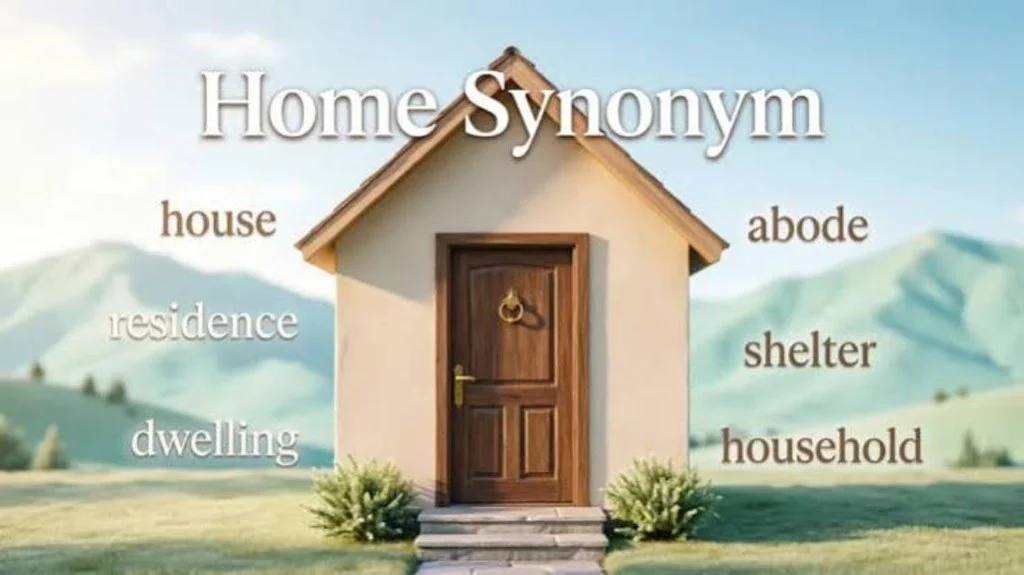
- House
- Place
- Residence
- Dwelling
- Abode
- Apartment
- Flat
- Property
- Household
Some are casual, while others are formal. “My place” is especially common in everyday speech.
For example:
- “Come to my place.”
- “I’ll be at my place tonight.”
Informal and slang-related terms
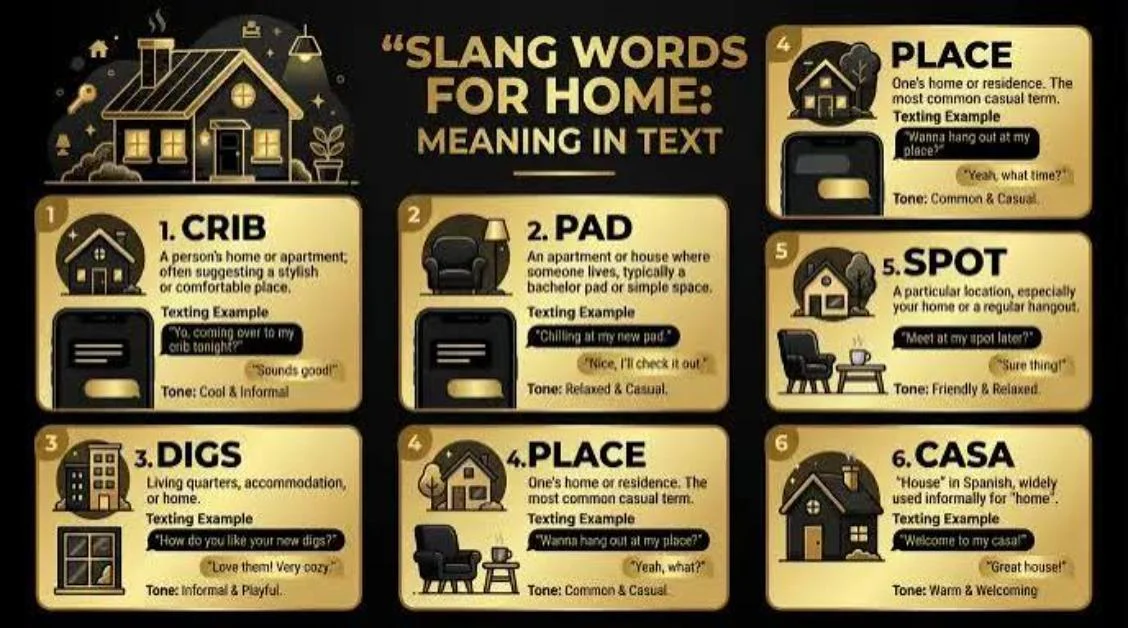
Some informal expressions can refer to home or a familiar place:
- My place
- The crib
- Pad
- Digs
- Hometown
- Home base
The meaning and popularity of slang can vary by region and age group, so not every term will sound natural everywhere.
There are also friendship terms that can look related to home:
- Homie
- Homes
- Homeboy
- Homegirl
These generally refer to people rather than houses. Some slang references list “homes” as an informal term for a close friend.
For related SEO content, useful internal links could include:
- What Does HOM Mean in Text?
- What Does Homie Mean in Text?
- What Does BRB Mean in Chat?
- What Does LOL Mean in Text?
- What Does “My Place” Mean in Slang?
- House vs. Home: What Is the Difference?
These related pages can help readers understand nearby slang and common texting expressions without forcing unrelated keywords into the article.
Examples of Home in Real Chat Situations
The easiest way to understand home meaning in text is to see it in realistic conversations.
Example 1: Checking someone’s location
A: Are you home?
B: Yeah, just got home 🏠
Here, home simply means the person’s residence.
Example 2: Talking about travel
A: How was the trip?
B: Great, but I’m happy to be home 😌
Here, home means the person’s usual place of residence and also carries a feeling of comfort.
Example 3: Asking someone to return
A: What time are you coming home?
B: Around 8, I think.
This is a normal location and timing question.
Example 4: Emotional meaning
A: I don’t know why, but being around you feels different.
B: Maybe because you feel at home with me ❤️
Here, home is clearly emotional rather than physical.
Example 5: Social media caption
“Some places are beautiful, but nothing feels like home.”
This uses home to express belonging.
Example 6: Short message
“Home?”
This message is incomplete without context. It may mean:
- “Are you home?”
- “Are you going home?”
- “Do you want to meet at home?”
- “Are you talking about your home?”
Quick examples
- “I’m finally home.”
- “See you when I’m home.”
- “Home feels good tonight.”
- “Back home after a long trip ✈️”
- “This place feels like home.”
- “You’re always welcome in my home.”
These examples show why context matters more than the word alone.
How to Reply When Someone Says Home
Your reply depends on what the other person means by home.
If someone says “I’m home,” a simple response could be:
- “Good! 😊”
- “Glad you made it home.”
- “Nice, get some rest.”
- “Perfect!”
If someone asks “Are you home?”, you can answer directly:
- “Yes, I’m home.”
- “Not yet.”
- “Almost home.”
- “No, I’m still outside.”
If someone says “I’m going home,” you could reply:
- “Okay, take care!”
- “Safe journey 😊”
- “Text me when you get there.”
- “Sounds good.”
If someone uses home in an emotional way, your reply can be warmer.
For example:
Them: “You feel like home to me ❤️”
You: “That’s honestly so sweet.”
Or:
Them: “This place feels like home.”
You: “I can see why. It has such a nice vibe.”
The key is not to overthink a simple word. Look at the sentence around it.
A good rule is:
Literal message → give a practical reply.
Emotional message → give a warmer reply.
Unclear message → ask what they mean.
For example, if someone only sends “home?”, you can respond:
“Do you mean, am I home? 😄”
That removes confusion without making the conversation awkward.
Is Home Still Popular? Trends & Online Usage

Yes. Home remains a very common everyday English word, and its basic meaning is not tied to a short-lived internet trend. People use it in speech, text messages, captions, search queries, websites, sports, business, and many other settings.
What has changed is the way people use the word online.
Social media has made emotional and symbolic uses of home especially visible. People may use it to describe:
- A favorite city
- A childhood place
- A travel destination
- A relationship
- A friendship
- A community
- A favorite song or movie
- A comforting memory
For example:
- “This song feels like home.”
- “That restaurant is my second home.”
- “Back home ❤️”
- “Home is wherever my people are.”
These expressions are easy to share because they communicate a strong feeling with one simple word.
At the same time, practical uses remain extremely common:
- “Are you home?”
- “I’m home.”
- “Coming home.”
- “Call me when you get home.”
- “I left it at home.”
There is also continued interest in shortened forms such as “hom,” although this should not be treated as a universal replacement for home. Some online slang references recognize it as an informal abbreviation, but standard English still uses home.
For writers and content creators, the best approach is to treat home as a flexible everyday word rather than forcing it into a trendy slang category.
FAQs
What does home mean in a text message?
In a text message, home usually means the place where someone lives. It can also mean a place or person that makes someone feel comfortable and safe.
Does home have a slang meaning?
Home is not mainly a slang word. It is a standard English word. In some informal contexts, related forms such as “hom” may be used as shortened slang.
What does “I’m home” mean in texting?
“I’m home” normally means “I have arrived at my home” or “I am currently at home.”
What does “Are you home?” mean?
“Are you home?” usually asks whether someone is currently at their residence. The exact meaning can depend on the conversation.
What does “you feel like home” mean?
“You feel like home” is usually an emotional statement. It means someone makes you feel safe, comfortable, accepted, or deeply connected.
Is home the same as house?
Not exactly. A house usually refers to the physical building, while home can refer to the place where someone lives and the feeling of comfort or belonging connected to it.
What does “back home” mean?
“Back home” usually means returning to or being in one’s usual home, hometown, or country. The exact meaning depends on the speaker’s context.
What does “home” mean on Instagram?
On Instagram, home can have its normal meaning, but it is also often used symbolically in captions about comfort, memories, relationships, hometowns, and belonging.
What does “hom” mean compared with “home”?
“Hom” may be used informally as a shortened form of home, especially in texting or internet slang. However, home is the standard spelling and is clearer in most situations.
Conclusion:
The meaning of home is simple at first, but the word can express much more than a physical place.
In text and chat, it usually means the place where someone lives or the place they are returning to. However, it can also describe comfort, belonging, memories, friendship, love, or emotional safety.
The context tells you which meaning is intended. “I’m home” is normally a simple location update, while “You feel like home” carries a much deeper emotional message.
Online, people use home across WhatsApp, Instagram, TikTok, Snapchat, captions, comments, and everyday conversations.
Home is also much older than internet slang. Its roots go back to Old English, and the word has developed many meanings in sports, technology, geography, business, and daily English.
So, when you see home in a message, start with the basic meaning, then look at the context. In most cases, that is all you need to understand what the sender means.
