If you have ever seen SMS in a message, phone setting, or social media post, you may have wondered, “What does SMS mean in text?
” SMS stands for Short Message Service. It is the technology used to send short text messages between mobile phones.
Today, people often use the word “SMS” when talking about ordinary phone texts, even though modern messaging apps such as WhatsApp and Instagram use different systems.
Understanding the SMS meaning in text is useful because the term appears in phones, apps, business messages, banking alerts, verification codes, and everyday conversations.
It can also be confused with terms such as DM, MMS, IM, and chat. In this guide, we will explain SMS in simple language, look at how people use it, explore its history, and show real examples of SMS in daily communication.
What Does SMS Mean in Text & Chat?
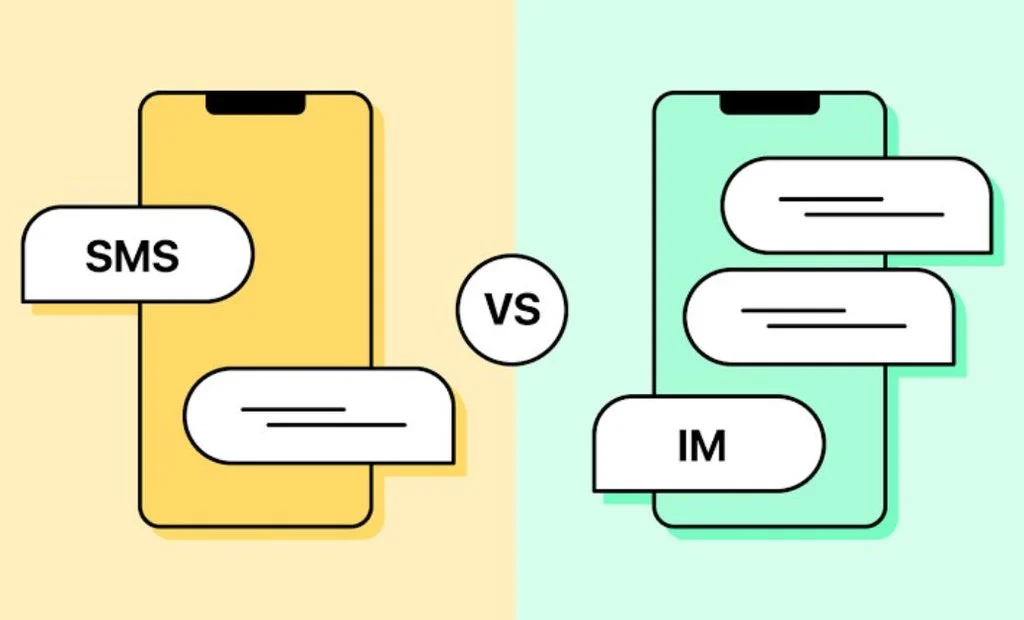
The SMS meaning in text and chat is Short Message Service. In simple words, SMS means a text message sent through a mobile phone network.
When someone says, “I sent you an SMS,” they usually mean they sent you a normal text message to your phone number. Unlike many internet-based messaging apps, traditional SMS does not require a Wi-Fi connection or mobile data connection. It uses the cellular network provided by a mobile carrier.
SMS became popular because it offered a quick way to communicate without making a phone call. People could send short messages such as reminders, greetings, questions, or updates.
For example:
- “I sent you an SMS. Check your phone.”
- “Did you get my SMS?”
- “The bank sent me an SMS.”
- “I’ll SMS you when I arrive.”
In everyday language, SMS and text message are often used as synonyms.
However, SMS is not exactly the same as every type of digital message. A WhatsApp message, Instagram DM, or Facebook Messenger message is generally an internet message rather than an SMS.
Simple meaning of SMS
SMS = Short Message Service = a text message sent through a mobile network.
The term can refer to both the messaging service itself and, in casual speech, an individual text message.
For example, if someone says, “I got an SMS from my bank,” they are talking about a text notification delivered to their phone.
Full Form, Stands For & Short Meaning of SMS
The full form of SMS is Short Message Service.
Each word explains part of the technology:
- Short means the service was designed for brief messages.
- Message refers to the text being sent.
- Service refers to the communication system provided through a mobile network.
So, when someone asks, “What does SMS stand for?” the short answer is Short Message Service.
SMS in simple words
You can think of SMS as the traditional text-message system built into mobile phones.
For example:
“Your appointment is tomorrow at 10 AM.”
If that notification arrives through your mobile carrier as a text message, it can be an SMS.
SMS is also commonly used for:
- Login verification codes
- Bank alerts
- Delivery updates
- Appointment reminders
- School notifications
- Promotional messages
- Emergency alerts
- Personal texts
- Business notifications
The term SMS may appear in phone menus too. You might see options related to SMS settings, SMS delivery reports, or SMS preferences.
SMS vs. text
There is usually no major difference in casual conversation.
SMS is the technical name for the service, while text is the everyday word people use for a message.
For example:
- Technical: “The phone supports SMS.”
- Casual: “Send me a text.”
Both can refer to traditional mobile text messaging.
Origin, History & First Known Use of SMS
SMS began as part of the development of digital mobile communication. It was designed to allow short text messages to travel through cellular networks.
The idea developed during the early years of GSM, a major standard for digital mobile communication. SMS was initially viewed more as a useful additional feature than as something that would become one of the world’s most common forms of communication.
Early SMS messages were limited in length. A standard SMS could contain up to 160 characters when using the basic character set. That limitation helped create the short and direct writing style associated with texting.
The first known person-to-person SMS message was sent in 1992. It reportedly contained the simple greeting “Merry Christmas.” The message was sent using the Vodafone network in the United Kingdom.
SMS gradually became popular as mobile phones became more common.
At first, texting was mainly used by people who wanted a quick alternative to a phone call. Later, businesses, banks, schools, governments, and other organizations began using SMS for notifications and alerts.
Important stages in SMS history
- Early 1990s: SMS becomes part of GSM mobile communication.
- 1992: The first known person-to-person SMS is sent.
- 1990s: Mobile texting begins spreading among consumers.
- 2000s: SMS becomes a major form of everyday communication.
- 2010s: Internet messaging apps grow rapidly.
- Today: SMS remains important for alerts, verification, notifications, and basic mobile communication.
Although apps have changed the way people communicate, SMS has not disappeared. Its ability to work through cellular networks keeps it useful for many situations.
How People Use SMS in Daily Conversations
People use SMS in many different ways. Some use it for casual conversations, while others mainly receive automated messages from companies and services.
In personal communication, SMS can be useful when you want to send a short message without starting a phone call.
For example:
- “Are you home?”
- “I’m outside.”
- “Call me when you can.”
- “Running 10 minutes late.”
- “Happy birthday! 🎉”
- “Please bring some water.”
People also use SMS when internet messaging apps are unavailable or when they need to contact someone through a phone number.
Businesses use SMS for practical reasons. A company may send a customer a confirmation, reminder, security code, or delivery update.
Examples include:
- “Your order has been shipped.”
- “Your verification code is 482913.”
- “Your appointment is confirmed.”
- “Your payment was received.”
- “Your package will arrive today.”
SMS in casual speech
Someone may say:
“I’ll SMS you later.”
This means:
“I’ll send you a text message later.”
However, “SMS” is less common as a verb in everyday English than “text.”
Most people would naturally say:
“I’ll text you later.”
rather than:
“I’ll SMS you later.”
Both can be understood, but “text” sounds more natural in many modern conversations.
SMS Meaning Across WhatsApp, Instagram, TikTok & Snapchat
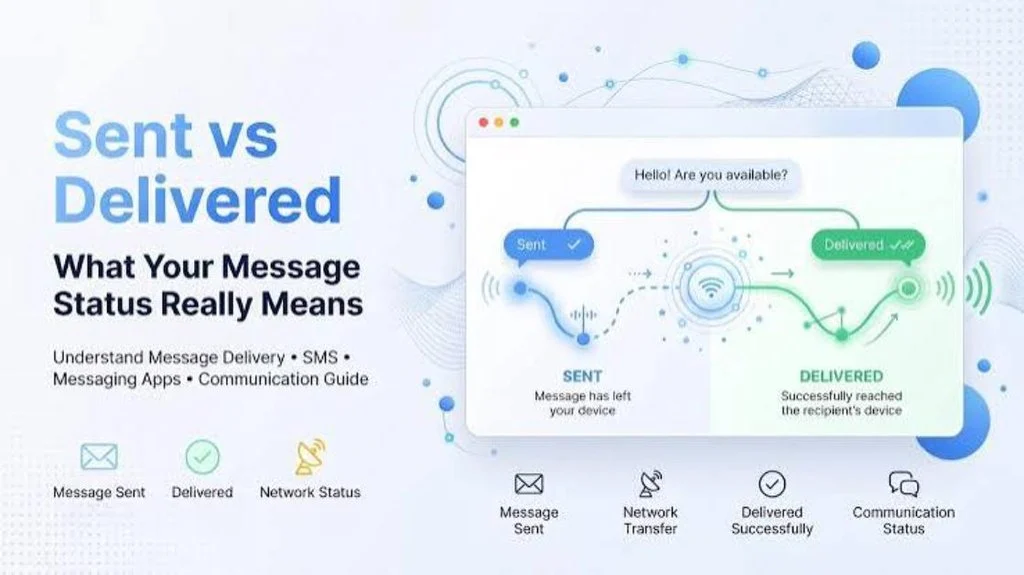
The SMS meaning in WhatsApp, Instagram, TikTok, and Snapchat can be confusing because these platforms primarily use internet-based messaging rather than traditional SMS.
WhatsApp messages are normally sent through the internet. They are not traditional SMS messages.
If someone says:
“Send me an SMS instead of WhatsApp.”
they probably mean they want a regular text message sent to their phone number.
Instagram uses direct messages, usually called DMs. An Instagram DM is different from an SMS.
Example:
- SMS: “I sent you a text.”
- Instagram: “I sent you a DM.”
TikTok
TikTok also has messaging features, but those messages are generally app-based rather than SMS.
Someone might use TikTok to send a message while using SMS separately for phone communication.
Snapchat
Snapchat messages are also part of the app’s messaging system. They should not normally be described as SMS.
Quick comparison
- SMS: Traditional mobile text message
- WhatsApp: Internet-based messaging
- Instagram DM: Direct message inside Instagram
- TikTok message: Message inside TikTok
- Snapchat chat: Message inside Snapchat
This difference matters because SMS generally depends on cellular service, while app-based messages normally depend on an internet connection.
Different Meanings of SMS in Other Fields
Although Short Message Service is the most common meaning of SMS in communication, the abbreviation can mean different things in other fields.
The exact meaning depends on the context.
For example, in business or technology, SMS may sometimes refer to a School Management System, Safety Management System, or another system whose name uses the same initials.
Here are a few possible meanings:
- Short Message Service — mobile text messaging
- Safety Management System — a structured system for managing safety
- School Management System — software used to manage school activities
- Student Management System — software for student records and administration
- Service Management System — a system used to organize or manage services
The important point is that context tells you which meaning is intended.
If you see SMS next to a phone number, verification code, or message notification, Short Message Service is usually the intended meaning.
If you see SMS in a school software discussion, it could refer to a school or student management system.
How to identify the right meaning
Ask yourself:
- Is the topic about phones or texting?
- Is there a mobile number involved?
- Is the message a verification code?
- Is the discussion about school software?
- Is the topic related to workplace or aviation safety?
When the subject is texting, SMS almost always means Short Message Service.
Common Confusions, Mistakes & Wrong Interpretations
One common mistake is assuming that every digital message is an SMS. That is not correct.
A message sent through WhatsApp is generally not SMS. An Instagram DM is not SMS either. These services use internet connections and their own messaging systems.
Another common confusion is the difference between SMS and MMS.
- SMS is mainly associated with text messaging.
- MMS stands for Multimedia Messaging Service and was designed to support multimedia content such as pictures and other media.
People also sometimes confuse SMS with DM.
- SMS: Usually sent to a phone number through a mobile network.
- DM: A private message sent through an online platform or social network.
Common mistakes
- Calling every WhatsApp message an SMS
- Thinking SMS always requires mobile data
- Assuming SMS and MMS mean exactly the same thing
- Confusing SMS with an Instagram DM
- Thinking SMS is only used for personal conversations
- Assuming SMS has completely disappeared because of messaging apps
Another mistake is treating “SMS” as common slang. It is better understood as a communication term or abbreviation rather than slang.
A simple rule
If the message is sent as a traditional mobile text to a phone number, calling it an SMS is usually correct.
If it is sent through an internet app, use the platform’s normal term, such as DM, chat, or message.
Similar Terms, Alternatives & Related Slang
There are several words and abbreviations that are closely related to SMS.
Text
“Text” is the most common everyday alternative to SMS.
Example:
“I’ll text you tonight.”
This usually means the same thing as sending an SMS in ordinary conversation.
Text message
This is another clear and common alternative.
Example:
“Did you get my text message?”
MMS
MMS stands for Multimedia Messaging Service. It is associated with multimedia messages rather than simple SMS text messages.
IM
IM means Instant Messaging. It usually refers to messages sent through an internet-based messaging service.
DM
DM means Direct Message. It is commonly used on social media platforms.
Chat
“Chat” is a broad term for real-time or ongoing digital conversation.
PM
PM can mean Private Message, especially on online platforms and forums.
Related abbreviation pages for internal linking
For an SEO website about texting terms, you could naturally add internal links such as:
- What Does DM Mean in Text?
- What Does PM Mean in Text?
- What Does IM Mean in Chat?
- What Does MMS Mean in Text?
- What Does BTW Mean in Text?
- What Does LOL Mean in Text?
- What Does BRB Mean in Text?
- What Does WYD Mean in Text?
- What Does IDK Mean in Text?
These links can help readers discover related terms without interrupting the main explanation.
Examples of SMS in Real Chat Situations
Seeing SMS in realistic situations makes the meaning easier to understand.
Example 1: Asking someone to check a message
Alex: Did you receive my SMS?
Sam: Yes, I just saw it 👍
Here, SMS means a regular text message.
Example 2: Banking alert
Bank: Your payment has been received. An SMS confirmation has been sent to your registered number.
In this case, SMS refers to a text notification.
Example 3: Verification code
Website: We sent an SMS with your verification code.
User: Got it. Thanks!
The SMS contains a temporary security code.
Example 4: Personal conversation
Mia: I don’t have Wi-Fi right now.
Liam: No problem. I’ll send you an SMS.
Here, the speaker is choosing a traditional mobile text instead of an internet messaging app.
Example 5: Appointment reminder
Clinic: Reminder: Your appointment is tomorrow at 3 PM. Please arrive 10 minutes early.
This is an example of automated SMS communication.
Quick examples
- “Check your SMS for the code.”
- “I sent an SMS to your number.”
- “The company will send you an SMS.”
- “Can you SMS me the address?”
- “I received an SMS from the delivery service.”
These examples show why the exact meaning depends slightly on the situation, but the central idea remains the same: SMS refers to text messaging through a mobile service.
How to Reply When Someone Says SMS
If someone says “SMS,” your reply depends on what they mean.
If they ask whether you received an SMS, a simple response works:
“Yes, I got it.”
If you have not received it:
“No, I haven’t received it yet.”
If someone asks you to send an SMS:
“Sure, I’ll text you.”
If they mention an SMS verification code:
“Yes, I received the code.”
You do not need to use the abbreviation in your reply. In casual English, “text” often sounds more natural.
Useful replies
- “Yes, I received it.”
- “I’ll text you now.”
- “I haven’t got the SMS yet.”
- “Can you send it again?”
- “Sure, I’ll SMS you later.”
- “Got it, thanks! 👍”
If the person uses “SMS” in a technical or business context, you can also reply in a more formal way.
For example:
“Yes, the SMS notification came through.”
The best response depends on the purpose of the message. There is no special slang response required when someone says “SMS.”
Is SMS Still Popular? Trends & Online Usage
SMS is less central to casual online conversation than it was during the peak of traditional texting. Messaging apps now make it easy to send photos, videos, voice messages, stickers, documents, and group chats through the internet.
Even so, SMS remains highly useful.
One major reason is that SMS can reach people through their mobile phone numbers without requiring everyone to use the same messaging app. This makes it valuable for businesses, banks, websites, healthcare providers, delivery companies, and other organizations.
SMS is especially common for:
- One-time verification codes
- Account alerts
- Banking notifications
- Appointment reminders
- Delivery updates
- Marketing messages
- Emergency notifications
- Password or security alerts
People also still use regular texts for simple personal communication.
The language around SMS has changed too. Younger users may be more likely to say “text me” than “SMS me.” On social platforms, terms such as DM, message, and chat are often more common.
However, the abbreviation SMS remains widely recognized because it is used in phone settings, business communication, mobile services, and technical documentation.
So, is SMS still popular?
Yes, but its role has changed. It is no longer the only easy way to send a short message. Instead, it remains an important communication channel that works alongside apps such as WhatsApp, Instagram, and other messaging services.
Frequently Asked Questions
What does SMS mean in text?
SMS means Short Message Service. In everyday language, it usually means a regular text message sent to a mobile phone through a cellular network.
What does SMS stand for?
SMS stands for Short Message Service.
Is SMS the same as a text message?
In most everyday situations, yes. “SMS” is the technical term, while “text message” or simply “text” is the more common casual expression.
Is WhatsApp an SMS?
No. WhatsApp messages are generally sent through the internet rather than the traditional SMS system provided by a mobile carrier.
What is the difference between SMS and MMS?
SMS is mainly associated with text messages, while MMS was designed to support multimedia content such as pictures and other media.
What does “send me an SMS” mean?
It means “send me a text message.” The person usually wants you to send a message to their mobile phone number.
Can SMS work without Wi-Fi?
Yes. Traditional SMS does not normally require Wi-Fi. It uses the cellular network provided by a mobile carrier.
Is SMS still used today?
Yes. SMS is still widely used for verification codes, banking alerts, appointment reminders, business notifications, and personal texting.
What is another word for SMS?
Common alternatives include text, text message, and mobile text. The best choice depends on the situation.
Does SMS mean “social media”?
No. In the context of mobile messaging, SMS means Short Message Service. Other meanings can exist in specialized fields, so context is important.
Conclusion:
The SMS meaning in text is simple: SMS stands for Short Message Service, the traditional system used to send short text messages through mobile networks. People often use “SMS,” “text,” and “text message” to describe the same basic form of mobile communication.
Although apps such as WhatsApp, Instagram, TikTok, and Snapchat have changed how people communicate, SMS remains useful.
It is still widely used for verification codes, bank alerts, reminders, delivery updates, business notifications, and personal messages.
The key thing to remember is that an SMS is different from an app-based DM or chat. If a message is sent through the traditional mobile text system, SMS is usually the correct term.
So, whenever you see SMS in a phone setting, notification, or conversation, you can simply think: “Short Message Service — a regular text mess
