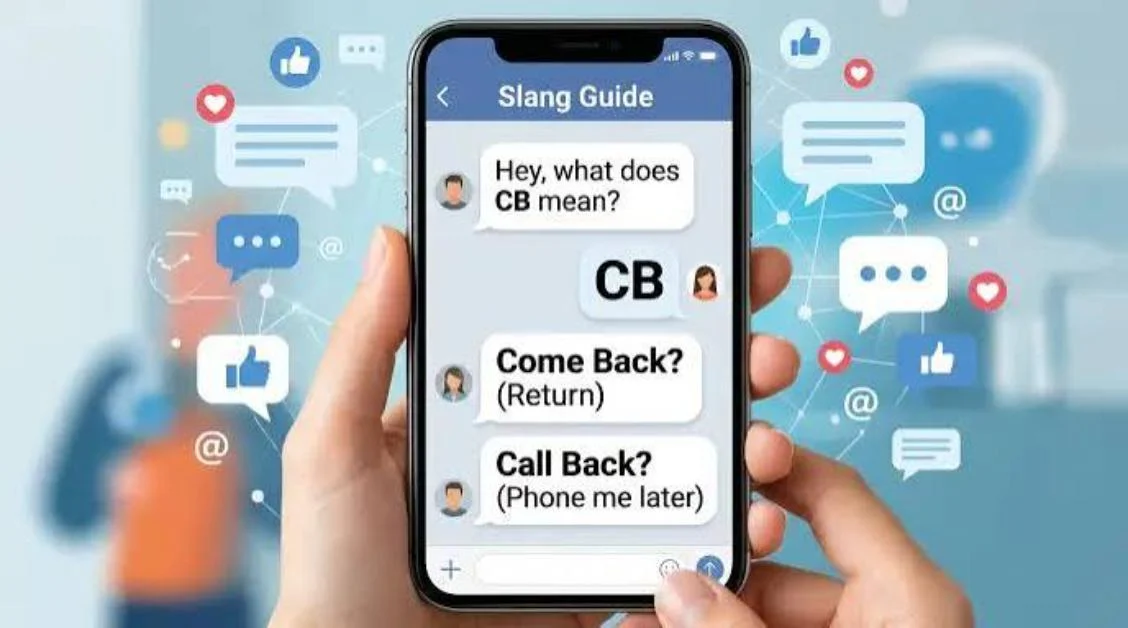
If you have seen someone type “CB” in a text, chat, comment, or social media message, you may have wondered what they meant.
Short forms like this are common online because people want to type faster and keep conversations simple. But CB meaning in text can change depending on the situation, the platform, and the people talking.
In many casual chats, CB can mean “come back” or “call back.” However, it can also have other meanings in different conversations and fields. That is why the words around “CB” are important.
This guide explains the most common CB meanings in text and chat, how people use the abbreviation on WhatsApp, Instagram, TikTok, and Snapchat, and how to understand it without guessing.
You will also find simple examples, related slang, common mistakes, and easy ways to reply when someone sends you “CB.”
What Does CB Mean in Text & Chat?
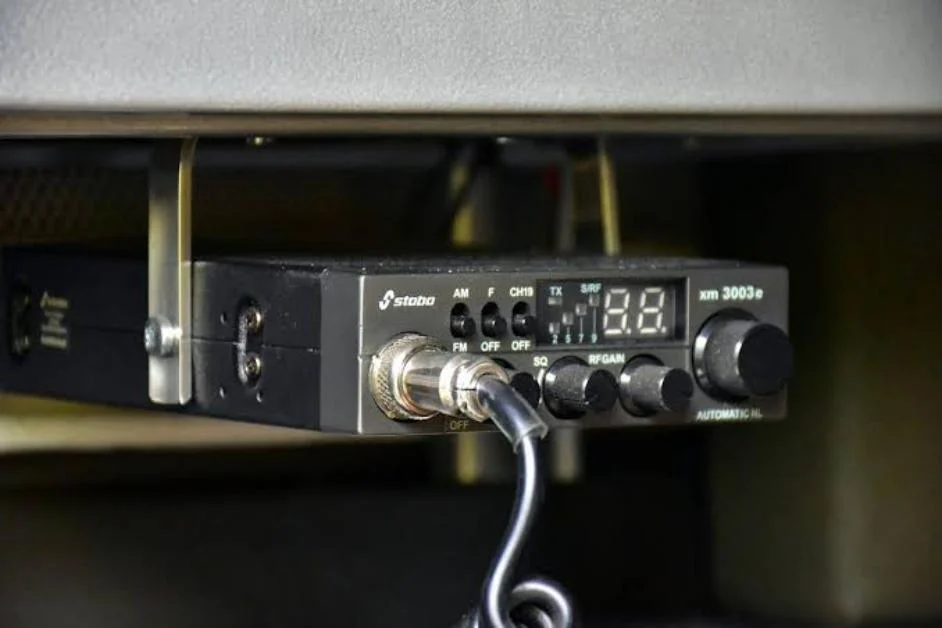
The CB meaning in text depends on the conversation. Unlike some abbreviations that have one clear definition, “CB” can stand for several phrases.
In casual messaging, one possible meaning is “come back.” Someone might use it when asking another person to return to a conversation, group, place, or online activity.
For example:
- “CB soon, we need to talk.”
- “Where did you go? CB 😭”
- “CB when you are free.”
In some conversations, CB can also mean “call back.” This is especially likely when someone is talking about a phone call.
Examples include:
- “Busy rn, CB later.”
- “I missed your call. CB?”
- “CB when you get home.”
The best way to understand the abbreviation is to look at the surrounding words.
Quick rule
- CB + return/leave context → may mean come back
- CB + phone/call context → may mean call back
- CB in a special community → may have a completely different meaning
Tone also matters. A friend saying “CB 😂” may be joking, while “CB ASAP” could sound like a serious request.
So, if you are trying to understand what CB means in a text, do not rely on the two letters alone. Read the whole message first.
Full Form, Stands For & Short Meaning of CB
There is no single full form of CB that works in every text conversation. Its meaning changes according to context.
One common casual interpretation is “come back.” In this use, the person is asking someone to return.
Another possible meaning is “call back.” Here, the sender wants the other person to return a phone call.
Common CB meanings in casual communication
- CB = Come back
- CB = Call back
- CB = Chat back in some informal conversations
- CB = Could be in certain contexts, although this is less standard and can be confused with other abbreviations
For example, if someone says:
“I have to go. CB later.”
They may mean “come back later.”
But if someone says:
“Can’t talk now. CB in 10.”
The intended meaning could be “call back in 10 minutes.”
The surrounding conversation gives you the clue.
It is also important not to assume that every person uses abbreviations in the same way. Friends may create their own shortcuts. A gaming group, school group, workplace, or online community may also use “CB” as an inside abbreviation.
Simple meaning
If you need the shortest answer, remember this:
CB in text can mean “come back” or “call back,” depending on context.
When you are unsure, asking “What do you mean by CB?” is perfectly fine. A quick clarification is better than replying to the wrong meaning.
Origin, History & First Known Use of CB
The exact origin of CB as a texting abbreviation is difficult to pin down. There is no single person, message, or date that can confidently be called the first use of “CB” in this meaning.
Short forms became increasingly common as people moved from traditional letters and long phone conversations to SMS, instant messaging, online chat rooms, and social media. Early mobile texting encouraged users to save time and sometimes characters by shortening common phrases.
Abbreviations such as “brb,” “lol,” “ttyl,” and “omw” became widely recognized. Two-letter combinations such as “CB” can develop naturally in the same environment.
However, CB is not as universally standardized as abbreviations like LOL or BRB. Its meaning may vary between communities.
The history also becomes complicated because “CB” existed long before modern texting. The letters have been used as abbreviations and initials in many unrelated areas, including technology, business, broadcasting, science, and everyday language.
That means finding an old use of “CB” does not automatically prove that it meant “come back” or “call back.”
What to remember
- There is no universally accepted first texting use of CB.
- Its use grew alongside short-form digital communication.
- Different online groups can give CB different meanings.
- Older uses of “CB” may have nothing to do with texting.
So, when discussing the origin of CB in text, it is safer to say that it developed as part of informal digital shorthand rather than claiming a specific inventor or first message.
How People Use CB in Daily Conversations
People generally use CB when they want to communicate quickly. The abbreviation is most useful in informal conversations with friends, family, classmates, gaming partners, or online contacts.
If “CB” means “come back,” it can be used when someone leaves a conversation or disappears for a while.
For example:
- “CB, I wasn’t finished 😂”
- “CB when you see this.”
- “Don’t leave yet. CB!”
- “CB soon, okay?”
If “CB” means “call back,” the conversation usually involves a phone call.
Examples:
- “I’m in class. CB later.”
- “Can you CB when you’re free?”
- “Sorry, missed your call. CB now?”
- “CB after dinner.”
The tone can range from friendly to urgent. A message such as “CB 😂” is usually casual. A message such as “CB ASAP” suggests that the sender wants a faster response.
A few things to notice
- Look at what was said before “CB.”
- Check whether the conversation involves a phone call.
- Consider whether someone has left or disappeared.
- Notice emojis and punctuation.
- Think about the relationship between the people chatting.
For example, if your friend leaves a group chat and someone writes “CB bro 😂,” “come back” is a reasonable interpretation.
If you missed a phone call and the person texts “CB,” “call back” is much more likely.
Context is the key.
CB Meaning Across WhatsApp, Instagram, TikTok & Snapchat
The CB meaning in text does not automatically change just because the platform changes. WhatsApp, Instagram, TikTok, and Snapchat all support informal communication, so users often carry the same abbreviations from one app to another.
On WhatsApp, “CB” may appear in private chats or group conversations. A friend might write “CB later” after leaving a discussion.
On Instagram, the abbreviation can appear in DMs, comments, or replies. However, users should be careful because “CB” may have a different meaning in a particular community.
On TikTok, short forms are often influenced by trends, comments, fandoms, and creator communities. A two-letter abbreviation may therefore have a temporary or niche meaning.
On Snapchat, where quick messages are common, “CB” can fit naturally into short conversations.
Examples
- WhatsApp: “CB when you’re online.”
- Instagram DM: “CB 😂 I need to tell you something.”
- TikTok: “CB to the comments, I missed this.”
- Snapchat: “Gotta go. CB later.”
The important point is that there is no universal platform-specific definition of CB. A Snapchat user does not necessarily mean something different from a WhatsApp user.
Always consider:
- The full sentence
- The relationship between the users
- The topic being discussed
- The community or trend involved
If you found “CB” in a TikTok comment or Instagram DM and the usual meaning does not make sense, the surrounding message is probably giving you an alternative meaning.
Different Meanings of CB in Other Fields
Outside texting and social media, CB can have many unrelated meanings. This is one reason why reading the context is so important.
In technology, business, science, education, transportation, and other areas, the same two letters can represent completely different terms.
For example, in some technical contexts, “CB” can refer to a circuit breaker. In electronics and radio-related discussions, it may appear as part of terminology connected with communication systems.
In education or professional organizations, “CB” may be used as an abbreviation for a company, course, certification, department, or organization.
The abbreviation can also appear as initials for names or places.
Examples of context-based meanings
- Texting: Come back / Call back
- Electrical work: Circuit breaker
- Business: May represent company or department initials
- Education: May represent a course, board, or organization
- Personal messages: Could simply be someone’s initials
This does not mean every meaning is equally common. In an ordinary text message, you should first consider common conversational meanings before jumping to a technical definition.
A useful tip
Ask yourself:
“What topic are we talking about?”
If the conversation is about phones, “call back” may make sense.
If it is about someone leaving, “come back” may make sense.
If it is about electrical equipment, “circuit breaker” may be more likely.
The letters alone are not enough to determine the answer.
Common Confusions, Mistakes & Wrong Interpretations
One of the biggest mistakes people make with CB meaning in text is assuming that every abbreviation has one fixed definition.
That is not true.
People often see “CB” and immediately choose the first meaning they remember. This can lead to awkward or confusing replies.
For example, suppose someone says:
“CB after work.”
If you interpret “CB” as “come back,” the sentence may sound strange. If the person meant “call back,” the message suddenly makes sense.
Another common mistake is confusing “CB” with similar abbreviations. Short forms can look alike, especially when people type quickly.
Common problems
- Assuming CB always means “come back”
- Assuming CB always means “call back”
- Ignoring the rest of the sentence
- Treating slang as formal English
- Using CB with people who may not understand it
- Confusing personal abbreviations with widely accepted slang
You should also avoid overanalyzing a simple message. Sometimes “CB” is simply an abbreviation known between two friends.
If the meaning is unclear, a simple response works:
- “CB = come back?”
- “Do you mean call back?”
- “What does CB mean here?”
There is nothing wrong with asking. In fact, it is often the fastest way to understand the message correctly.
Similar Terms, Alternatives & Related Slang
If you are learning internet slang, CB is just one of many short forms used in digital conversations.
Some related abbreviations are much more widely recognized.
Useful related terms
- BRB — Be right back
- BBL — Be back later
- TTYL — Talk to you later
- GTG — Got to go
- OMW — On my way
- BTW — By the way
- IDK — I don’t know
- TBH — To be honest
- LMK — Let me know
- HBU — How about you?
- WYD — What are you doing?
- WBU — What about you?
If you want to tell someone to return, BRB and BBL may be clearer than CB because they have more established meanings.
For example:
- “BRB, dinner time.”
- “BBL, I have work.”
- “TTYL 😊”
- “LMK when you’re free.”
Internal linking suggestions
For a website about text abbreviations, you could naturally link this article to related pages such as:
- BRB meaning in text
- BBL meaning in text
- TTYL meaning in text
- WYD meaning in text
- LMK meaning in text
- IDK meaning in text
- TBH meaning in text
- OMW meaning in text
These links help readers discover related slang without forcing keywords into the article.
Examples of CB in Real Chat Situations
Seeing real examples makes the meaning of CB in text much easier to understand.
Example 1: Come back
Alex: “I’m leaving the group for a bit.”
Sam: “CB soon 😂”
Here, “CB” most naturally means “come back.”
Example 2: Call back
Alex: “Can you talk?”
Sam: “Not right now. CB in 20.”
Here, “CB” can mean “call back in 20 minutes.”
Example 3: Returning to a conversation
Alex: “Wait, I need to tell you something!”
Sam: “I’m going offline.”
Alex: “CB 😭”
The likely meaning is “come back.”
Example 4: Missed call
Alex: “Sorry, I was driving.”
Sam: “No problem. CB when you get home.”
Here, “call back” is the natural interpretation.
Example 5: Unclear meaning
Alex: “CB tomorrow.”
Sam: “CB means come back or call back? 😂”
This is a good example of why context matters.
Quick takeaway
When you see “CB,” replace it mentally with possible meanings and see which one makes the sentence sound natural. If both work, ask the sender.
How to Reply When Someone Says CB
Your reply should depend on what you think CB means.
If the person means “come back,” you can respond casually:
- “Haha, I’m coming 😂”
- “I’ll be back soon.”
- “Give me five minutes.”
- “Okay, I’m back!”
If they mean “call back,” your response could be:
- “Sure, I’ll call you later.”
- “Can I call you in 10?”
- “I’m free now. Calling!”
- “Okay, I’ll call after work.”
If you are not sure what they mean, do not guess.
Try:
- “CB = call back?”
- “You mean come back? 😂”
- “What do you mean by CB?”
Match the tone
A friend may appreciate a playful response:
“I’m back 😂 What happened?”
A more serious conversation may need a direct answer:
“Sure, I’ll call you in 10 minutes.”
You should also consider whether the sender is using an abbreviation you already share. If they regularly use “CB” to mean something specific, their personal usage matters more than a dictionary definition.
The goal is not to find the one “correct” meaning at all costs. The goal is to understand what that person meant in that conversation.
Is CB Still Popular? Trends & Online Usage

Short forms remain common in online communication, but not every abbreviation has the same level of popularity. Some terms become widely recognized, while others stay limited to certain groups or situations.
CB is best treated as a context-based abbreviation rather than one of the most universal texting terms. Many people are more familiar with abbreviations such as BRB, LOL, IDK, OMG, and TTYL.
This matters because using a less familiar abbreviation can sometimes create confusion.
For example, if you send:
“CB later.”
A close friend may understand you immediately. Someone who rarely uses texting slang may ask what you mean.
Social media also changes language quickly. A term can become popular within a specific community and then fade or develop a new meaning. TikTok comments, gaming communities, group chats, and fandoms can all create their own shorthand.
Why short forms remain popular
- They save typing time.
- They fit quick conversations.
- They feel casual and friendly.
- They work well on mobile devices.
- Friends often develop shared shortcuts.
Still, clarity matters more than being short. If your audience may not understand “CB,” writing “come back” or “call back” is usually better.
So, is CB still used? Yes, it can appear in informal online conversations, but its meaning and popularity vary widely by person and community.
FAQs
What does CB mean in text?
In text messages, CB can mean “come back” or “call back.” The correct meaning depends on the surrounding conversation.
Does CB mean “come back”?
Yes. CB can mean “come back” when someone is asking another person to return to a conversation, group, place, or activity.
Does CB mean “call back”?
Yes. In conversations about phone calls, CB can mean “call back.” For example, “CB when you’re free” may mean “call me back when you’re free.”
What does CB mean on WhatsApp?
On WhatsApp, CB can have the same informal meanings as in other chats, including “come back” or “call back.” Context determines which meaning is intended.
What does CB mean on Instagram?
On Instagram, CB does not have one fixed meaning. In an informal DM, it may mean “come back” or “call back,” but a particular community may use it differently.
What does CB mean on TikTok?
There is no single universal TikTok definition of CB. Its meaning depends on the comment, conversation, trend, or community where it appears.
Is CB a rude word?
No. CB is not automatically rude or offensive. It is usually just an abbreviation. However, tone and context can make any short message sound demanding or unfriendly.
Should I use CB in professional messages?
It is usually better to avoid unclear slang in professional communication. Instead of “CB,” write “call me back” or “come back” so your meaning is clear.
What should I do if I don’t understand CB?
Ask the sender. A simple “Do you mean come back or call back?” can clear up the confusion immediately.
Conclusion:
The CB meaning in text can be confusing because the abbreviation does not have one universal definition. In casual conversations, it can commonly refer to “come back” or “call back,” but the exact meaning depends on the words around it and the situation.
If someone sends you “CB,” check whether the conversation is about returning somewhere or making a phone call. Also remember that online communities can create their own meanings for short abbreviations.
When in doubt, asking for clarification is the safest choice. It is better to understand the sender than to guess and give an unrelated reply.
Whether you see CB on WhatsApp, Instagram, TikTok, Snapchat, or in a regular text message, context is your best clue. Once you know what the conversation is about, the intended meaning is usually much easier to
